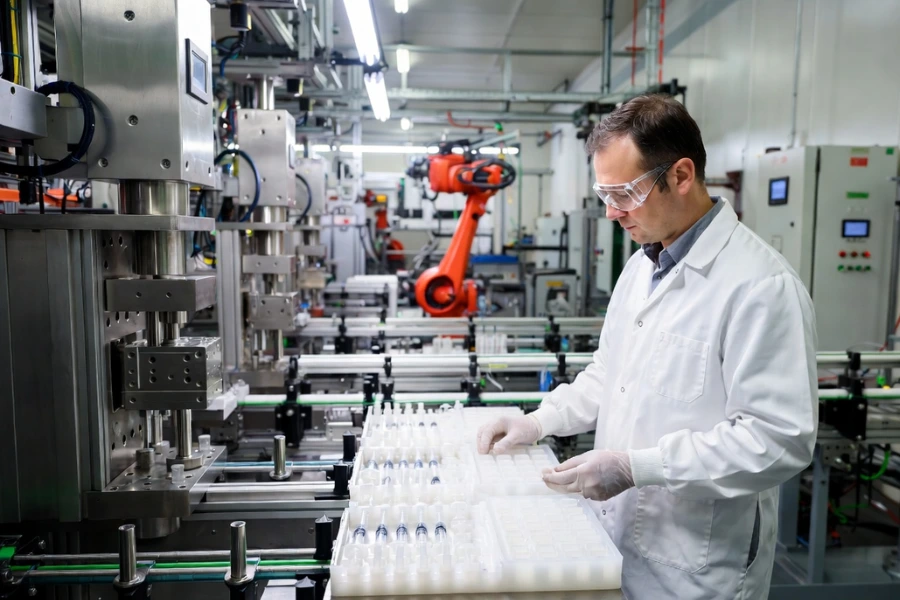
Medical device plastics are used in disposable components, fluid-handling parts, diagnostic equipment, device housings, surgical instruments, laboratory products, and medical packaging.
The right plastic depends on more than the polymer name. Engineers also need to consider the specific resin grade and formulation, device function, mechanical requirements, chemical exposure, sterilization process, dimensional requirements, and manufacturing conditions.
A useful distinction is between plastics used in medical devices and medical-grade plastics. A polymer such as PC, PP, ABS, or PEEK is not automatically suitable for every medical application simply because it is commonly used in healthcare.
What Is Medical-Grade Plastic?
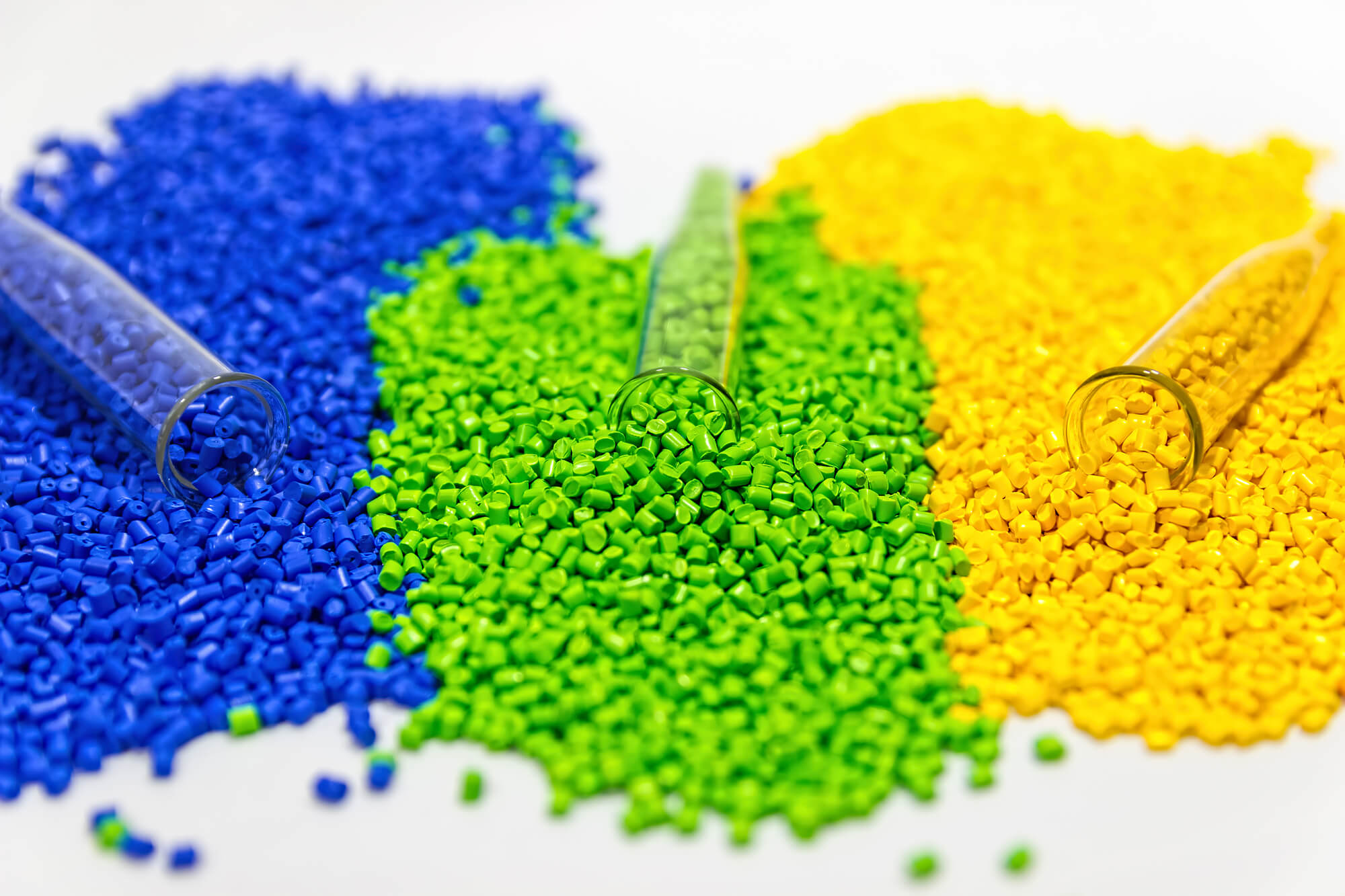
Medical-grade plastic generally refers to a specific polymer grade or formulation intended and documented for defined healthcare or medical applications.
The relevant characteristics can include:
- Mechanical performance
- Chemical resistance
- Dimensional stability
- Thermal performance
- Sterilization compatibility
- Processing behavior
- Material consistency
- Applicable biological and regulatory documentation
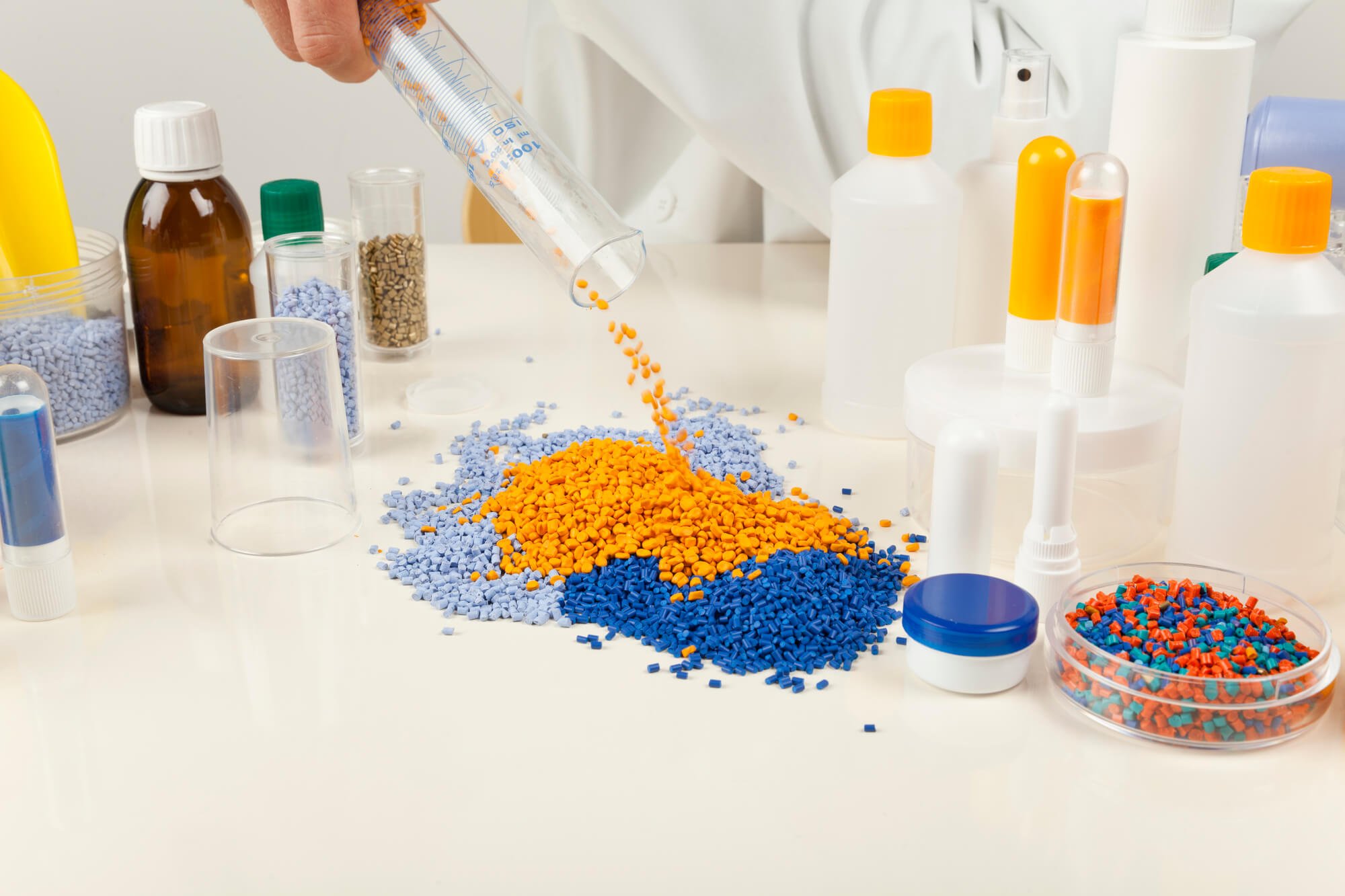
The polymer family alone does not establish suitability. Different grades of the same polymer can contain different additives, colorants, fillers, processing aids, or other formulation differences.
For example, FDA-recognized ASTM F997-18 covers polycarbonate resin intended for medical devices or components and addresses factors such as processing, assembly, sterilization, additives, and the properties of fabricated material.
For components that contact the human body, biological safety is evaluated in relation to the finished device and its intended use. FDA describes biocompatibility within a risk-management process that considers factors such as the nature, type, frequency, and duration of contact.
Therefore, “medical-grade” should not be treated as a universal safety designation for every possible medical application.

Why Are Plastics Used in Medical Devices?
Different plastics can combine properties that are useful for medical components, depending on the application.
Common reasons for selecting plastics include:
- Lightweight and design flexibility — thermoplastic molding can produce complex geometry while keeping component weight relatively low.
- Mechanical performance — engineering plastics can provide strength, stiffness, impact resistance, fatigue performance, or wear resistance.
- Chemical and environmental resistance — selected grades can tolerate specific fluids, cleaning agents, drugs, moisture, or other exposures.
- Transparency and electrical properties — materials such as PC and PMMA can provide optical clarity, while many plastics provide electrical insulation.
- Scalable manufacturing — injection molding can produce repeatable plastic components at production volumes when material, tooling, and process conditions are properly controlled.
These properties are not universal to every plastic. The same polymer family can contain grades with substantially different performance and processing requirements.
Types of Plastics Used in Medical Device Molding
Thermoplastics are widely used for molded medical components because they can be heated, formed, cooled, and processed repeatedly within appropriate manufacturing conditions.
The following materials represent common polymer families used in healthcare-related applications. Their suitability depends on the specific grade and device requirements.

Acrylonitrile Butadiene Styrene (ABS)
ABS provides good impact strength, dimensional stability, and relatively straightforward processing.
It can be considered for equipment housings, handles, covers, and other components where moderate mechanical performance and manufacturability are important.
Its heat resistance is more limited than that of many high-temperature engineering plastics. Temperature exposure, chemical compatibility, and sterilization conditions therefore need to be considered before selecting a specific ABS grade.
Polyethylene (PE)
Polyethylene is available in multiple grades with different molecular structures and performance characteristics.
Depending on the grade, PE can provide chemical resistance, low moisture absorption, impact performance, or wear resistance. Potential applications include containers, fluid-handling components, packaging-related products, and selected medical components.
The required grade should be matched to the component’s mechanical, chemical, temperature, and processing requirements.
Polypropylene (PP)
Polypropylene combines low density with chemical resistance and useful fatigue performance.
It is widely used in disposable medical products, containers, syringes, laboratory products, trays, and fluid-handling components.
PP can also be useful for features that undergo repeated flexing. Sterilization performance and long-term mechanical behavior still depend on the selected grade and application.
Polycarbonate (PC)
Polycarbonate is an important engineering plastic for applications that require transparency together with useful mechanical performance.
PC is an amorphous plastic with relatively low molding shrinkage and good potential dimensional accuracy. It also has high melt viscosity and requires careful processing.
The provided engineering reference identifies several manufacturing considerations for molded PC components:
- Moisture must be controlled before processing.
- Excess moisture can contribute to silver streaks, bubbles, and reduced strength.
- High melt viscosity can affect filling behavior.
- Cooling conditions influence molding behavior.
- Residual stress can contribute to stress cracking.
- Sharp corners, notches, uneven walls, and poorly designed inserts can increase stress concentration.
- Mold and melt temperatures affect molded-part quality.
- Appropriate wall thickness and uniform cooling support dimensional stability.
These characteristics make PC a useful example of why material selection and mold design need to be considered together.
Polyvinyl Chloride (PVC)
PVC can be formulated as rigid or flexible material and is used in various healthcare products.
Its chemical resistance and formulation flexibility can make it useful for fluid-handling components, tubing, bags, and other products.
Processing requires careful temperature control because PVC can degrade when exposed to excessive heat. Formulation is also important because plasticizers and other additives can substantially affect the final material.
Polymethyl Methacrylate (PMMA)
PMMA, commonly known as acrylic, provides good optical clarity and can be useful where visibility is important.
It may be considered for transparent medical or diagnostic components where optical performance is more important than the higher impact resistance available from materials such as PC.
Polyamide (PA or Nylon)
Polyamide provides good mechanical strength, wear resistance, and engineering performance.
It can be considered for components exposed to mechanical loading, wear, or repeated movement.
Moisture absorption is an important consideration because it can affect dimensional behavior and mechanical properties. This becomes particularly relevant when a component has tight functional tolerances.
Polyethylene Terephthalate Glycol (PETG)
PETG offers clarity and good formability and can be used in selected medical and laboratory applications.
The appropriate grade should be evaluated for mechanical requirements, chemical exposure, temperature, sterilization method, and expected service conditions.
Polystyrene (PS)
Polystyrene is relatively easy to process and can provide useful optical properties for selected laboratory and diagnostic products.
Applications can include disposable laboratory components and containers where its performance limitations are compatible with the intended use.

Other Engineering and High-Performance Medical Plastics
Some medical applications require properties beyond those normally provided by commodity thermoplastics.
Selected grades of materials such as PEEK, PSU, PPSU, PEI, and fluoropolymers may be considered when components require combinations of:
- Higher operating temperature
- Chemical resistance
- Creep resistance
- Dimensional stability
- High mechanical performance
- Repeated exposure to demanding environments
Polysulfone (PSU/PSF)
The provided engineering reference describes polysulfone as an amorphous polymer with good heat resistance, dimensional stability, creep resistance, and a broad operating temperature range.
Its manufacturing behavior is more demanding than that of many commodity thermoplastics. The reference identifies moisture sensitivity, relatively poor flow, high processing temperatures, and the need for appropriate molding and gating conditions.
This makes PSF another example of the relationship between in-service performance and manufacturing behavior. A high-performance resin may provide useful properties but still require controlled drying, tooling, temperature, and processing conditions.
Fluoropolymers
Fluoropolymers are known for properties such as chemical resistance, heat resistance, electrical insulation, and resistance to aging.
The provided reference identifies fluoroplastics as materials used for corrosion-resistant components and certain medical applications.
Their selection should still consider mechanical requirements, processing method, grade-specific documentation, and the environment in which the component will operate.
Common Medical Device Plastic Applications
Medical plastic parts range from relatively simple disposable components to precision connectors, valves, housings, fluid-path components, and mechanically loaded structural parts.
| Application | Typical material considerations |
|---|---|
| Disposable components | Processability, chemical resistance, dimensional control, cost |
| Fluid-handling parts | Chemical compatibility, sealing, dimensional consistency, clarity where required |
| Device housings | Impact resistance, stiffness, dimensional stability, surface quality |
| Diagnostic components | Clarity, dimensional control, chemical resistance, molded precision |
| Surgical components | Mechanical performance, cleaning or sterilization compatibility |
| Laboratory products | Chemical resistance, clarity, dimensional accuracy |
| Medical packaging | Protection, barrier requirements, sterilization and storage conditions |
Disposable Medical Components
Plastics are widely used for syringes, caps, containers, tubing-related components, connectors, laboratory consumables, and other disposable products.
Material selection depends on the required combination of chemical resistance, mechanical performance, sterilization or disinfection, dimensional control, and manufacturing cost.
Medical Equipment Housings
Diagnostic equipment, monitoring devices, handheld instruments, and other medical equipment can use plastic housings and covers.
These parts may require impact resistance, electrical insulation, dimensional stability, chemical resistance, and resistance to cleaning or disinfecting agents.
Fluid-Handling Components
Fluid-contact components may encounter drugs, bodily fluids, cleaning agents, solvents, or other chemicals.
Material selection should therefore consider chemical compatibility, dimensional stability, sealing performance, required transparency, and the intended sterilization pathway.
Diagnostic and Laboratory Components
Laboratory and diagnostic products often require controlled dimensions, repeatable molding, chemical resistance, and, in some cases, optical clarity.
For these applications, a material’s processing behavior can be as important as its basic datasheet properties.
Reusable Medical Components
Reusable components may experience repeated cleaning, disinfection, sterilization, temperature cycling, and mechanical loading.
Selected high-temperature engineering polymers may be considered when repeated exposure to demanding conditions is required. Compatibility should be verified against the actual sterilization cycle, number of cycles, and required property retention.
Medical Packaging
Plastic packaging can protect medical products from contamination, moisture, mechanical damage, and environmental exposure.
The packaging material needs to be matched to the product, barrier requirements, sterilization process, storage conditions, and applicable packaging requirements.
How to Select Plastics for Medical Devices
Material selection should start with the requirements of the device rather than with a list of popular polymers.

1. Define the Intended Use
First determine what the component actually needs to do.
Consider:
- Structural or non-structural function
- Disposable or reusable use
- Fluid contact
- Patient contact
- Repeated movement
- Optical requirements
- Sealing requirements
- Expected service life
This establishes which material properties actually matter.

2. Evaluate Contact and Exposure Conditions
A component may encounter:
- Body fluids
- Tissue
- Blood
- Drugs
- Cleaning agents
- Disinfectants
- Solvents
- Moisture
- Elevated temperatures
- Radiation
The selected material needs to retain the required properties throughout the expected exposure.

3. Check Mechanical Requirements
Important properties may include:
- Tensile strength
- Flexural strength
- Impact resistance
- Stiffness
- Fatigue resistance
- Wear resistance
- Creep resistance
- Stress-cracking resistance
The relevant property depends on the failure mode the component must avoid.
4. Evaluate Dimensional Stability
Dimensional stability is critical for:
- Connectors
- Valves
- Precision housings
- Fluid interfaces
- Moving components
- Sealing surfaces
Final dimensions are affected by more than resin shrinkage. Moisture absorption, cooling behavior, wall thickness, mold temperature, gate location, and processing conditions can also influence the molded component.
This is particularly relevant for materials such as PC and PA, where moisture and processing history can affect dimensional or mechanical performance.
5. Consider Sterilization Compatibility
Sterilization should be considered before the resin is finalized.
Common medical-device sterilization methods include:
- Ethylene oxide (EtO)
- Steam or moist heat
- Gamma irradiation
- Electron-beam irradiation
- Other low-temperature sterilization technologies
FDA notes that EtO is used for medical devices that may be sensitive to heat or moisture.
Material compatibility is not determined by polymer family alone. The evaluation may need to consider:
- Sterilization method
- Temperature and humidity
- Radiation dose where applicable
- Number of cycles
- Color and appearance
- Mechanical-property retention
- Dimensional stability
- Chemical changes
- Required service life
A material that performs adequately under one sterilization process may not provide the same performance under another.

6. Consider Temperature and Electrical Requirements
The component may experience:
- Normal operating temperature
- Cleaning temperature
- Sterilization temperature
- Thermal cycling
- Local heat exposure
Electrical properties may also matter for housings, connectors, diagnostic equipment, and other electronic medical components.
The material needs to maintain the required properties under actual operating conditions rather than only at room temperature.
7. Evaluate Manufacturing Behavior
Material selection should also account for injection molding requirements.
Important factors include:
- Melt viscosity
- Flow behavior
- Moisture sensitivity
- Shrinkage
- Cooling behavior
- Mold temperature
- Gate design
- Wall thickness
- Draft
- Ejection
- Residual stress
For example, PC has relatively high melt viscosity and requires careful moisture and temperature control. Its stress sensitivity also makes part geometry and mold design important.
Polysulfone presents a different challenge, with higher processing temperatures, moisture sensitivity, and demanding flow behavior.
Material selection can therefore affect gate location, cooling strategy, expected shrinkage, warpage risk, and achievable dimensional tolerance.
8. Review Material Documentation and Supply Requirements
For medical applications, material selection may also involve:
- Resin grade identification
- Supplier documentation
- Formulation information
- Change-control requirements
- Traceability
- Biological evaluation data
- Sterilization data
- Processing recommendations
Material documentation supports qualification, but it does not automatically qualify the finished device. The material, manufacturing process, finished component, and intended use still need to be considered together.
Biocompatibility and ISO 10993
Biocompatibility should not be treated as a simple property permanently attached to a polymer family.
A more useful way to view the relationship is:
Polymer family → specific grade and formulation → manufacturing process → finished component → intended contact and use
FDA’s current biocompatibility resources emphasize that evaluation is based on the medical device, its materials, and the nature of its contact with the body. FDA also considers factors such as processing, sterilization, and formulation when evaluating the relationship between test articles and the proposed device.
FDA currently recognizes ISO 10993-1:2025 as a consensus standard within a risk-management approach to biological evaluation.
For this reason, the phrase “ISO 10993-certified plastic” can be misleading when it is used as a universal statement of device biocompatibility.
A more useful evaluation considers:
- Specific material grade
- Formulation
- Additives and colorants
- Processing conditions
- Finished-part configuration
- Intended body contact
- Contact duration
- Sterilization
- Other relevant biological risks
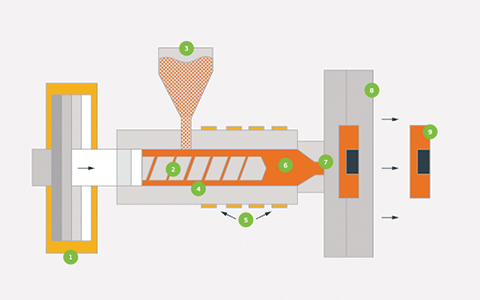
Medical Plastics and Injection Molding
Injection molding is widely used for thermoplastic medical components because it can produce repeatable geometries at production scale.
The process involves heating the polymer, injecting it into a mold cavity, cooling the material, and ejecting the molded component.
For medical plastic parts, material behavior directly affects mold and process development.
For example:
- High-viscosity materials may require appropriate runner and gate design.
- Moisture-sensitive materials require controlled drying before molding.
- Materials with significant shrinkage require appropriate compensation during mold design.
- Uneven wall thickness can increase differential cooling and dimensional variation.
- Sharp corners and notches can increase stress concentration.
- High-temperature polymers may require elevated mold temperatures and suitable tooling materials.
- Residual stress can influence cracking, dimensional stability, and long-term performance.
This creates a direct relationship between:
Material → Part Geometry → Mold Design → Processing Conditions → Finished-Part Performance
For precision medical components, material selection should therefore be considered alongside DFM, tooling, and process control.
Medical Plastic Material Comparison
The following comparison is intended to organize the main selection considerations. It does not replace evaluation of a specific resin grade.
| Material | Useful characteristics | Key considerations |
|---|---|---|
| PC | Transparency, impact resistance, dimensional performance | Moisture, residual stress, chemical exposure, sterilization |
| PP | Chemical resistance, fatigue performance, low density | Grade-specific temperature and sterilization behavior |
| PE | Chemical resistance, low moisture absorption | Mechanical and temperature requirements vary by grade |
| ABS | Impact strength, dimensional stability, processability | Heat resistance and sterilization conditions |
| PMMA | Optical clarity, surface appearance | Impact performance and chemical exposure |
| PA | Strength, wear resistance, engineering performance | Moisture absorption and dimensional effects |
| PETG | Clarity, formability | Temperature, chemical exposure, sterilization |
| PS | Processability, optical properties | Limited mechanical and thermal performance |
| PSU/PSF | Heat resistance, dimensional stability, creep resistance | High processing temperature and moisture sensitivity |
| PEEK | High-performance mechanical, thermal, and chemical properties | Cost, processing requirements, grade selection |
The comparison highlights why material selection is a trade-off between required performance, application conditions, material grade, manufacturability, and long-term requirements.
Key Takeaways
Medical device plastics are not defined by polymer names alone.
The practical selection process is:
Device function → contact and exposure → mechanical requirements → chemical environment → sterilization → dimensional requirements → material grade → processing conditions → documentation
For example, PC can be attractive when transparency, impact resistance, and dimensional performance are important, but moisture sensitivity and residual stress need to be controlled during molding.
Polysulfone can provide high-temperature performance and dimensional stability, while its processing requirements are more demanding.
The appropriate material is therefore the grade whose properties, formulation, processing behavior, documentation, and expected performance fit the actual medical device requirements.
SeaSkyMedical Medical Plastic Manufacturing
Material selection becomes more effective when it is considered together with part design, mold design, processing, and quality requirements.
SeaSkyMedical supports medical plastic component development through material selection, DFM, mold tooling, medical injection molding, and production support.
For projects involving medical plastic parts or precision plastic components for medical devices, these requirements can be evaluated together before production so that material behavior and manufacturing constraints are addressed early in development.