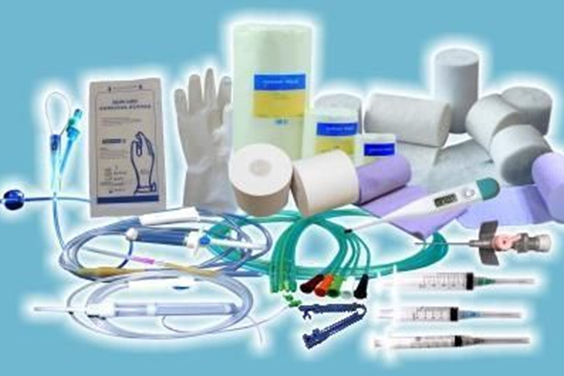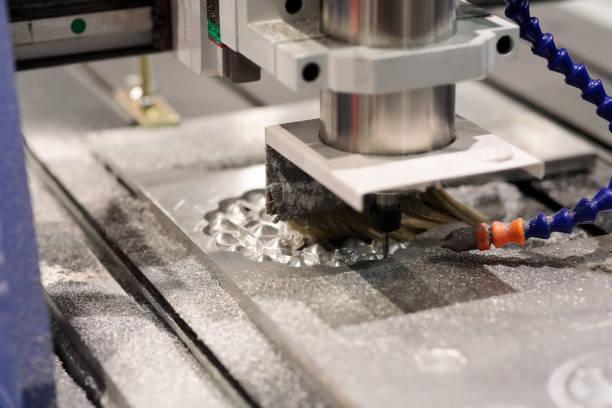
Medical injection molding projects are controlled through documentation.
Each document exists to define requirements, manage risk, and support regulatory review within medical plastic injection molding programs.
The type and depth of documentation depend on part risk, intended use, and regulatory exposure.
Not every project requires the same documentation set.
How Documentation Is Typically Structured
Documentation in medical injection molding is usually organized by function rather than by department.
Each group supports a specific control objective across medical device contract manufacturing projects.
The main documentation groups include:
- Design and engineering documentation
- Material and supplier documentation
- Tooling and process documentation
- Validation and qualification documentation
- Quality system and regulatory documentation
- Cleanroom and sterilization documentation
Documents That Are Commonly Required for Most Projects
Certain documents are typically required for nearly all medical injection molding projects, regardless of device class.
These documents define what is being made and how it is controlled.
Design and Engineering Documentation
These documents establish the technical baseline for manufacturing.
They are usually provided or approved by the customer and reviewed during early product development stages.
Common examples include:
- Part drawings with defined tolerances
- 3D CAD models with revision control
- Material specifications and application requirements
- Design for manufacturability notes
- Engineering change records
Without controlled design documentation, downstream validation and inspection cannot be aligned.
Material and Supplier Documentation
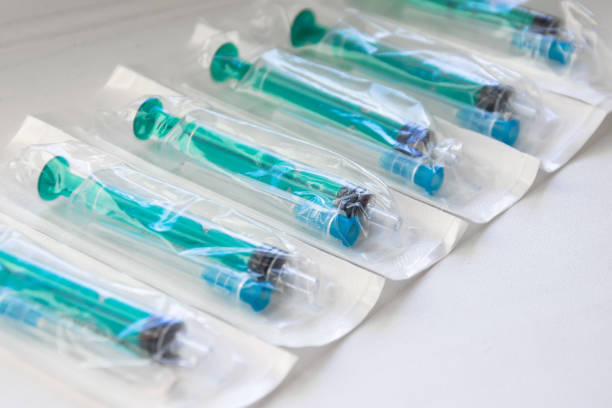
Medical molding requires traceable, medical-grade materials.
Material documentation demonstrates suitability for medical use and audit readiness, often supported by structured material selection processes.
Typically required records include:
- Material certificates of analysis
- Medical grade resin declarations
- Approved supplier documentation
- Resin lot traceability records
For elastomer-based components, documentation may also reference TPE injection molding or LSR injection moulding due to their cleanroom and sterilization compatibility.
Tooling and Process Documentation
These documents define how parts are manufactured on the production floor.
They are typically generated and maintained by the molding manufacturer during mold making and process setup.
Common records include:
- Mold design and tool specifications
- Mold installation and setup records
- Process parameter sheets
- Equipment calibration certificates
- Mold maintenance logs
Early mold tool design review helps align tooling documentation with validation and inspection requirements before production.
Documentation That Is Risk-Driven or Application-Dependent
Not all documentation is required for every medical injection molding project.
Some records are driven by product risk, regulatory pathway, or customer quality system requirements.
Validation and Qualification Documentation
Validation records demonstrate that a process is capable and repeatable.
The depth of validation depends on part complexity and intended use.
Common validation documents include:
- Validation protocols and reports
- Installation Qualification records
- Operational Qualification records
- Performance Qualification records
- First Article Inspection reports
- Process capability studies
Low-risk components may require limited qualification.
Regulated medical device components typically require full IQ, OQ, and PQ documentation.
Cleanroom and Sterilization Documentation
Cleanroom and sterilization records are required when contamination control or sterile supply is involved.
These records are commonly applied during cleanroom injection molding and downstream secondary operations.
Typical documentation includes:
- Cleanroom classification and monitoring records
- Environmental control logs
- Bioburden testing results
- Sterilization compatibility documentation
- Packaging and sealing validation records
Validated medical device packaging and medical device assembly activities are often documented as part of this scope.
Quality System and Regulatory Documentation
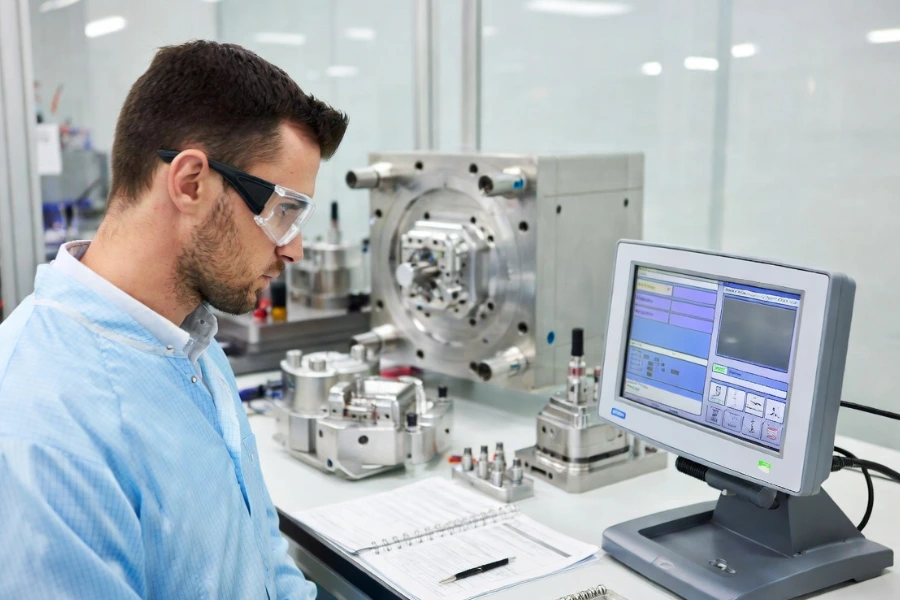
Medical injection molding projects operate within a formal quality management system.
These documents support audits and regulatory submissions.
Common records include:
- Quality manuals and standard operating procedures
- Design control documentation
- Change control records
- Nonconformance and corrective action records
- Production or device history records related to molding
Such documentation is typically maintained across integrated medical OEM component manufacturing programs.
Who Is Typically Responsible for Each Documentation Area
Understanding documentation ownership helps avoid gaps and duplication.
| Documentation Type | Common Owner |
|---|---|
| Part design and specifications | Customer |
| Material selection and approval | Shared |
| Tooling and process setup | Manufacturer |
| Validation execution | Manufacturer with customer approval |
| Quality system records | Manufacturer |
| Regulatory submission documents | Customer |
Clear responsibility definition early in the project reduces delays during validation and audits.
How Documentation Evolves Across the Project Lifecycle
Documentation requirements increase as a project moves toward production.
| Project Stage | Primary Documentation Focus |
|---|---|
| Concept and design | Drawings, material specs, feasibility analysis |
| Tooling and pilot | Tooling records, process setup, initial inspections |
| Validation | IQ, OQ, PQ, capability studies |
| Production | SPC, traceability, quality records |
| Ongoing supply | Change control, revalidation when required |
Advantages and Limitations of Documentation-Based Control
Advantages
- Supports regulatory audits and submissions
- Enables stable, repeatable production
- Improves traceability and issue resolution
- Reduces risk during scale-up and transfer
Limitations
- Requires upfront planning and coordination
- Increases workload for low-risk parts
- Must be actively maintained to remain valid
Balanced documentation is achieved by aligning depth with product risk.
Where Manufacturing Partners Add Practical Value
An experienced medical injection molding manufacturer helps align documentation with actual manufacturing conditions.
This includes:
- Identifying which documents are required versus optional
- Aligning validation depth with part risk
- Integrating tooling, process, and quality records
- Supporting audits with complete documentation sets
SeaSkyMedical commonly supports customers from prototype to production by coordinating documentation, tooling, cleanroom manufacturing, and secondary operations under a single quality system.
Closing Considerations
Documentation in medical injection molding exists to support control, not volume.
When documentation reflects real manufacturing practices, it becomes a functional risk management tool rather than an administrative burden.
For projects requiring structured documentation across design, validation, and production, Contact SeaSkyMedical for more information.