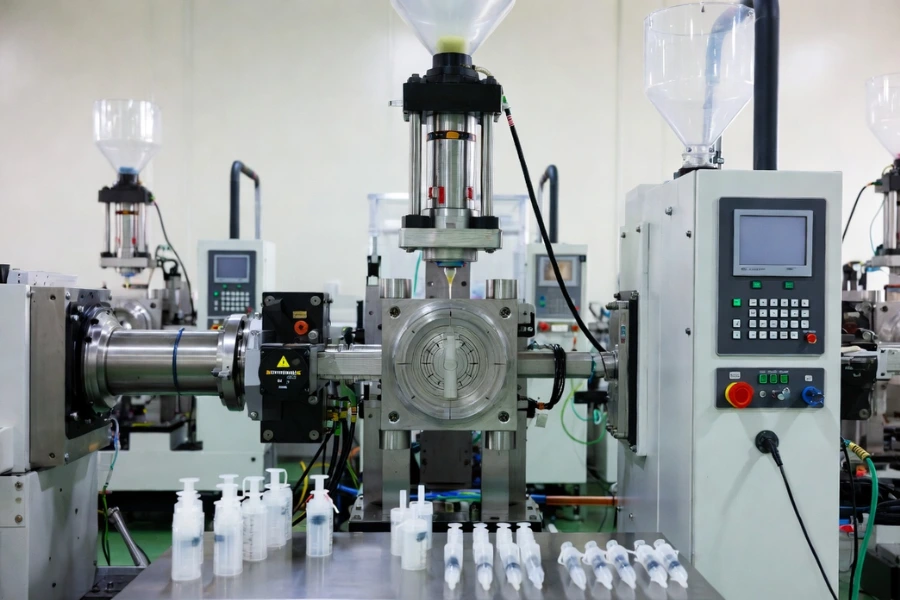
Selecting the right medical device contract manufacturer is a strategic decision that can significantly influence product quality, regulatory readiness, development efficiency, and long-term commercialization success.
For medical OEMs, choosing a manufacturing partner is rarely only about production capacity or unit cost. A supplier must also provide the engineering capability, quality systems, manufacturing technology, and scalability required to transform a medical product concept into a reliable commercial product.
Different medical products require different manufacturing strengths. A disposable diagnostic cartridge may depend on precision medical injection molding, cleanroom manufacturing, and high-volume production stability. A catheter system may require advanced extrusion, polymer engineering, and specialized assembly expertise. A connected healthcare device may require electronics integration, automated testing, and global supply chain support.
This guide compares leading medical device contract manufacturers based on their manufacturing capabilities, technical specialization, application suitability, and potential trade-offs. Instead of ranking manufacturers by company size or market reputation, this comparison focuses on helping OEM teams identify suppliers that best match their product requirements, regulatory pathway, production stage, and commercialization strategy.
The most suitable manufacturing partner is not always the largest organization. It is the supplier whose capabilities align with the technical challenges and business objectives of the specific medical product.
How This Medical Device Manufacturer Comparison Was Developed
There is no universal “best” medical device contract manufacturer for every healthcare application. Supplier selection depends on product complexity, manufacturing process requirements, regulatory expectations, production volume, and long-term business strategy.
This comparison evaluates manufacturers based on factors commonly considered during medical supplier qualification, including:
| Evaluation Area | Why It Matters During Supplier Selection |
|---|---|
| Medical Manufacturing Experience | Demonstrates familiarity with regulated healthcare production environments and industry expectations |
| Engineering Support and DFM Capability | Helps identify manufacturing risks before tooling investment and production launch |
| Manufacturing Technology Expertise | Ensures the supplier has the right process capability for the product design |
| Quality Management System | Supports consistent production, documentation, traceability, and regulatory compliance |
| ISO 13485 Experience | Indicates experience managing medical device quality requirements |
| Cleanroom Manufacturing | Supports products requiring controlled production environments |
| Process Validation Capability | Demonstrates readiness for commercial manufacturing and regulatory requirements |
| Material Expertise | Supports correct selection of plastics, silicone, elastomers, and specialty polymers |
| Automation and Assembly Capability | Improves manufacturing repeatability and production efficiency |
| Production Scalability | Determines whether the supplier can support growth from prototype to mass production |
| Global Supply Chain Support | Helps maintain manufacturing continuity during international commercialization |
The evaluation does not represent a ranking system. Each manufacturer has developed expertise in different areas of medical manufacturing.
For example:
- A company specializing in medical injection molding may be the best choice for disposable plastic medical components.
- A catheter specialist may provide stronger technical value for minimally invasive devices.
- A global CDMO may be better suited for combination products requiring engineering, validation, and commercialization support.
The correct supplier depends on matching manufacturing capability with product requirements.
How to Compare Medical Device Contract Manufacturers
When evaluating a potential medical device manufacturing partner, OEM teams should look beyond basic production capability.
A reliable supplier should support the complete product lifecycle, including:
- Product design optimization
- Design for Manufacturability (DFM)
- Prototype development
- Tooling development
- Process validation
- Production transfer
- Commercial manufacturing
- Long-term lifecycle support
Many supplier selection challenges occur because manufacturers are evaluated too late in the product development process. Involving manufacturing engineers early can help identify potential issues related to:
- Material selection
- Tolerance requirements
- Mold design
- Assembly methods
- Production feasibility
- Validation requirements
For medical startups, engineering collaboration and development flexibility may be more important than large-scale manufacturing capacity. For established medical OEMs, priorities may shift toward automation, process capability, supply chain stability, and global production support.
Medical Device Contract Manufacturer Comparison Matrix
The following table provides an overview of leading medical manufacturing companies and their primary areas of expertise.
| Manufacturer | Best Fit | Core Manufacturing Strengths | Key Technologies | Main Consideration |
|---|---|---|---|---|
| SeaSkyMedical | Plastic medical devices, diagnostic consumables, laboratory products | Integrated medical manufacturing from engineering to production | Medical injection molding, precision tooling, cleanroom assembly, DFM support | Strong fit for polymer-intensive medical products requiring flexible OEM support |
| Phillips-Medisize | Drug delivery systems and complex healthcare products | Full-service CDMO capabilities | Product development, injection molding, automation, connected healthcare manufacturing | Better suited for complex programs requiring broad development and commercialization support |
| Viant Medical | Complex finished medical devices | Vertically integrated manufacturing | Plastics, precision metals, catheter technologies, assembly, automation | Suitable for products requiring multiple manufacturing processes under one supplier |
| Freudenberg Medical | Minimally invasive devices and polymer-based medical products | Specialized medical polymer technologies | Silicone molding, extrusion, micro molding, catheter manufacturing | Strong technical match for specialized polymer applications |
| Röchling Medical | Precision plastic medical products | Medical plastics expertise and cleanroom production | Medical injection molding, diagnostics, pharmaceutical packaging | Best suited for plastic-intensive healthcare applications |
| Tessy Plastics | High-volume medical plastic components | Scientific molding and automation | Precision injection molding, process optimization, cleanroom production | Strong advantage in repeatable high-volume manufacturing |
| Nolato Medical Solutions | Multi-material medical products | Polymer technology integration | LSR molding, thermoplastic molding, cleanroom assembly | Suitable for products combining silicone and thermoplastic materials |
| Spectrum Plastics Group | Catheter systems and medical tubing | Advanced polymer processing | Extrusion, tubing, catheter technologies, injection molding | Primarily focused on specialized polymer medical applications |
| Integer Holdings | Implantable and highly regulated medical devices | Advanced medical technology manufacturing | Implantables, cardiovascular devices, precision components | Designed for technically demanding and highly regulated products |
| Flex Health Solutions | Connected healthcare and medical electronics | Global healthcare manufacturing infrastructure | Electronics manufacturing, automation, diagnostics, supply chain management | Best suited for electronics-integrated medical products |
Medical Manufacturing Capability Comparison by Product Requirement
Different medical products require different supplier capabilities. Instead of selecting manufacturers based only on company size, OEM teams should first identify the dominant manufacturing challenge of their product.
| Product Requirement | Recommended Manufacturer Type | Important Capabilities |
|---|---|---|
| Disposable plastic medical devices | Medical injection molding specialist | Precision molding, tooling, cleanroom assembly, validation |
| Diagnostic consumables | Medical plastics manufacturer | Dimensional accuracy, contamination control, scalable production |
| Drug delivery systems | CDMO or integrated healthcare manufacturer | Product development, automation, validation, commercialization support |
| Catheter systems | Polymer processing specialist | Extrusion, tubing, silicone processing, precision assembly |
| Silicone medical components | Multi-material specialist | LSR molding, material expertise, clean manufacturing |
| Implantable devices | Highly regulated medical manufacturer | Validation, traceability, advanced manufacturing control |
| Connected healthcare products | Electronics healthcare manufacturer | Electronics integration, testing, global production support |
| Multi-process medical devices | Vertically integrated manufacturer | Multiple manufacturing technologies under one supplier |
This product-based comparison helps OEM teams narrow supplier selection based on actual engineering requirements rather than general company reputation.
Key Takeaway for OEM Buyers
The right medical device contract manufacturer should be evaluated as a long-term manufacturing partner, not simply as a production vendor.
The strongest supplier choice is usually the company that can provide the right combination of:
- Engineering collaboration
- Manufacturing technology
- Quality management
- Regulatory readiness
- Production scalability
- Lifecycle support
The following sections compare each manufacturer in detail, including their core strengths, suitable applications, manufacturing considerations, and potential trade-offs.
SeaSkyMedical

Headquarters: China
Website: https://www.seaskymedical.com/
Best Fit:
Medical OEMs developing plastic-intensive medical products, diagnostic consumables, laboratory components, and disposable healthcare devices requiring integrated tooling, medical injection molding, cleanroom assembly, and flexible OEM manufacturing support.
Overview
SeaSkyMedical is a specialized medical device contract manufacturer focused on providing integrated manufacturing solutions for healthcare product developers.
The company supports medical OEM projects across multiple development stages, including product engineering, Design for Manufacturability (DFM), precision mold manufacturing, medical injection molding, cleanroom assembly, and commercial production.
For many medical plastic products, manufacturing success depends not only on molding capability but also on early engineering decisions involving material selection, mold design, dimensional requirements, assembly methods, and production feasibility. SeaSkyMedical’s integrated approach allows these factors to be evaluated before large tooling and production investments are made.
The company primarily supports applications such as diagnostic consumables, laboratory products, medical plastic components, and disposable healthcare products where consistency, traceability, and controlled manufacturing processes are important.
Compared with suppliers focused mainly on one production stage, SeaSkyMedical provides a more integrated manufacturing model by combining tooling, molding, assembly, and engineering support within one supply chain.
Core Manufacturing Strengths
Medical Injection Molding and Precision Plastic Components
SeaSkyMedical’s primary manufacturing strength is precision medical injection molding for healthcare products requiring stable dimensions, repeatable production, and consistent quality.
Medical plastic components often involve challenging requirements such as:
- Tight dimensional control
- Complex geometries
- Material compatibility
- High-volume repeatability
- Consistent assembly performance
For disposable medical devices and diagnostic products, injection molding performance directly affects product reliability, production efficiency, and overall manufacturing cost.
Precision Tooling and DFM Engineering
A major factor influencing medical product success is the connection between product design and manufacturing feasibility.
SeaSkyMedical supports OEM teams through DFM evaluation, helping identify potential production risks before tooling begins.
Typical engineering considerations include:
- Wall thickness optimization
- Draft angle evaluation
- Mold structure improvement
- Parting line considerations
- Material selection
- Tolerance requirements
- Assembly feasibility
Early DFM collaboration can reduce tooling modifications, shorten development cycles, and improve the transition from prototype to commercial production.
Cleanroom Manufacturing and Assembly
Many medical products require controlled manufacturing environments to maintain product cleanliness and process consistency.
By integrating cleanroom assembly with molding and manufacturing operations, SeaSkyMedical helps OEM customers reduce coordination between multiple suppliers.
This approach can be valuable for products requiring:
- Controlled assembly processes
- Repeatable production conditions
- Traceability
- Stable quality performance
Suitable Applications
SeaSkyMedical is particularly suitable for:
- IVD consumables
- Diagnostic medical devices
- Laboratory plastic components
- Disposable medical products
- Injection molded healthcare components
- Custom medical plastic assemblies
- OEM and ODM medical projects
Manufacturing Considerations
For medical OEMs developing plastic-intensive products, supplier integration can significantly influence project efficiency.
Managing separate suppliers for:
- Mold manufacturing
- Injection molding
- Assembly
- Quality control
may increase communication complexity and create additional risks during design transfer.
An integrated manufacturing partner can simplify coordination by allowing engineering teams to communicate directly with tooling and production teams.
This approach is especially useful for startups and growing medical companies that require manufacturing expertise during product development.
Trade-Off
SeaSkyMedical’s strongest advantage is integrated medical plastic manufacturing, particularly for products requiring tooling, injection molding, and cleanroom assembly.
However, companies developing highly specialized products such as implantable medical technologies, advanced healthcare electronics, or pharmaceutical combination products may require suppliers with broader CDMO infrastructure or specialized capabilities in those areas.
Comparison Positioning
Compared with other medical manufacturers:
| Compared With | SeaSkyMedical Advantage | Alternative Strength |
|---|---|---|
| Röchling Medical | Flexible OEM support and integrated tooling-to-production workflow | Larger global medical plastics infrastructure |
| Tessy Plastics | Strong engineering collaboration for customized medical plastic projects | Extensive high-volume scientific molding systems |
| Phillips-Medisize | More focused on plastic medical manufacturing | Broader CDMO and commercialization capabilities |
For OEMs whose primary challenge is precision plastic manufacturing rather than global pharmaceutical commercialization, a specialized medical manufacturing partner may provide a more direct solution.
Phillips-Medisize

Headquarters: United States
Website: https://www.phillipsmedisize.com/
Best Fit:
Medical OEMs and pharmaceutical companies developing complex healthcare products such as drug delivery systems, connected healthcare devices, and combination products requiring full-service CDMO capabilities.
Overview
Phillips-Medisize is a global Contract Development and Manufacturing Organization (CDMO) supporting medical device, pharmaceutical, and healthcare companies through product development, engineering, manufacturing, and commercialization.
Unlike manufacturers focused mainly on individual production processes, Phillips-Medisize provides a broader development-to-commercialization model.
Its capabilities extend across:
- Product development
- Engineering support
- Injection molding
- Automation
- Assembly
- Validation
- Commercial manufacturing
This makes the company particularly suitable for medical products requiring coordination between multiple disciplines, including mechanical components, electronics, software integration, and pharmaceutical delivery functions.
Core Manufacturing Strengths
Full-Service CDMO Capability
Phillips-Medisize supports medical products throughout the product lifecycle.
Key stages include:
- Concept development
- Engineering optimization
- Prototype support
- Verification and validation
- Design transfer
- Commercial manufacturing
- Lifecycle management
This integrated approach can reduce supplier coordination challenges for complex medical programs.
Drug Delivery and Combination Products
One of Phillips-Medisize’s strongest areas is supporting advanced healthcare products such as:
- Autoinjectors
- Wearable injectors
- Drug delivery systems
- Connected healthcare devices
- Combination products
These products often require coordination between:
- Precision molding
- Mechanical engineering
- Electronics
- Automation
- Regulatory requirements
A supplier with experience across these areas can help reduce development complexity.
Global Manufacturing Support
For multinational medical companies, global manufacturing capability can support:
- Regional production strategies
- Supply chain optimization
- Commercial expansion
- Manufacturing continuity
This can be particularly valuable for products entering multiple regulatory markets.
Suitable Applications
Phillips-Medisize is suitable for:
- Drug delivery devices
- Combination products
- Connected healthcare systems
- Wearable medical devices
- Complex diagnostic platforms
- Pharmaceutical-related medical products
Manufacturing Considerations
When selecting a CDMO, OEMs should evaluate whether the additional capabilities align with product requirements.
For complex products involving multiple technologies, a CDMO model can simplify:
- Engineering communication
- Validation planning
- Supplier coordination
- Commercial production transfer
However, simpler medical plastic products may not require the full range of CDMO services.
Trade-Off
Phillips-Medisize provides extensive development and commercialization capabilities, making it suitable for complex medical programs.
However, smaller OEM projects focused mainly on precision plastic components may find a specialized medical injection molding supplier more efficient and more aligned with their immediate manufacturing needs.
Comparison Positioning
| Compared With | Phillips-Medisize Advantage | Alternative Strength |
|---|---|---|
| SeaSkyMedical | Broader CDMO and commercialization capabilities | More focused plastic medical manufacturing |
| Viant Medical | Strong pharmaceutical and connected healthcare experience | Broader vertically integrated device manufacturing |
| Flex Health Solutions | Medical product development integration | Stronger electronics manufacturing ecosystem |
For companies developing complex healthcare products requiring engineering, validation, and commercialization support, a full-service CDMO model can provide significant value.
Viant Medical

Headquarters: United States
Website: https://viantmedical.com/
Best Fit:
Medical OEMs requiring vertically integrated manufacturing for complex devices combining plastics, precision metals, catheter technologies, assembly, and finished product production.
Overview
Viant Medical is a global medical device contract manufacturer offering vertically integrated manufacturing solutions across product development, engineering, precision manufacturing, assembly, and commercialization.
Unlike suppliers focused on one manufacturing technology, Viant combines multiple capabilities within a single organization.
Its manufacturing platform includes:
- Precision plastics
- Metal components
- Catheter technologies
- Automated assembly
- Finished medical devices
This integrated model allows OEMs to reduce the complexity of managing multiple manufacturing suppliers during product development and commercialization.
Core Manufacturing Strengths
Vertically Integrated Manufacturing
Viant’s primary advantage is its ability to support products requiring multiple manufacturing processes.
Examples include products combining:
- Injection molded components
- Precision metal parts
- Tubing systems
- Subassemblies
- Final device assembly
Managing these processes under one supplier can improve communication between engineering teams and production operations.
Complex Medical Device Assembly
Many advanced healthcare products require coordination between multiple manufacturing stages.
Viant supports:
- Component manufacturing
- Assembly integration
- Production optimization
- Commercial manufacturing transfer
This capability is valuable for OEMs developing finished medical devices rather than individual components.
Production Scalability and Validation Support
Moving from development into commercial production requires stable processes and controlled manufacturing.
Viant supports:
- Process development
- Manufacturing transfer
- Validation activities
- Production scaling
Suitable Applications
Viant Medical is suitable for:
- Finished medical devices
- Surgical products
- Catheter-based devices
- Orthopedic products
- Complex diagnostic systems
- Multi-process healthcare products
Manufacturing Considerations
For products involving several manufacturing technologies, supplier consolidation can reduce project complexity.
Instead of coordinating separate vendors for:
- Plastic molding
- Metal fabrication
- Assembly
- Testing
OEMs may benefit from a vertically integrated partner capable of managing multiple production requirements.
Trade-Off
Viant’s broad manufacturing platform is particularly valuable for complex medical products.
For simple disposable plastic devices requiring mainly injection molding and cleanroom assembly, a specialized medical plastics manufacturer may provide a more focused and efficient solution.
Comparison Positioning
| Compared With | Viant Advantage | Alternative Strength |
|---|---|---|
| SeaSkyMedical | Broader multi-process manufacturing capability | More focused plastic medical manufacturing |
| Phillips-Medisize | Strong finished device integration | Stronger pharmaceutical CDMO positioning |
| Integer Holdings | Broader manufacturing flexibility | Stronger implantable device specialization |
For medical OEMs developing complex products requiring multiple manufacturing technologies, vertically integrated suppliers can reduce coordination challenges during commercialization.
Freudenberg Medical

Headquarters: Germany
Website: https://www.freudenbergmedical.com/
Best Fit:
Medical OEMs developing minimally invasive devices, catheter systems, silicone-based components, and advanced polymer medical products requiring specialized material processing and precision manufacturing expertise.
Overview
Freudenberg Medical is a specialized medical device contract manufacturer focused on advanced polymer technologies, minimally invasive medical devices, and precision manufacturing solutions for highly regulated healthcare applications.
Unlike manufacturers primarily focused on general medical plastics or standard injection molding, Freudenberg Medical has developed deep expertise in areas where material performance and manufacturing precision directly influence product functionality.
The company supports medical OEMs across multiple stages of product development, including engineering design support, material selection, process development, validation, and commercial production.
Its technical strengths are particularly relevant for products involving flexible materials, complex geometries, miniaturized components, and demanding clinical applications.
For medical products such as catheter systems and silicone-based devices, manufacturing capability is closely connected with clinical performance. Factors including dimensional accuracy, polymer behavior, bonding quality, and assembly consistency can directly influence final product reliability.
Core Manufacturing Strengths
Catheter Technologies and Minimally Invasive Devices
One of Freudenberg Medical’s primary strengths is supporting minimally invasive medical applications that require specialized polymer processing and precision manufacturing.
Key applications include:
- Cardiovascular devices
- Electrophysiology products
- Catheter systems
- Surgical devices
- Interventional medical products
These applications typically require strict control over:
- Tubing dimensions
- Material properties
- Flexibility performance
- Component consistency
- Assembly accuracy
Compared with conventional plastic medical components, minimally invasive products often require deeper process knowledge because small variations can affect device functionality.
Silicone and Advanced Polymer Processing
Freudenberg Medical has significant expertise in silicone technologies and advanced medical polymers.
Important capabilities include:
- Silicone molding
- Thermoplastic processing
- Specialty polymer applications
- Flexible medical component manufacturing
These technologies support medical products requiring:
- Soft and flexible structures
- Patient-contact materials
- Biocompatible components
- Complex geometries
Material selection and processing control are particularly important for products exposed to repeated mechanical stress or direct patient interaction.
Precision Extrusion and Micro Manufacturing
Many minimally invasive medical products require manufacturing technologies beyond traditional injection molding.
Freudenberg Medical supports:
- Medical extrusion
- Micro molding
- Precision polymer processing
- Complex component manufacturing
These capabilities are valuable for applications requiring:
- Miniaturized components
- Tight dimensional control
- Advanced material performance
Suitable Applications
Freudenberg Medical is suitable for:
- Catheter systems
- Minimally invasive devices
- Silicone medical components
- Flexible medical assemblies
- Advanced polymer healthcare products
- Interventional medical devices
Manufacturing Considerations
For products involving specialized polymers or flexible materials, supplier selection should focus on technical expertise rather than production scale alone.
OEM teams should evaluate:
- Polymer processing experience
- Material compatibility knowledge
- Assembly capability
- Validation experience
- Long-term manufacturing consistency
For catheter-based products, selecting a supplier with proven extrusion and polymer engineering experience can reduce development risks during product transfer and commercialization.
Trade-Off
Freudenberg Medical provides strong advantages in specialized polymer technologies and minimally invasive medical applications.
However, companies developing conventional disposable plastic components may not require such advanced processing capabilities and may benefit from suppliers focused primarily on high-volume medical injection molding.
Comparison Positioning
| Compared With | Freudenberg Medical Advantage | Alternative Strength |
|---|---|---|
| Spectrum Plastics Group | Broader polymer technology expertise including silicone and specialized components | Strong focus on catheter tubing and extrusion applications |
| SeaSkyMedical | Advanced polymer and minimally invasive device expertise | Stronger focus on integrated plastic medical manufacturing |
| Röchling Medical | Specialized catheter and flexible material capabilities | Stronger focus on precision medical plastics |
For OEMs developing technically demanding polymer-based medical products, specialized manufacturing expertise may provide greater value than general production capacity.
Röchling Medical

Headquarters: Germany
Website: https://www.roechling.com/medical
Specialization: Precision medical plastics, medical injection molding, diagnostics, pharmaceutical packaging, cleanroom manufacturing, and medical assemblies.
Main Products / Services: Diagnostic consumables, medical injection molded components, drug delivery systems, pharmaceutical packaging, laboratory products, cleanroom assembly, validation support, and precision plastic medical devices.
Company Overview
Röchling Medical is the healthcare division of the Röchling Group and specializes in medical plastics manufacturing for medical devices, diagnostics, pharmaceuticals, and life science applications. The company combines engineering support, product development, precision injection molding, cleanroom manufacturing, assembly, and packaging within an integrated medical manufacturing platform.
Its expertise is centered on producing high-performance plastic medical products requiring exceptional dimensional accuracy, contamination control, and regulatory compliance.
Röchling serves customers developing diagnostic consumables, laboratory equipment, drug delivery products, and pharmaceutical packaging, supporting projects from engineering development through commercial manufacturing.
Why This Company Stands Out
Röchling Medical distinguishes itself through its specialization in precision medical plastics rather than broad multi-industry manufacturing. Its experience in engineering polymers, precision medical injection molding, cleanroom production, and pharmaceutical packaging allows it to support products with demanding dimensional and regulatory requirements.
The company’s engineering teams collaborate with customers during product development to improve manufacturability, optimize plastic component performance, and support validation planning before commercial production begins.
Its extensive experience in diagnostics and life science products further strengthens its position within plastic-intensive healthcare applications where contamination control and process consistency are critical.
Best For
Medical OEMs developing diagnostic consumables, laboratory products, pharmaceutical packaging, drug delivery systems, and precision plastic medical components.
Manufacturing Considerations
Companies developing plastic-intensive medical products often benefit from suppliers specializing in medical polymer engineering rather than manufacturers focused primarily on electronics or metal fabrication.
For diagnostic cartridges, laboratory consumables, and pharmaceutical packaging, expertise in precision medical injection molding, cleanroom manufacturing, validation support, and quality management can have a significant impact on product consistency and long-term manufacturing reliability.
Tessy Plastics

Headquarters: United States
Website: https://tessy.com/
Specialization: Precision medical injection molding, scientific molding, automation, cleanroom manufacturing, and finished medical device production.
Main Products / Services: Precision injection molded medical components, drug delivery devices, diagnostic products, surgical instruments, finished medical devices, automated assembly, packaging, and validation support.
Company Overview
Tessy Plastics is a U.S.-based medical device contract manufacturer recognized for its expertise in precision plastic manufacturing and highly automated production. The company provides engineering support, material selection, scientific molding, precision injection molding, cleanroom assembly, automated manufacturing, and finished device production for medical, pharmaceutical, and diagnostic OEMs.
Its manufacturing philosophy emphasizes repeatability, process capability, and continuous process optimization. Rather than relying solely on operator experience, Tessy integrates scientific molding methodologies with automation and quality monitoring to achieve highly consistent manufacturing performance throughout commercial production.
The company supports products ranging from disposable medical components to complex diagnostic devices and drug delivery systems, helping customers transition efficiently from product development to full-scale manufacturing.
Why This Company Stands Out
Tessy Plastics is widely recognized for its application of scientific molding principles within medical injection molding. By monitoring cavity pressure, process windows, and critical molding parameters, the company focuses on maintaining stable production processes rather than relying only on final product inspection.
Its investment in advanced automation further improves repeatability by reducing operator variation while increasing manufacturing efficiency. Combined with ISO Class 7 and ISO Class 8 cleanroom manufacturing, this approach supports regulated medical products requiring consistent dimensional accuracy and contamination control.
For OEMs producing high-volume plastic medical devices, Tessy’s combination of scientific molding, automation, and validation experience offers significant advantages in long-term production consistency.
Best For
Medical OEMs requiring precision medical injection molding, scientific molding, automated assembly, cleanroom manufacturing, and scalable production of high-volume medical plastic components.
Manufacturing Considerations
Projects involving high production volumes often benefit from manufacturers emphasizing process capability rather than simply production output. Stable molding processes, validated production windows, and automated inspection systems can reduce manufacturing variation throughout the product lifecycle.
Companies developing disposable medical devices, diagnostic consumables, or drug delivery products may find scientific molding particularly valuable for maintaining consistent product quality across millions of production cycles.
Nolato Medical Solutions

Headquarters: Sweden
Website: https://www.nolato.com/business-areas/medical-solutions/
Best Fit:
Medical OEMs developing multi-material healthcare products, drug delivery devices, wearable medical products, and silicone-based medical components.
Overview
Nolato Medical Solutions provides medical device contract manufacturing services focused on polymer technologies, drug delivery systems, diagnostics, and wearable healthcare applications.
The company combines thermoplastic injection molding, liquid silicone rubber (LSR) molding, cleanroom manufacturing, automated assembly, and engineering support.
Its main advantage is the ability to manage multiple material technologies within a single manufacturing environment.
As medical products become increasingly complex, many devices require combinations of:
- Rigid plastics
- Silicone components
- Flexible materials
- Precision assemblies
Nolato’s multi-material expertise helps OEMs simplify manufacturing coordination while maintaining product performance requirements.
Core Manufacturing Strengths
Liquid Silicone Rubber (LSR) Manufacturing
Nolato has strong expertise in LSR molding for products requiring:
- Flexibility
- Soft-touch properties
- Patient-contact performance
- Biocompatible materials
Multi-Material Medical Manufacturing
Combining different materials can introduce manufacturing challenges related to:
- Bonding
- Compatibility
- Process control
- Assembly consistency
Nolato’s experience with both thermoplastics and silicone supports these complex requirements.
Wearable Healthcare Products
Wearable medical devices often require:
- Miniaturized components
- Ergonomic materials
- Reliable assembly
- Consistent manufacturing quality
These applications benefit from suppliers experienced in flexible materials and precision production.
Suitable Applications
Nolato Medical Solutions is suitable for:
- Drug delivery devices
- Wearable healthcare products
- Silicone medical components
- Multi-material medical products
- Diagnostic devices
Manufacturing Considerations
For products combining different material systems, supplier involvement during early design stages is important.
OEM teams should evaluate:
- Material compatibility
- Manufacturing process selection
- Assembly methods
- Validation capability
Early collaboration can reduce technical risks before production begins.
Trade-Off
Nolato’s strength is advanced polymer integration and multi-material manufacturing.
For simple plastic medical components requiring conventional injection molding, a specialized medical molding supplier may provide a more focused solution.
Comparison Positioning
| Compared With | Nolato Advantage | Alternative Strength |
|---|---|---|
| SeaSkyMedical | Strong multi-material and silicone expertise | Integrated plastic medical manufacturing |
| Freudenberg Medical | Broad polymer technology capability | Stronger minimally invasive device specialization |
| Tessy Plastics | Silicone and thermoplastic integration | High-volume scientific molding |
For medical products combining silicone, plastics, and complex assemblies, material expertise can be a decisive supplier selection factor.
Spectrum Plastics Group

Headquarters: United States
Website: https://www.spectrumplastics.com/
Specialization: Medical tubing, catheter technologies, polymer engineering, precision extrusion, injection molding, and minimally invasive medical device manufacturing.
Main Products / Services: Medical tubing, catheter systems, balloon catheters, extruded medical products, injection molded medical components, polymer engineering, and finished medical assemblies.
Company Overview
Spectrum Plastics Group is a specialized medical device contract manufacturer focused on advanced polymer technologies for minimally invasive healthcare applications. The company combines engineering development, catheter manufacturing, precision extrusion, injection molding, balloon technologies, and assembly to support OEMs developing sophisticated medical devices.
Its manufacturing capabilities are particularly relevant for cardiovascular, neurovascular, structural heart, electrophysiology, and other interventional medical markets where precision polymer engineering is essential.
Rather than serving as a general manufacturing supplier, Spectrum has concentrated its expertise on polymer-intensive technologies that support increasingly complex minimally invasive procedures.
Why This Company Stands Out
Spectrum Plastics distinguishes itself through its deep expertise in medical tubing and catheter systems. Its engineering teams specialize in designing and manufacturing polymer components that require exceptional dimensional control, material consistency, flexibility, and functional performance.
By integrating extrusion, balloon catheter production, injection molding, and polymer engineering within one organization, Spectrum helps reduce supplier transitions while supporting complex medical device development programs.
Its focus on minimally invasive technologies also provides valuable engineering insight during product optimization, helping customers improve manufacturability while maintaining demanding clinical performance requirements.
Best For
Medical OEMs developing catheter systems, balloon catheters, minimally invasive devices, cardiovascular products, neurovascular technologies, and advanced polymer medical components.
Manufacturing Considerations
Projects centered on catheter technologies or advanced polymer engineering generally require more specialized manufacturing expertise than standard plastic component production. Selecting suppliers with extensive experience in extrusion, catheter assembly, and polymer design can reduce technical risks during development while improving long-term manufacturing stability.
For minimally invasive medical devices, manufacturing precision often has a direct impact on clinical performance, making process capability and engineering collaboration especially important during supplier selection.
Integer Holdings Corporation

Headquarters: United States
Website: https://integer.net/
Specialization: Implantable medical devices, cardiovascular technologies, neuromodulation, orthopedic products, catheter technologies, precision components, and advanced medical manufacturing.
Main Products / Services: Implantable medical components, cardiovascular devices, neurostimulation systems, orthopedic products, catheter technologies, medical batteries, precision medical components, and engineering support.
Company Overview
Integer Holdings is one of the world’s leading medical device outsourcing manufacturers, providing engineering and manufacturing solutions for many of the largest medical technology companies. The company specializes in highly engineered products used in cardiovascular intervention, cardiac rhythm management, neuromodulation, electrophysiology, orthopedic reconstruction, and vascular therapies.
Unlike manufacturers focused primarily on disposable plastic products, Integer concentrates on sophisticated medical technologies where engineering precision, long-term reliability, and regulatory compliance are critical. Its services cover product development support, precision manufacturing, process validation, quality management, and commercial production.
With decades of experience in highly regulated medical markets, Integer has established itself as a strategic manufacturing partner for OEMs developing life-sustaining and implantable medical devices.
Why This Company Stands Out
Integer’s greatest strength lies in its expertise in implantable and high-performance medical technologies. Manufacturing implantable products requires significantly tighter process control, extensive validation, material traceability, and long-term reliability than many conventional medical devices.
The company combines precision machining, advanced manufacturing, catheter technologies, battery systems, and component engineering to support products used in cardiovascular therapy, neuromodulation, and other critical clinical applications.
Its engineering teams also work closely with OEMs during product development, helping optimize manufacturing processes, process capability, verification activities, and production transfer before commercial manufacturing begins.
Because implantable products typically remain in the human body for extended periods, Integer places strong emphasis on manufacturing consistency, risk management, validation planning, and lifecycle quality control.
Best For
Medical OEMs developing implantable devices, cardiovascular technologies, neuromodulation systems, electrophysiology products, orthopedic implants, and other high-complexity medical devices.
Manufacturing Considerations
Implantable medical products generally require far more extensive manufacturing validation than standard disposable devices. OEMs should evaluate suppliers based not only on production capability, but also on their experience with process qualification, material traceability, documentation, risk management, and long-term manufacturing consistency.
For products involving implantable technologies or life-sustaining therapies, engineering expertise and regulatory readiness often have a greater influence on project success than manufacturing capacity alone.
Flex Health Solutions

Headquarters: Singapore / United States
Website: https://flex.com/industries/healthcare
Best Fit:
Healthcare companies developing connected medical devices, digital health products, diagnostic equipment, and healthcare electronics requiring global manufacturing and supply chain capabilities.
Overview
Flex Health Solutions provides medical device contract manufacturing services by combining healthcare manufacturing experience with global electronics manufacturing and supply chain capabilities.
Unlike manufacturers primarily focused on polymers, molding, or mechanical components, Flex specializes in healthcare products where electronics integration, connectivity, and digital functionality are important.
The company supports medical OEMs through:
- Engineering development
- New Product Introduction (NPI)
- Electronics manufacturing
- Automated assembly
- Testing
- Global production support
As healthcare products increasingly incorporate sensors, connectivity, and embedded electronics, manufacturing partners must often manage both mechanical and electronic production requirements.
Flex’s capabilities are particularly relevant for connected healthcare products requiring coordination between hardware, software, testing, and manufacturing operations.
Core Manufacturing Strengths
Connected Healthcare Manufacturing
Flex supports products involving:
- Medical electronics
- Connected devices
- Patient monitoring systems
- Wearable healthcare products
These products often require integration between:
- Mechanical components
- Electronic systems
- Software functions
- Manufacturing testing
Global Manufacturing Infrastructure
For international medical companies, global manufacturing networks can support:
- Regional production
- Supply chain management
- Market expansion
- Manufacturing continuity
This can be valuable for products entering multiple markets.
New Product Introduction (NPI)
Flex supports the transition from product development to commercial manufacturing.
Key capabilities include:
- Engineering transfer
- Production setup
- Testing systems
- Manufacturing optimization
This helps reduce risks during commercialization.
Suitable Applications
Flex Health Solutions is suitable for:
- Connected medical devices
- Wearable healthcare products
- Diagnostic equipment
- Medical electronics
- Digital health systems
- Healthcare technology platforms
Manufacturing Considerations
For healthcare products containing electronics or connectivity features, supplier selection requires evaluating capabilities beyond traditional medical manufacturing.
OEM teams should consider:
- Electronics manufacturing capability
- Testing systems
- Software integration requirements
- Supply chain management
- Global production needs
Choosing the largest manufacturer is not always the best approach. The supplier should match the technical complexity of the product.
Trade-Off
Flex provides strong advantages for connected healthcare products and electronics-driven medical systems.
However, projects focused mainly on disposable plastic medical components may not require such broad electronics manufacturing capabilities and may be better matched with specialized medical injection molding suppliers.
Comparison Positioning
| Compared With | Flex Advantage | Alternative Strength |
|---|---|---|
| Phillips-Medisize | Strong electronics and global manufacturing ecosystem | Stronger medical CDMO product development focus |
| Viant Medical | Advanced electronics and supply chain capabilities | Stronger mechanical device integration |
| SeaSkyMedical | Connected healthcare manufacturing capability | Stronger plastic medical component specialization |
For digital health and connected medical products, manufacturing success often depends on integrating electronics, software, testing, and supply chain capabilities together.
Medical Device Contract Manufacturer Selection Workflow
Choosing the right medical device contract manufacturer requires a structured evaluation process rather than comparing suppliers only by company size or quotation.
A practical supplier qualification process usually includes the following steps.
Step 1: Define Product Requirements
Before contacting manufacturers, OEM teams should clarify:
- Product type
- Material requirements
- Manufacturing process
- Production volume
- Regulatory pathway
- Commercial timeline
A clear product definition helps identify suppliers with relevant technical expertise.
Step 2: Match Manufacturing Capability
The selected supplier should have experience with the required manufacturing technology.
Examples:
| Product Challenge | Required Capability |
|---|---|
| Plastic medical components | Medical injection molding |
| Catheter systems | Extrusion and polymer processing |
| Silicone products | LSR molding expertise |
| Connected devices | Electronics manufacturing |
| Implantable devices | Advanced validation and traceability |
Step 3: Evaluate Quality and Validation Systems
Medical OEMs should review:
- ISO 13485 quality systems
- Process validation experience
- Documentation capability
- Traceability processes
- Risk management procedures
Step 4: Assess Prototype-to-Production Capability
A strong manufacturing partner should support the transition from development to commercialization.
Important capabilities include:
- DFM support
- Tooling development
- Pilot production
- Design transfer
- Production scaling
Step 5: Confirm Long-Term Manufacturing Fit
The final supplier decision should consider:
- Future production growth
- Supply chain stability
- Engineering support
- Lifecycle management capability
A supplier that matches current needs but cannot support future growth may create additional challenges later.
Medical Device Manufacturer Comparison by Project Type
Different medical products require different manufacturing capabilities. Selecting a supplier based only on company size or reputation may create unnecessary complexity if the manufacturer’s expertise does not match the product requirements.
The following guide helps OEM teams identify suitable manufacturer types based on common medical product categories.
| Medical Product Type | Recommended Manufacturer Type | Key Capabilities to Evaluate |
|---|---|---|
| Disposable plastic medical devices | Medical injection molding specialist | Precision molding, tooling expertise, cleanroom manufacturing, production scalability |
| Diagnostic consumables | Medical plastics manufacturer | Dimensional accuracy, contamination control, validation capability, high-volume production |
| Laboratory components | Precision medical molding supplier | Material expertise, mold quality, repeatable production processes |
| Drug delivery systems | Full-service CDMO | Product development, automation, validation, regulatory support |
| Catheter systems | Polymer technology specialist | Extrusion, tubing manufacturing, silicone processing, assembly capability |
| Silicone medical products | Multi-material manufacturing partner | LSR molding, material compatibility, precision processing |
| Implantable medical devices | Highly regulated medical manufacturer | Traceability, validation, risk management, advanced quality systems |
| Connected healthcare devices | Electronics healthcare manufacturer | Electronics integration, testing, software coordination, global manufacturing |
| Complex finished medical devices | Vertically integrated manufacturer | Multiple manufacturing processes, assembly, supply chain management |
This comparison does not suggest that one manufacturer type is universally superior.
Instead, medical OEMs should first identify the primary engineering challenge of their product and then select a supplier whose strongest capabilities directly address that challenge.
For example:
A disposable diagnostic cartridge may benefit more from a manufacturer specializing in precision medical injection molding than from a global electronics-focused healthcare supplier.
A connected patient monitoring device may require electronics integration and global manufacturing capabilities that a traditional plastic component manufacturer does not provide.
The best supplier choice depends on product requirements rather than company size.
Common Mistakes When Selecting a Medical Manufacturing Partner
Selecting the wrong medical device contract manufacturer can increase development costs, delay commercialization, and create long-term production challenges.
Many supplier selection problems occur because companies evaluate manufacturers based on only one factor, such as price or production capacity, rather than considering overall manufacturing compatibility.
Choosing Based Only on Unit Cost
A lower manufacturing quotation may appear attractive initially, but it does not always represent the lowest total project cost.
Potential hidden costs may include:
- Additional tooling revisions
- Engineering changes
- Production delays
- Validation problems
- Quality issues during scale-up
Medical OEMs should evaluate the complete manufacturing value, including engineering support, process capability, and long-term production stability.
Selecting a Supplier Too Late in Product Development
One common mistake is involving manufacturers only after the product design has already been finalized.
Late supplier involvement may result in:
- Difficult-to-manufacture designs
- Expensive tooling modifications
- Assembly challenges
- Longer development timelines
Early collaboration with manufacturing engineers can improve:
- Design for Manufacturability
- Material selection
- Mold design
- Production feasibility
Ignoring Validation Capability
Medical products require controlled manufacturing processes.
A supplier should demonstrate experience with:
- Process validation
- Quality documentation
- Traceability
- Production qualification
- Regulatory manufacturing requirements
A manufacturer capable of producing prototypes but lacking validation experience may create challenges during commercialization.
Selecting a Supplier Without Considering Future Production Scale
A supplier that performs well during prototype development may not always support commercial production requirements.
OEM teams should evaluate:
- Automation capability
- Production capacity
- Quality systems
- Supply chain stability
- Long-term manufacturing support
The transition from prototype to mass production is often where manufacturing challenges become visible.
Choosing the Largest Manufacturer Instead of the Right Manufacturer
Large global manufacturers may provide extensive resources, but they are not always the best match for every project.
A smaller specialized manufacturer may provide:
- Faster engineering communication
- More flexible project support
- Greater customization capability
The ideal supplier is the one whose capabilities align with the product’s technical and commercial requirements.
Engineering Trade-Offs When Evaluating Medical Manufacturing Partners
Medical device manufacturing decisions often involve balancing different priorities.
There is rarely a single supplier that provides maximum flexibility, lowest cost, fastest development, and the broadest technology range simultaneously.
Understanding these trade-offs helps OEM teams make more informed decisions.
Integrated Manufacturing Partner vs Specialized Supplier
An integrated manufacturer may combine:
- Engineering
- Tooling
- Injection molding
- Assembly
- Packaging
- Supply chain management
Advantages:
- Fewer supplier interfaces
- Easier communication
- Reduced design transfer risk
- Better project coordination
However, specialized suppliers may provide deeper expertise in specific technologies.
Examples:
- Catheter extrusion
- Silicone molding
- Implantable devices
- Medical electronics
For complex technologies, specialized expertise may be more valuable than supplier consolidation.
Medical Injection Molding Specialist vs Full-Service CDMO
Medical injection molding specialists often provide strong expertise in:
- Precision tooling
- Plastic material selection
- Mold optimization
- Process control
- High-volume production
Full-service CDMOs typically provide broader capabilities:
- Product development
- Verification and validation
- Regulatory support
- Commercialization planning
- Lifecycle management
A startup developing a complex combination product may benefit from CDMO support.
An OEM with an established product design may only require advanced molding capability.
Prototype Flexibility vs Commercial Production Efficiency
Early-stage products usually require:
- Rapid design changes
- Engineering iterations
- Flexible production
Commercial products usually require:
- Process stability
- Automation
- Statistical control
- Production efficiency
A supplier experienced in both development and commercial manufacturing can reduce transition risks.
Regional Supplier vs Global Manufacturing Network
Regional manufacturers may provide:
- Faster communication
- Easier engineering collaboration
- Shorter development cycles
Global manufacturers may provide:
- International production capability
- Supply chain redundancy
- Regional market support
- Large-scale commercialization infrastructure
The correct choice depends on product strategy and target markets.
Frequently Asked Questions
A medical device contract manufacturer provides outsourced engineering, manufacturing, assembly, validation, and production services for medical OEMs. Depending on its capabilities, a manufacturer may support DFM, prototyping, tooling, medical injection molding, cleanroom manufacturing, process validation, design transfer, and commercial production.
Ideally, manufacturers should be involved during the early product development stage. Early engineering collaboration allows DFM reviews, material selection, mold optimization, tolerance analysis, and manufacturing risk assessment before tooling is released, helping reduce redesign costs and development delays.
ISO 13485 is one of the most widely recognized quality management standards for medical device manufacturing. Depending on the product and target market, manufacturers may also support FDA Quality System Regulation (QSR), MDR requirements, process validation, and other regional regulatory standards.
DFM helps optimize a product before production begins by identifying manufacturing risks related to tooling, plastic flow, wall thickness, gate location, draft angles, assembly methods, and material selection. Addressing these issues early generally shortens development time and improves manufacturing efficiency.
Depending on the project, OEMs commonly request documentation such as IQ (Installation Qualification), OQ (Operational Qualification), PQ (Performance Qualification), process validation reports, inspection records, traceability documentation, material certifications, and quality management records.
Yes. Many full-service medical contract manufacturers provide integrated services covering engineering, mold manufacturing, medical injection molding, cleanroom assembly, validation, packaging, and logistics. Consolidating these processes with one supplier can reduce supplier interfaces and simplify project management.
Medical injection molding enables high-volume production of precision plastic components with excellent dimensional consistency and repeatability. It is widely used for diagnostic consumables, laboratory products, surgical devices, drug delivery systems, and numerous disposable medical products.
Rather than comparing suppliers based solely on production cost, OEMs should evaluate engineering expertise, DFM support, manufacturing technologies, validation experience, quality management systems, automation, scalability, regulatory readiness, and long-term supply chain capability. Matching a supplier’s technical strengths with the specific requirements of the product generally leads to better development outcomes and more reliable commercial production.