For manufacturers, regulatory affairs teams, and procurement professionals engaged with FDA-regulated products, ensuring that suppliers provide comprehensive and accurate documentation is fundamental to facilitating submission support and maintaining regulatory compliance. Incomplete, inconsistent, or missing records can not only delay FDA review and approval but may also expose the product to compliance risk and jeopardize its marketability. This article outlines the documentation suppliers are expected to provide, structured to align with submission types and regulatory expectations, while integrating practical considerations drawn from medical injection molding and quality system expertise.
1. Foundational Commercial and Shipping Documents
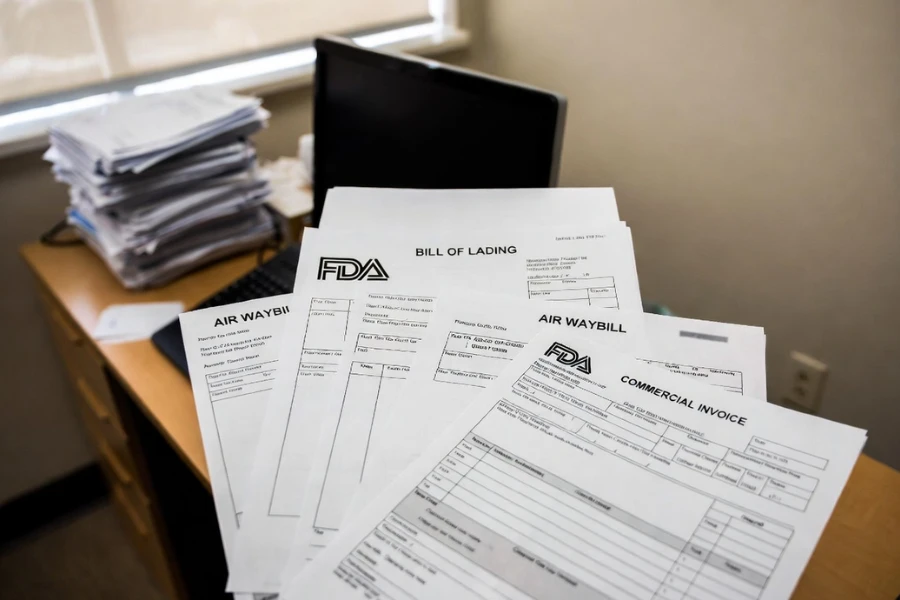
Suppliers must provide the transactional and logistical documentation necessary to confirm product identity, origin, and movement. This includes Bill of Lading (BOL) and Airway Bill (AWB) to document the mode of transport, alongside commercial invoices and purchase orders specifying product descriptions, quantities, and terms of transaction. For manual, non-ABI submissions, CBP forms 3461 or 7501 are required to support regulatory review. Providing complete commercial and shipping documentation is critical for all FDA-regulated imports, as the absence of these records can trigger a “Documents Required” status and delay product entry into the United States.
2. Product Identity and Technical Specifications
Documentation concerning product identity and technical specifications must be precise, comprehensive, and traceable to ensure regulatory authorities can verify compliance.
2.1 Component and Formulation Records
Suppliers are expected to submit a complete list of all substances used in manufacturing, including those not present in the final product, with each component clearly indicating its quality designation, such as USP, NF, ACS, or EP. For proprietary blends or custom materials, a complete composition statement is required. Batch formulas must detail the quantitative composition per unit dose, including any overages used to compensate for production losses or process variability.
2.2 Product Specifications and Analytical Methods

- Methods for active ingredient identification and content determination with acceptance criteria.
- Specifications for inactive components including potentially toxic substances, accompanied by validated analytical methods.
- Physical and chemical attributes such as appearance, pH, particle size, moisture content, viscosity, and other relevant properties.
- Dosage form-specific parameters including dissolution profiles, content uniformity, sterility, endotoxin levels, and residual ethylene oxide for sterilized plastics.
2.3 Intended Use and Labeling
Documentation must specify whether the product is intended for diagnostic, therapeutic, or preventive use in humans or animals and include label copies containing product name, manufacturer, intended use, and storage conditions.
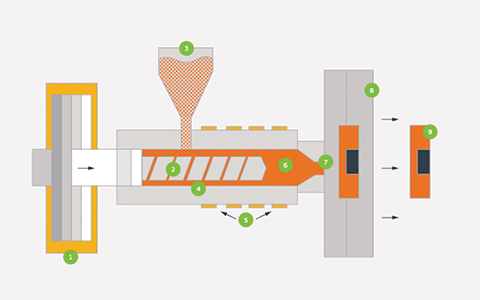
Suppliers like Seaskymedical provide integrated medical injection molding services, including in-house DFM support, cleanroom production, and traceable batch documentation to facilitate FDA submission compliance.
3. Manufacturing and Quality Process Control Documentation

Suppliers must provide detailed records that demonstrate consistent, reproducible manufacturing operations aligned with regulatory expectations.
3.1 Master Production Records and Process Descriptions
Records should provide a step-by-step account of each production operation, including equipment specifications, operating conditions, and points of in-process sampling. Schematic flow diagrams illustrating material paths, equipment, and sampling points are recommended to enhance clarity and traceability.
3.2 In-Process Controls and Rework Documentation
Documentation must include process control standards and analytical methods, supported by representative batch records. Rework procedures for non-conforming batches should detail deviations, corrective actions, storage conditions, and any supplementary stability data required by FDA for heat or mechanically altered materials. Minor rework, such as repackaging, may be justified with documented rationale.
3.3 Cleanroom and Environmental Control Records
For medical or pharmaceutical-grade products, suppliers should provide validated ISO-classified cleanroom records (ISO 7 or ISO 8), including monitoring of air filtration, differential pressure, temperature, and humidity. Procedures for personnel entry, gowning, and sterilization must be documented to confirm consistent process control.
3.4 Equipment and Process Capability Documentation
- Inventory of critical production and testing equipment with calibration and maintenance records.
- Design for Manufacturability (DFM) reports and Moldflow analyses demonstrating potential defect mitigation and process optimization.
- Mold validation and acceptance records, including T0/T1/T2 sample feedback loops.
Seaskymedical integrates equipment validation, DFM, and cleanroom controls into its workflow, providing robust documentation for FDA submission support.
4. Compliance and Certification Records
Suppliers must furnish evidence of compliance with quality management systems and applicable regulatory standards:
- ISO 13485 certification for medical devices or ISO 9001 for general manufacturing.
- FDA registration numbers for manufacturers and product listings.
- Internal or third-party audit reports, CAPA records, and change control documentation.
- Traceability records for raw materials and critical subcontractors.
- Product-specific compliance documentation, including biocompatibility testing, sterility assurance, and EO residual analysis.
5. Documentation for Specific FDA Submission Types
5.1 Import Entry (Customs Clearance)
In addition to commercial and shipping documentation, suppliers may be asked to provide:
- USDA permits for animal-derived materials
- Impact resistance or safety test results for applicable commodities
- Packing lists or growers’ lists for agricultural items
- Certificates of Analysis (COA) and statements identifying the actual manufacturer
- Documentation explaining returned U.S. goods
Preferred submission method is ITACS system upload, with local FDA office email, fax, or mail as alternatives.
5.2 Drug Marketing Applications (NDA/ANDA)
Suppliers should provide full component and formulation documentation, including manufacturer details, sampling plans ensuring batch representativeness, regulatory specifications, and analytical methods supporting FDA evaluation. Specific dosage forms require additional documentation covering dissolution, content uniformity, sterility, endotoxin levels, pH, viscosity, and particulate content, while placebos must demonstrate absence of active drug.
5.3 Investigational New Drug Applications (IND)
- Phase 1/2: assay methods, identification tests, uniformity, dissolution, sterility, particulate, and endotoxin evaluation for injectables.
- Phase 3: documentation approaching NDA detail, including comprehensive identity testing, assay methods, dissolution profiles, and reference standard support.
- Placebos: detailed description of controls to ensure absence of new drug substance and consistency with active product.
5.4 Medical Device Supplier Qualification
- Requirement definition documentation developed across quality, regulatory, technical, and procurement departments
- Supplier capability response documents with supporting evidence and product samples
- Supplier audit records with audit plan, checklists, on-site results, deviations, and corrective actions
- Periodic requalification records including performance monitoring, complaints, and delivery metrics
FAQ (Selected Examples)
Q1: What regulatory certifications are typically required for medical injection molded parts?
A1: ISO 13485 is essential, and U.S. distribution requires FDA registration and compliance with 21 CFR Part 820. ISO 14644 or ISO 10993 may also be necessary depending on the product.
Q2: Can suppliers without a cleanroom rely solely on post-molding sterilization?
A2: Only for low-risk components. High-risk or implantable devices must use cleanrooms during molding. Process control is preferred over endpoint sterilization.
Q3: Can a Drug Master File (DMF) be referenced during the IND phase?
A3: Yes, with written authorization, specific reference sections, and applicability confirmation.
Q4: Are dissolution data required for solid oral dosage forms?
A4: NDA/ANDA submissions require dissolution testing. Phase 3 IND submissions also require in vitro dissolution methods and acceptance criteria.
Q5: If analytical methods differ from USP/NF, will FDA accept them?
A5: FDA may accept alternative methods if equivalent or superior, with supporting validation data. Acceptance limits must not exceed pharmacopeial standards unless indicated on the label.
Q6: Are stability studies needed for reprocessed batches?
A6: If reprocessing involves heat, mixing, or mechanical alteration, accelerated stability data should be submitted. Minor physical rework may be justified with documentation.