A Manufacturer of Record (MoR) is the legal entity that regulatory authorities recognize as responsible for a medical device.
This responsibility applies regardless of how many suppliers or manufacturing partners participate in design, molding, assembly, or packaging through a distributed medical device contract manufacturing model.
In U.S. regulatory practice, the FDA relies on the Manufacturer of Record as the single accountable party when reviewing compliance, investigating quality issues, or evaluating post-market performance.
What Manufacturer of Record means in medical manufacturing
The Manufacturer of Record is defined by regulatory accountability, not by manufacturing volume or technical capability.
It is the organization identified in regulatory filings and quality system documentation as responsible for the finished device.
A Manufacturer of Record typically:
- Is named in device registration and submission records
- Maintains the primary quality management system
- Owns responsibility for design controls and risk management
- Acts as the official interface with regulatory authorities
The role exists to provide a clear and traceable point of responsibility within complex supply chains.
How the Manufacturer of Record model is applied in practice
Most medical devices are produced through distributed manufacturing models.
Tooling development, mold making, plastic injection molding, secondary processing, assembly, and packaging are often handled by different suppliers.
Within this structure, responsibility flows as follows:
- The Manufacturer of Record retains ownership of regulatory compliance
- External suppliers execute defined manufacturing or processing steps
- Quality oversight, change control, and documentation remain centralized
Suppliers operate under controlled agreements, but they do not assume regulatory ownership of the device.rolled agreements, but they do not assume regulatory ownership of the device.
How regulatory responsibility differs from manufacturing activities
The Manufacturer of Record model is based on a responsibility structure, not a manufacturing sequence.
Understanding this distinction is critical when structuring supplier relationships.
Typical responsibility allocation includes:
- Design and risk management under the Manufacturer of Record
- Process execution under qualified OEM medical component suppliers
- Final release authority retained by the Manufacturer of Record
This structure allows manufacturing flexibility while preserving regulatory clarity.
Manufacturer of Record and contract manufacturers have different roles
Contract manufacturers and component suppliers are often involved in medical device production.
Their roles differ fundamentally from that of the Manufacturer of Record.
Manufacturer of Record and contract manufacturers have different roles
Contract manufacturers and component suppliers are often involved in medical device production.
Their roles differ fundamentally from that of the Manufacturer of Record.
| Role | Primary function |
|---|---|
| Manufacturer of Record | Regulatory accountability and compliance ownership |
| Contract manufacturer | Execution of defined manufacturing processes |
| Component supplier | Production of individual parts or materials |
Where product ownership and process IP are often separated
Product ownership does not always align fully with the Manufacturer of Record role.
External suppliers may retain intellectual property related to tooling, processes, or specialized manufacturing methods.
Common IP scenarios include:
- Molds owned by a molding supplier using free mold tool design support
- Proprietary insert molding or overmolding processes
- Process parameters protected as supplier know-how
If these boundaries are not clearly defined, future design changes or supplier transitions can become constrained.
Clear contractual allocation of IP rights is therefore a critical part of Manufacturer of Record planning.
How device classification affects Manufacturer of Record responsibility
The Manufacturer of Record is responsible for determining the regulatory classification of a device.
In the United States, devices are categorized as Class I, II, or III based on risk.
As classification increases, so does responsibility.
Higher-risk devices typically require more extensive design controls and verification and validation activities, all of which fall under the Manufacturer of Record’s authority.
Suppliers may support these activities, but final accountability remains centralized.
Why contracts define Manufacturer of Record responsibilities
Formal contracts underpin the Manufacturer of Record model.
They define how responsibility is managed across organizational boundaries.
Effective agreements typically address:
- Scope of manufacturing and inspection activities
- Quality system interfaces and audit rights
- Change control and escalation procedures
- Ownership of tooling, data, and documentation
Clear definition of medical device assembly and packaging responsibilities supports regulatory compliance and reduces long-term operational risk.
Benefits of clearly defining the Manufacturer of Record
Establishing a clear Manufacturer of Record is commonly used in regulated medical manufacturing.
It provides structure in multi-supplier environments.
Key benefits include:
- Unambiguous regulatory accountability
- Consistent quality system governance
- Controlled management of design and process changes
These benefits are especially relevant for medical plastic injection molding programs involving disposable or high-volume devices.
Operational challenges to consider when acting as Manufacturer of Record
The Manufacturer of Record model also introduces constraints.
Responsibility concentration requires mature internal systems.
Common challenges include:
- Increased documentation and review workload
- Dependence on supplier process consistency
- Ongoing oversight of external manufacturing partners
These factors should be evaluated early in product development.
Where the Manufacturer of Record model is commonly used
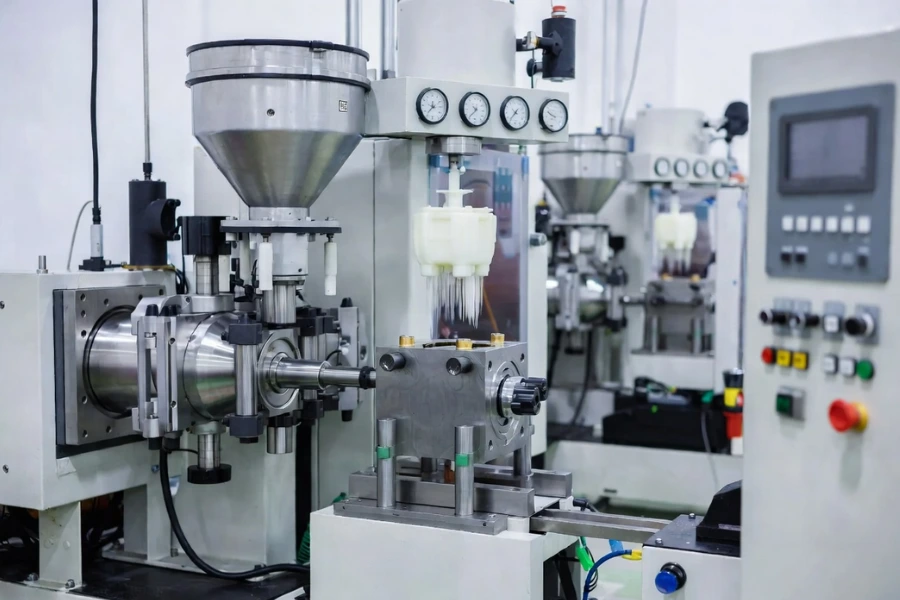
The Manufacturer of Record model is typically applied in:
- Medical plastic injection molded components
- Disposable medical and laboratory consumables
- Devices with outsourced molding or assembly steps
- OEM medical device manufacturing programs
In these applications, the Manufacturer of Record often works with specialized partners for cleanroom injection molding or micro-scale manufacturing.
Organizations such as SeaSkyMedical are commonly engaged as qualified manufacturing partners, supporting regulated production while operating within a defined Manufacturer of Record framework.
Key points to consider when defining a Manufacturer of Record
The Manufacturer of Record is a regulatory role, not a manufacturing technique.
Understanding this distinction allows medical device companies to design supply chains that are both compliant and scalable.
When planning medical injection molding, cleanroom manufacturing, or prototype-to-production transitions, defining Manufacturer of Record responsibilities early helps reduce regulatory and operational uncertainty through structured product development support.
Contact SeaSkyMedical for more information.mation.