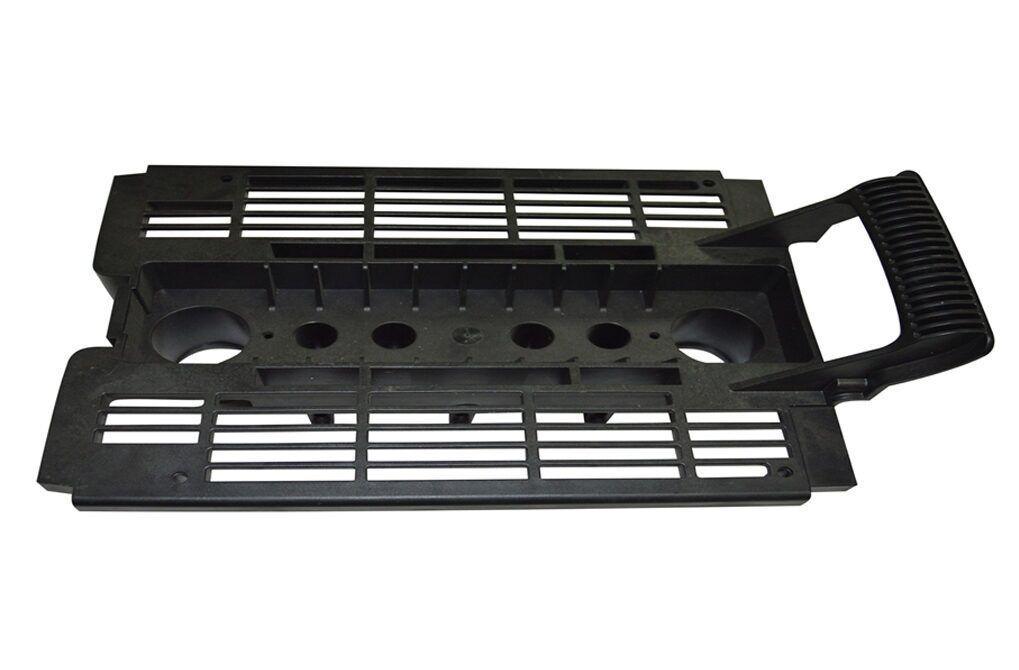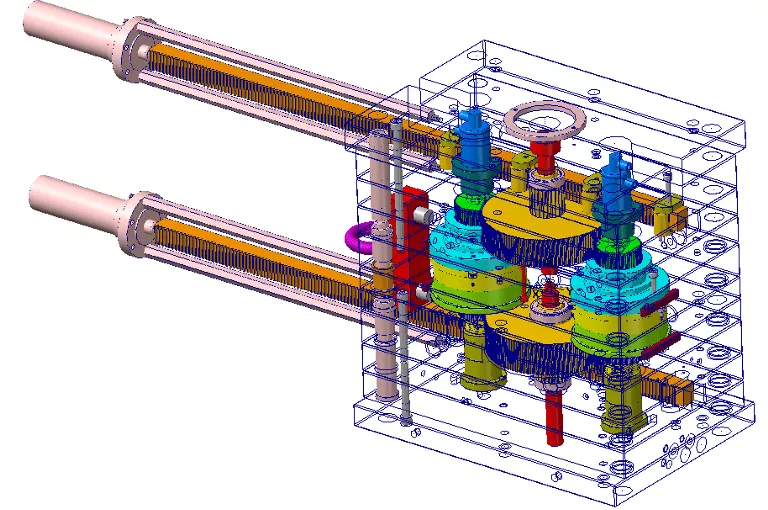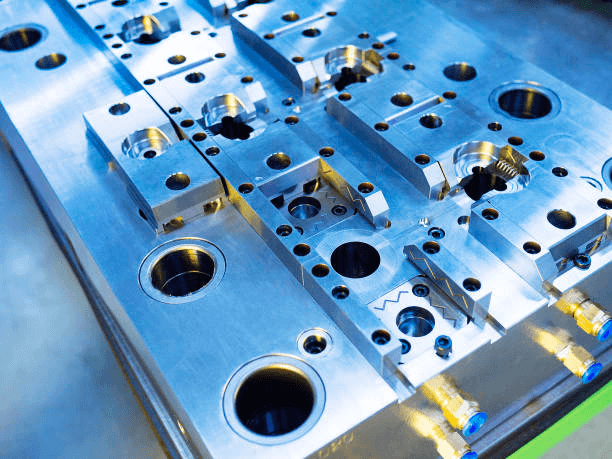
Reusable medical devices face a unique material challenge. Unlike disposable products, these devices must maintain their performance after repeated cycles of cleaning, disinfection, and sterilization throughout their service life.
High-temperature steam sterilization, especially autoclave processing at 121°C or 134°C, exposes medical plastics to a combination of thermal stress, moisture, pressure, and chemical exposure. A material that performs well in its original condition may gradually lose toughness, dimensional stability, or mechanical reliability after repeated cycles.
For medical device engineers and OEM sourcing teams, selecting the right polymer requires more than comparing individual material properties. The selected material must balance sterilization resistance, mechanical performance, manufacturing feasibility, and long-term production reliability.
PPSU medical plastic has become a preferred choice for many reusable medical devices because it combines excellent hydrolysis resistance, high-temperature stability, impact toughness, chemical resistance, and injection molding capability. These characteristics allow PPSU components to maintain reliable performance in demanding healthcare environments.
For manufacturers developing reusable medical components, material selection is closely connected with production capability. Processes such as medical plastic injection molding require careful control of tooling, molding parameters, and quality systems to achieve consistent results.
Why Repeated Sterilization Is Difficult for Medical Plastics
Sterilization performance is one of the most important considerations when selecting materials for reusable medical equipment.
A reusable medical device may experience hundreds of reprocessing cycles involving:
- Cleaning agents
- Disinfectants
- High-temperature steam
- Mechanical handling
- Repeated thermal cycling
The challenge is not surviving a single sterilization process. The challenge is maintaining consistent performance throughout the expected product lifecycle.
Common failure mechanisms include:
| Failure Mode | Root Cause | Potential Impact |
|---|---|---|
| Loss of toughness | Polymer aging and hydrolysis | Cracking during handling or use |
| Dimensional change | Thermal cycling and material stress | Assembly problems or poor fit |
| Surface degradation | Chemical exposure | Reduced appearance and service life |
| Mechanical property reduction | Long-term environmental stress | Lower device reliability |
For example, a surgical instrument handle may pass initial testing after molding, but if the polymer becomes brittle after repeated autoclave exposure, the risk of cracking during clinical use increases.
Therefore, medical OEM teams evaluate sterilization-resistant plastics based on long-term property retention rather than initial material strength alone.
How PPSU Reduces Sterilization-Related Failure Risks
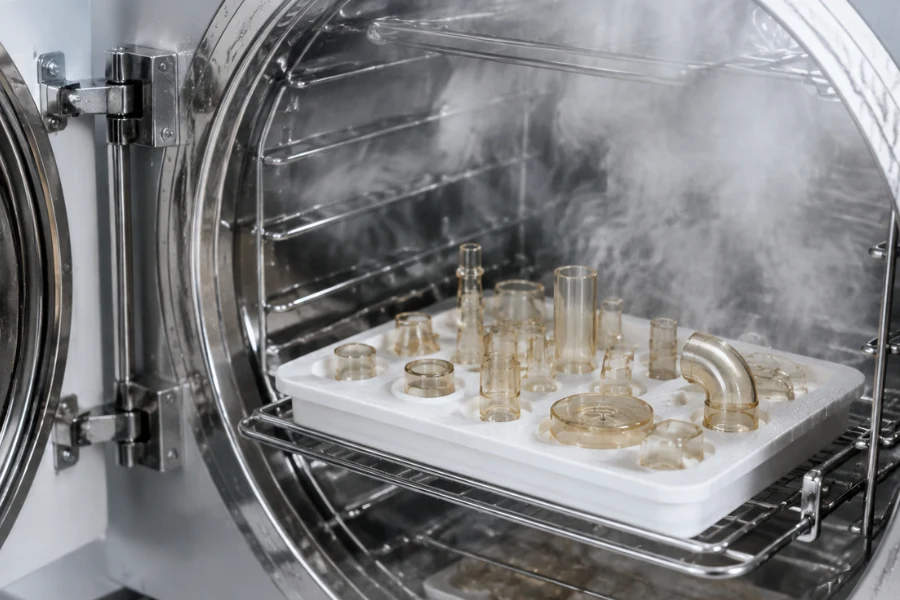
PPSU, also known as polyphenylsulfone, is an amorphous high-performance thermoplastic designed for applications requiring thermal stability, toughness, and chemical resistance.
Its value in medical manufacturing comes from how these properties work together during repeated reprocessing.
Hydrolysis Resistance Under Repeated Steam Exposure
Hydrolysis resistance is one of the primary reasons PPSU is selected for reusable medical applications.
During steam sterilization, polymers are exposed to high-temperature moisture. Over time, less stable materials may experience molecular changes that reduce toughness and mechanical performance.
PPSU provides strong resistance to hydrolytic degradation, allowing components to maintain their structural integrity after repeated exposure to hot water and steam.
This helps reduce common sterilization-related problems:
- Brittle fracture
- Reduced impact resistance
- Premature component replacement
- Performance variation during service life
Medical-grade PPSU materials are commonly used in applications requiring repeated autoclave sterilization. Some resin suppliers publish testing data showing excellent performance after hundreds or more than 1,000 sterilization cycles under defined conditions.
However, actual component life depends on multiple factors, including:
- Sterilization temperature
- Cycle frequency
- Part geometry
- Mechanical loading
- Cleaning procedures
Material selection should therefore consider the complete operating environment rather than relying only on laboratory cycle data.
Thermal Stability During Autoclave Sterilization
Repeated exposure to elevated temperature can cause dimensional changes and mechanical degradation in unsuitable polymers.
PPSU provides a high thermal performance margin, with a glass transition temperature above 200°C and long-term service capability around 180°C.
This allows PPSU components to withstand common autoclave conditions of 121°C and 134°C while maintaining functional stability.
For precision medical components, thermal resistance alone is not enough. Engineers must also consider:
- Dimensional retention
- Assembly accuracy
- Sealing performance
- Mechanical movement
A reusable medical component that changes dimension after sterilization may affect the entire device assembly.
Because PPSU is an amorphous thermoplastic, it provides predictable dimensional behavior compared with many semi-crystalline polymers that may experience greater structural changes during thermal cycling.
Mechanical Performance Retention After Repeated Sterilization Cycles
Reusable medical devices are exposed to repeated mechanical stress throughout their service life. Components may experience gripping forces, impact during handling, repeated assembly operations, and transportation between clinical environments.
For this reason, material selection cannot focus only on initial strength values. The more important consideration is whether the polymer can maintain toughness and structural reliability after long-term sterilization exposure.
PPSU provides excellent impact resistance and toughness compared with many conventional engineering plastics. Even after repeated exposure to high-temperature steam, PPSU can maintain mechanical performance required for demanding reusable applications.
A typical failure chain in reusable medical components may occur as follows:
Repeated sterilization exposure
↓
Material aging or moisture-related degradation
↓
Loss of toughness
↓
Increased stress concentration sensitivity
↓
Cracking or premature failure during use
PPSU helps interrupt this failure chain by maintaining better mechanical stability under repeated thermal and moisture exposure.
This characteristic is especially valuable for:
- Surgical instrument handles
- Sterilization trays
- Medical equipment housings
- Reusable connectors and components
For OEM engineers, the advantage of PPSU is not simply achieving high mechanical properties at the beginning of production. The greater value is maintaining predictable performance throughout the device lifecycle.
Chemical Resistance During Medical Reprocessing
Reusable medical devices typically go through multiple stages before returning to clinical use.
A common workflow includes:
- Cleaning
- Chemical disinfection
- Rinsing
- Steam sterilization
- Repeated reuse
Each stage introduces different material challenges.
A polymer that performs well under autoclave conditions may still experience degradation when exposed to cleaning chemicals over hundreds of cycles.
PPSU demonstrates strong resistance to many chemicals commonly used in healthcare environments, including acids, bases, hydrogen peroxide-based solutions, and other disinfectants.
This chemical stability helps protect medical components from:
- Surface degradation
- Stress cracking
- Loss of mechanical properties
- Reduced service life
However, chemical compatibility should always be evaluated according to the actual device environment. Factors such as concentration, exposure time, temperature, and mechanical stress can influence long-term material behavior.
For medical device projects involving multiple materials and manufacturing processes, professional medical material selection helps engineers evaluate performance requirements, processing conditions, and lifecycle considerations together.
PPSU vs Other Medical Plastics: How OEM Engineers Make the Right Choice
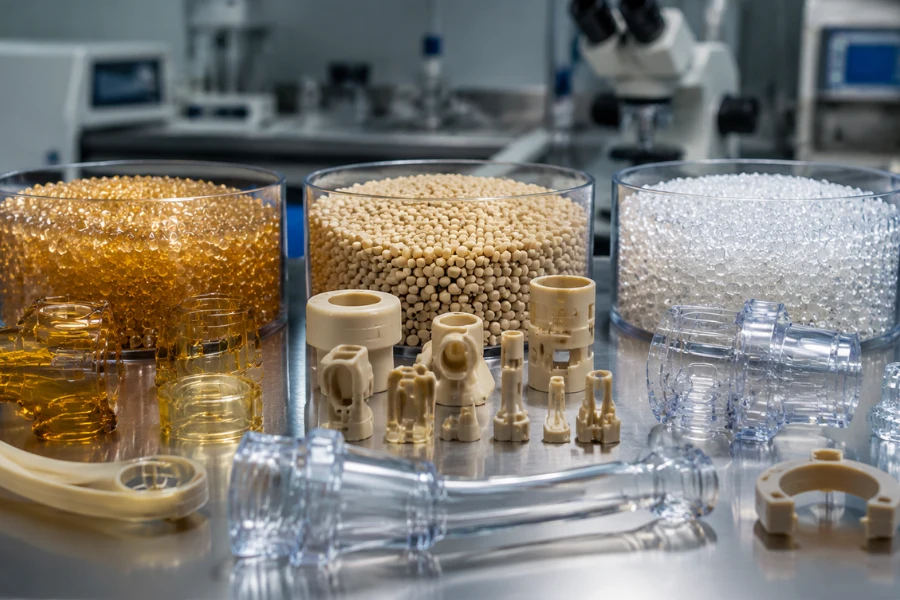
PPSU is not automatically the best choice for every medical device. The correct material depends on the application requirements, sterilization method, manufacturing process, and cost target.
For reusable medical devices, engineers usually evaluate several factors together:
- Sterilization cycle requirements
- Mechanical loading conditions
- Chemical exposure
- Dimensional stability
- Production volume
- Regulatory considerations
A high-performance polymer should not only meet technical requirements but also support reliable manufacturing at production scale.
| Material | Sterilization Performance | Mechanical Performance | Processing Considerations | Typical Applications |
|---|---|---|---|---|
| PPSU | Excellent resistance to repeated steam sterilization | High toughness and impact resistance | Requires controlled high-temperature injection molding | Reusable surgical instruments, sterilization trays, medical housings |
| PEEK | Excellent thermal and chemical resistance | Superior mechanical performance | Higher processing temperature and cost | Extreme performance medical applications |
| PC | Good transparency and strength | Good initial mechanical properties | Easier processing but lower long-term steam resistance | Transparent medical components |
| PSU | Good sterilization resistance | Stable rigidity and dimensional performance | Moderate processing requirements | Medical housings and fluid components |
| PEI | Good high-temperature capability | High stiffness and strength | Requires experienced molding control | High-temperature engineering components |
When PPSU Is Preferred Over PC
Polycarbonate is widely used in medical applications because of its transparency, impact resistance, and relatively easy processing characteristics.
However, repeated steam sterilization can become a limiting factor depending on the application requirements.
PPSU is often preferred when the component requires:
- Frequent autoclave exposure
- Long service life
- Higher impact resistance
- Better mechanical retention after sterilization
For transparent components where visual inspection is the primary requirement, PC may still be a suitable option.
The decision depends on the dominant design requirement. If optical clarity is the priority, PC may provide advantages. If repeated sterilization durability is the primary concern, PPSU often provides a stronger balance.
When PPSU Is Preferred Over PEEK
PEEK provides exceptional mechanical performance, chemical resistance, and temperature capability. It is often selected for applications where extreme performance justifies higher material cost.
However, many reusable medical devices do not require the maximum performance level provided by PEEK.
PPSU can provide a more balanced solution when manufacturers need:
- Reliable steam sterilization resistance
- High impact toughness
- Injection molding scalability
- Lower material cost compared with PEEK
For many reusable medical components, PPSU offers a practical balance between engineering performance and manufacturing feasibility.
Medical Compliance Considerations for PPSU Components
Material selection for medical devices involves more than mechanical and thermal performance.
Medical-grade PPSU materials may be supplied with supporting documentation related to:
- Biocompatibility evaluation
- Material certification
- Chemical resistance data
- Regulatory documentation
For applications involving patient contact, manufacturers must evaluate material suitability based on the complete device design and intended use.
It is important to understand that material documentation alone does not automatically mean the finished medical device meets all regulatory requirements.
Final device compliance depends on:
- Device design
- Manufacturing process
- Intended application
- Sterilization method
- Validation strategy
For medical OEM teams, material selection should be evaluated together with product development, manufacturing capability, and quality requirements.
PPSU Applications in Reusable Medical Devices
PPSU is widely used in medical components where repeated sterilization, durability, and manufacturing flexibility are critical.
Surgical Instrument Handles and Components
Surgical instrument handles are one of the common applications for PPSU because they must withstand frequent autoclave cycles while maintaining mechanical reliability.
These components require:
- High impact resistance
- Stable dimensions after sterilization
- Resistance to cleaning chemicals
- Comfortable ergonomic designs
Compared with traditional metal components, PPSU provides opportunities for lightweight designs and more complex geometries through injection molding.
For OEM manufacturers developing reusable surgical products, PPSU components often require close coordination between material selection, tooling design, and production processes.
Sterilization Trays and Instrument Holders
Sterilization trays operate under repeated exposure to heat, moisture, chemicals, and mechanical handling.
They require materials that can maintain:
- Structural integrity
- Chemical resistance
- Dimensional stability
- Long service life
PPSU provides a lightweight alternative to traditional metal solutions while maintaining the durability required for repeated hospital workflows.
Medical Housings and Fluid Handling Components
Reusable medical equipment often includes housings, connectors, adapters, and fluid pathway components that must maintain performance after repeated cleaning and sterilization.
PPSU supports these applications through:
- High chemical resistance
- Stable mechanical performance
- Precision molding capability
- Design flexibility
For complex medical components, consistent manufacturing quality is as important as the material properties themselves.
Manufacturers producing customized reusable medical components often combine material expertise with OEM medical components manufacturing capabilities to support the transition from design concepts to production-ready parts.
Injection Molding Considerations for PPSU Medical Components
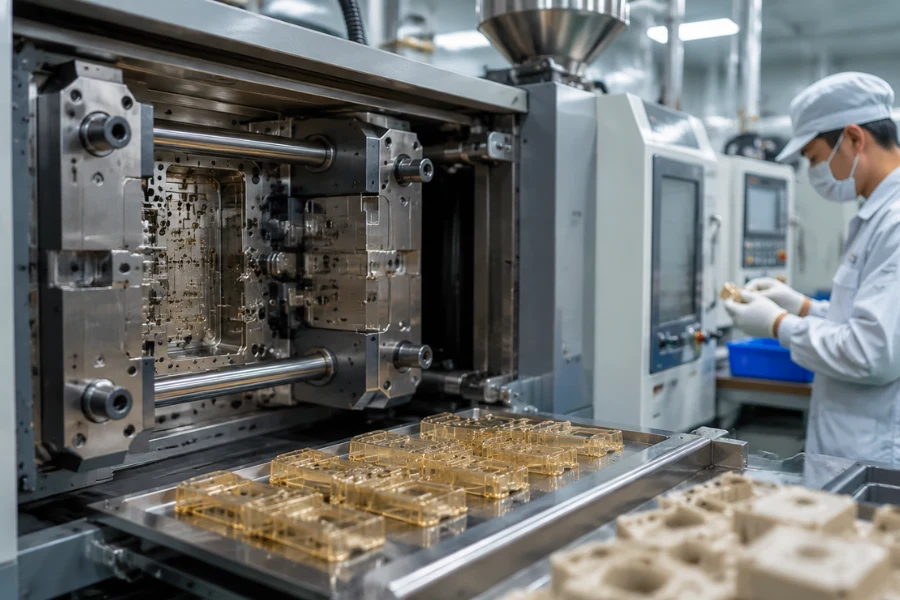
PPSU provides excellent performance for reusable medical devices, but achieving consistent part quality requires more than selecting the correct resin grade.
The final performance of PPSU components depends on the interaction between:
- Material preparation
- Injection molding parameters
- Tooling design
- Dimensional control
- Process validation
A high-performance polymer can only deliver its expected properties when the manufacturing process is stable and repeatable.
Material Drying and Moisture Control
PPSU is a hygroscopic thermoplastic, meaning it can absorb moisture from the surrounding environment.
Before molding, proper drying is required to prevent moisture-related defects and maintain material performance.
Insufficient drying may contribute to:
- Surface splay marks
- Internal voids
- Reduced mechanical properties
- Inconsistent appearance
For medical components, these defects are not only cosmetic concerns. Internal material degradation can influence long-term reliability after repeated sterilization cycles.
A controlled PPSU molding process typically includes:
- Proper resin storage conditions
- Defined drying parameters
- Moisture exposure management
- Consistent material handling procedures
Maintaining resin condition before processing helps improve production repeatability and reduce variation between manufacturing batches.
High-Temperature Processing and Process Window Control
Compared with common medical plastics such as PP, ABS, and standard PC grades, PPSU requires higher processing temperatures.
The molding process must carefully control:
- Melt temperature
- Injection speed
- Injection pressure
- Residence time
- Mold temperature
- Cooling conditions
The goal is not simply to fill the mold cavity. The process must create components with stable mechanical properties, predictable dimensions, and consistent surface quality.
Poor process control may lead to:
| Manufacturing Issue | Possible Cause | Production Impact |
|---|---|---|
| Short shot | Insufficient melt flow or unsuitable parameters | Incomplete component geometry |
| Surface defects | Moisture or processing instability | Appearance and quality concerns |
| Internal stress | Improper filling or cooling conditions | Reduced long-term reliability |
| Material degradation | Excessive heat exposure | Lower mechanical performance |
Because PPSU components are often used in demanding medical applications, maintaining a stable processing window is essential.
Mold Design and DFM Considerations for PPSU Parts
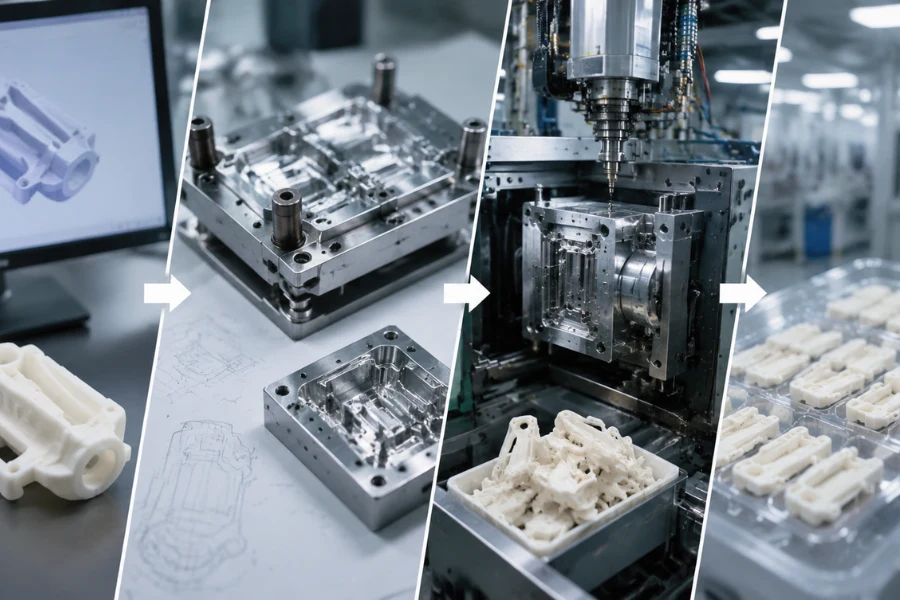
Tooling design has a direct influence on PPSU component quality, especially for medical parts that must maintain dimensional accuracy after repeated sterilization cycles.
Because PPSU requires high-temperature processing and is often used for precision reusable medical devices, mold design should be evaluated during the early development stage rather than after production issues occur.
A proper medical mold making strategy helps manufacturers achieve:
- Stable cavity performance
- Consistent part dimensions
- Repeatable production quality
- Reduced molding risks
Gate Design and Flow Balance
Gate location affects:
- Melt flow behavior
- Weld line position
- Mechanical consistency
- Surface appearance
For reusable medical components, weld lines and stress concentration areas require careful evaluation because these regions may experience additional mechanical loading during clinical use.
A well-designed gating system helps improve filling consistency and reduces the possibility of weak areas within the molded component.
Wall Thickness and Cooling Design
Uniform wall thickness is an important DFM consideration for PPSU medical parts.
Poor geometry design may contribute to:
- Uneven cooling
- Residual stress
- Warpage
- Dimensional variation
For components requiring repeated sterilization, dimensional stability is especially important because even small changes may influence:
- Assembly accuracy
- Connector fit
- Sealing performance
- Functional movement
Early free mold tool design support allows engineering teams to identify potential manufacturing challenges before investing in production tooling.
Tooling Materials and Mold Maintenance
PPSU processing temperatures create additional requirements for tooling systems.
Important considerations include:
- Appropriate mold steel selection
- Thermal stability of the tooling system
- Cavity consistency
- Preventive maintenance planning
For medical production, tooling performance directly affects:
- Part repeatability
- Validation stability
- Long-term manufacturing reliability
A production mold is not only a manufacturing tool. It is a critical factor in maintaining consistent medical component quality over time.
Prototype to Production Considerations
Successful medical device development requires a controlled transition from prototype evaluation to full-scale production.
A typical development workflow includes:
Prototype molding
↓
Design verification
↓
DFM optimization
↓
Production tooling development
↓
Process qualification
↓
Mass production
During this transition, engineering teams must evaluate whether the PPSU design can be manufactured consistently at production scale.
Prototype success does not always guarantee production success because mass production introduces additional considerations, including:
- Tooling repeatability
- Cycle time optimization
- Process capability
- Inspection requirements
- Production documentation
Early manufacturing involvement helps identify potential risks before significant tooling investment.
For early-stage medical product development, combining design evaluation with 3D prototype printing can help teams verify concepts, evaluate ergonomics, and identify design improvements before production tooling begins.
Process Validation and Traceability for PPSU Medical Manufacturing
In medical device manufacturing, producing a functional prototype is only the beginning. Production processes must demonstrate repeatability, control, and traceability.
For PPSU medical components, manufacturers may establish:
- Documented molding parameters
- Material lot traceability
- Inspection procedures
- Process monitoring
- Validation records
Validation activities such as IQ, OQ, and PQ help demonstrate that the manufacturing process can consistently produce components according to defined requirements.
Installation Qualification (IQ)
IQ confirms that equipment, tooling, and production systems are installed correctly according to established specifications.
Operational Qualification (OQ)
OQ evaluates whether the molding process operates consistently within defined processing parameters.
Performance Qualification (PQ)
PQ confirms that the production process can repeatedly manufacture acceptable parts under normal production conditions.
For reusable medical devices, validation is closely connected with material selection because changes in resin grade, tooling design, or molding parameters may influence final device performance.
Medical manufacturers often integrate validation planning with broader medical device contract manufacturing strategies to ensure that product development, production, and quality requirements are aligned.
Common PPSU Injection Molding Challenges
Although PPSU provides excellent material performance, manufacturers should consider several production challenges.
Residual Stress Management
Improper filling or cooling conditions may create internal stress within molded parts.
Over time, residual stress combined with repeated sterilization exposure can contribute to:
- Cracking
- Dimensional instability
- Reduced service life
Optimizing molding parameters, cooling design, and part geometry helps reduce these risks.
Tight Dimensional Requirements
Reusable medical devices often require components to maintain precise dimensions after repeated sterilization.
Engineering teams should evaluate:
- Critical dimensions
- Assembly tolerances
- Functional requirements
- Sterilization effects
Dimensional control should be addressed during tooling development rather than corrected after production begins.
How OEMs Should Evaluate PPSU for Medical Device Projects
Choosing PPSU should involve a complete product lifecycle evaluation.
A practical material selection process includes:
1. Evaluate Sterilization Requirements
Determine:
- Sterilization method
- Temperature conditions
- Expected cycle quantity
- Cleaning chemical exposure
PPSU is especially suitable when repeated steam sterilization is a primary design requirement.
2. Review Mechanical Requirements
Consider:
- Impact resistance
- Repeated loading
- Assembly forces
- Long-term durability
Reusable devices require stable performance throughout their expected service life.
3. Confirm Manufacturing Feasibility
Material selection should include production capability evaluation.
OEM teams should consider:
- Injection molding experience
- Tooling capability
- Quality control systems
- Production scalability
The best material choice must be technically suitable and commercially manufacturable.
4. Consider Regulatory and Quality Requirements
Review:
- Medical-grade material documentation
- Biocompatibility information
- Quality system requirements
- Validation strategy
For patient-contacting applications, medical-grade PPSU may include supporting documentation related to biocompatibility testing, such as ISO 10993 evaluations. However, final device compliance depends on the complete product design, manufacturing process, and intended use.
FAQ
Why is PPSU considered an ideal plastic for repeated sterilization?
PPSU combines high-temperature stability, hydrolysis resistance, impact toughness, and chemical resistance. These properties allow reusable medical components to maintain reliable performance after repeated cleaning and sterilization cycles.
How does PPSU compare with PEEK for medical applications?
PEEK provides higher overall mechanical and chemical performance for extreme applications but usually involves higher material cost and more demanding processing requirements. PPSU offers a balanced solution for many reusable medical devices requiring repeated sterilization resistance and injection molding capability.
Can PPSU medical components be injection molded?
Yes. PPSU can be processed through injection molding, but it requires controlled drying, high-temperature processing capability, suitable tooling design, and experienced manufacturing control.
Does PPSU automatically meet medical device requirements?
No. Medical-grade PPSU materials may include supporting documentation such as biocompatibility information and material certification. Final medical device compliance depends on the complete device design, manufacturing process, intended use, and regulatory evaluation.
What factors affect PPSU sterilization performance?
Actual performance depends on sterilization temperature, cycle frequency, component design, mechanical loading, chemical exposure, and manufacturing quality.
Conclusion
PPSU medical plastic is widely selected for reusable medical devices because it provides a strong balance between sterilization resistance, mechanical durability, chemical stability, and manufacturing feasibility.
Its resistance to hydrolysis, high-temperature performance, impact toughness, and dimensional stability allow PPSU components to operate reliably in demanding clinical environments.
However, successful PPSU implementation requires more than selecting a high-performance polymer. Medical OEM teams must also consider injection molding conditions, tooling design, DFM principles, process validation, and long-term production control.
For medical device manufacturers, the most effective material choice is not always the highest-performance polymer. It is the material that provides the right balance between reliability, manufacturability, lifecycle performance, and cost.
SeaSkyMedical supports medical device companies with medical plastic injection molding, precision tooling, DFM analysis, prototype development, and scalable manufacturing solutions designed for reliable medical applications.
By combining material knowledge with manufacturing expertise, OEM teams can develop reusable medical devices that perform consistently throughout their intended service life.