Process validation in medical injection molding is the documented demonstration that a molding process can consistently produce parts meeting defined quality requirements under actual manufacturing conditions.
It’s applied when final inspection alone can’t fully verify product quality, which is common for medical devices and medical consumables. Validation focuses on process control and repeatability, not sample approval.
How medical injection molding process validation works
Medical injection molding process validation is typically structured around three formal qualification stages. These stages are executed in sequence and supported by approved protocols and controlled records.
The objective is to confirm that the process is correctly installed, operates within defined limits, and remains stable during routine production.
Installation Qualification (IQ)
Installation Qualification verifies that all equipment, tooling, and supporting systems are installed and configured according to defined requirements.
IQ commonly includes verification of:
- Injection molding machines and control software
- Mold installation, identification, and configuration
- Auxiliary equipment such as dryers, chillers, and mold temperature controllers
- Calibration status and preventive maintenance records
- Cleanroom classification, temperature, and humidity
- Utilities, safety features, and approved documentation
IQ answers a fundamental question. Is the manufacturing environment correctly set up before process testing begins.
SeaSkyMedical typically aligns IQ activities with upstream tooling readiness, including mold making and mold setup documentation.
Operational Qualification (OQ)
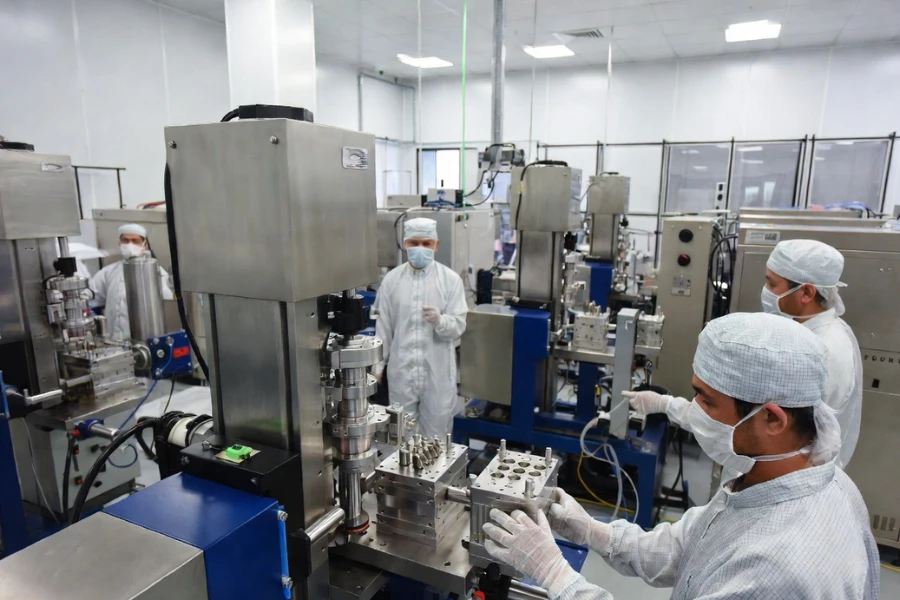
Operational Qualification establishes the acceptable operating window for the molding process.
During OQ, critical process parameters are intentionally challenged at defined low, nominal, and high settings to confirm that parts remain within specification across normal process variation.
Typical OQ activities include:
- Identification of critical process parameters (CPPs)
- Correlation of CPPs to critical quality attributes (CQAs)
- Controlled variation of temperature, pressure, speed, and timing
- Definition of process limits and alarm thresholds
- Confirmation of standard operating conditions
In practice, OQ is the stage where process weaknesses are most often exposed. A process window that appears acceptable during short runs may prove too narrow for stable production if CPPs are incorrectly defined or insufficiently challenged.
OQ planning is commonly tighter when the production route is clearly defined early, especially for programs that move from development into medical plastic injection molding.
Performance Qualification (PQ)
Performance Qualification confirms that the validated process performs consistently during routine production conditions.
PQ is conducted using process settings defined during OQ and typically involves extended production runs across multiple lots or time periods.
Common PQ elements include:
- Multiple production runs or shifts
- Use of different raw material batches
- Dimensional and visual inspection using defined sampling plans
- Evaluation of process stability and capability
PQ demonstrates repeatability over time. It does not correct design limitations, tooling constraints, or unrealistic tolerances identified earlier in the project.
In medical programs, PQ expectations are often tied to environmental controls. For parts that require controlled particulate levels, PQ is typically executed under planned conditions such as cleanroom injection molding.
Supporting activities before IQ, OQ, and PQ
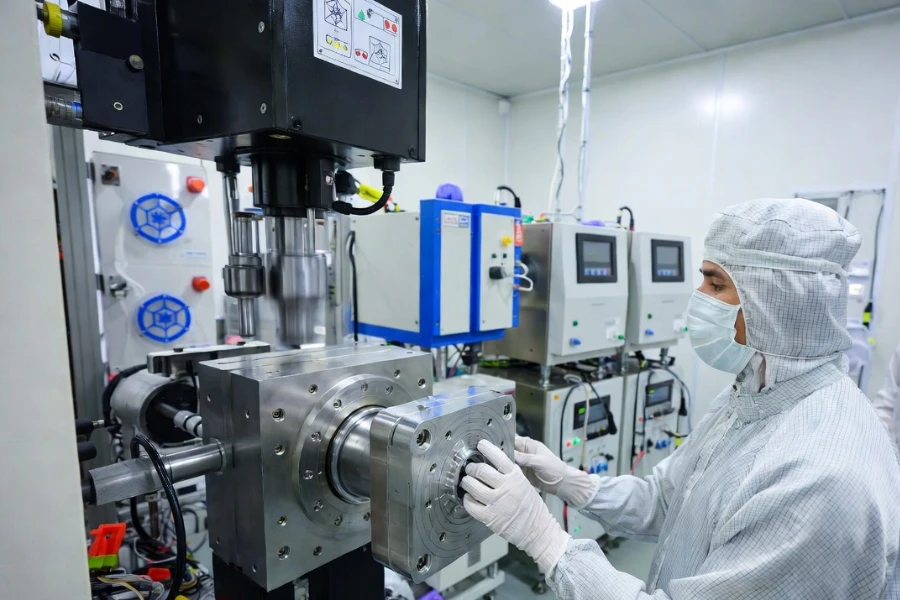
In practice, effective validation begins before formal qualification.
Most medical injection molding programs include preparatory activities that reduce risk during OQ and PQ and help prevent repeated validation cycles.
These activities commonly include:
- Process characterization through controlled trial runs
- Scientific injection molding techniques to establish baseline behavior
- Design of Experiments to identify sensitive variables
- Early definition of inspection methods and acceptance criteria
When these steps are incomplete or rushed, OQ frequently expands in scope or must be repeated due to unstable or poorly defined process limits.
For many projects, these preparatory steps start during product development and may include early iteration support such as 3D prototype printing. Tooling decisions also matter at this stage, which is why some programs benefit from early free mold tool design input before validation protocols are finalized.
Typical documentation used during validation
Medical injection molding validation relies on controlled documentation to support traceability, audit readiness, and change control.
Common validation documents include:
| Document type | Purpose |
|---|---|
| Validation Master Plan | Defines validation scope, strategy, and responsibilities |
| IQ, OQ, PQ protocols | Specify test methods and acceptance criteria |
| IQ, OQ, PQ reports | Record results, deviations, and approvals |
| Process FMEA | Identifies process risks and mitigation actions |
| Calibration and training records | Support data integrity and repeatability |
In audits, protocol adherence and data traceability are typically reviewed more closely than document quantity.
Advantages and limitations of process validation
Advantages
- Demonstrates process repeatability and control
- Reduces long-term production and quality risk
- Supports regulatory and customer audits
- Identifies design or tooling issues early
Limitations
- Requires upfront time, material, and engineering resources
- Depends on accurate definition of CPPs and CQAs
- Cannot compensate for poor part design or unrealistic tolerances
Process validation confirms process capability. It does not replace design optimization.
Where process validation is typically applied
Process validation is commonly required for:
- Medical device components and housings
- Medical consumables and disposable products
- Laboratory consumables and fluid path parts
- Micro injection molded components with tight tolerances
- Insert molding and overmolding assemblies
Programs that include multi-step supply requirements often connect validation deliverables to downstream needs such as OEM medical components and broader medical device contract manufacturing.
Higher product risk generally corresponds to stricter validation expectations.
Process validation in a production environment
In production programs, validation outcomes are closely tied to decisions made during design, tooling development, and material selection.
At SeaSkyMedical, validation activities are integrated with mold design, cleanroom manufacturing planning, and inspection strategy. Secondary steps are also considered early because they can change part handling and acceptance criteria.
Depending on the device, this may include secondary operation planning, controlled medical device assembly, and defined sealing, labeling, or kitting requirements through medical device packaging.
Process validation is treated as a risk-control activity rather than a standalone milestone.
Final notes
Process validation in medical injection molding is a structured method to confirm that a process operates reliably under real manufacturing conditions.
When executed with proper preparation and realistic assumptions, IQ, OQ, and PQ provide confidence in long-term production performance while supporting regulatory and quality system requirements.
For additional details on validation planning or cleanroom medical manufacturing capabilities, Contact SeaSkyMedical for more information or Get a Quote.