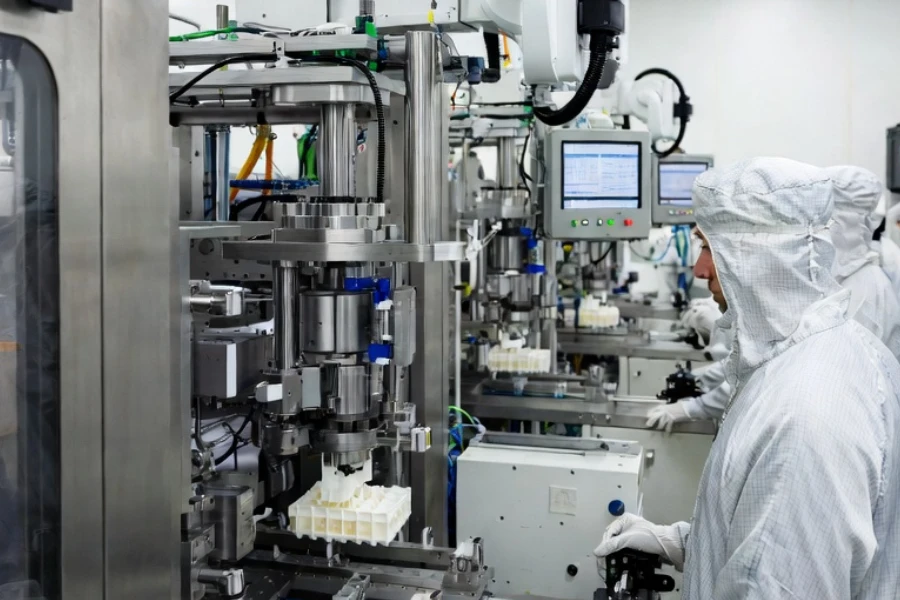
Cleanroom requirements increase manufacturing costs by changing how production is performed, not just where it happens. They affect airflow control, operator behavior, material handling, inspection discipline, and packaging conditions.
In medical plastic production, these requirements are often applied within medical plastic injection molding processes to reduce contamination risk while maintaining consistent product quality.
What Cleanroom Requirements Mean in Medical Manufacturing
Definition of a Cleanroom Environment
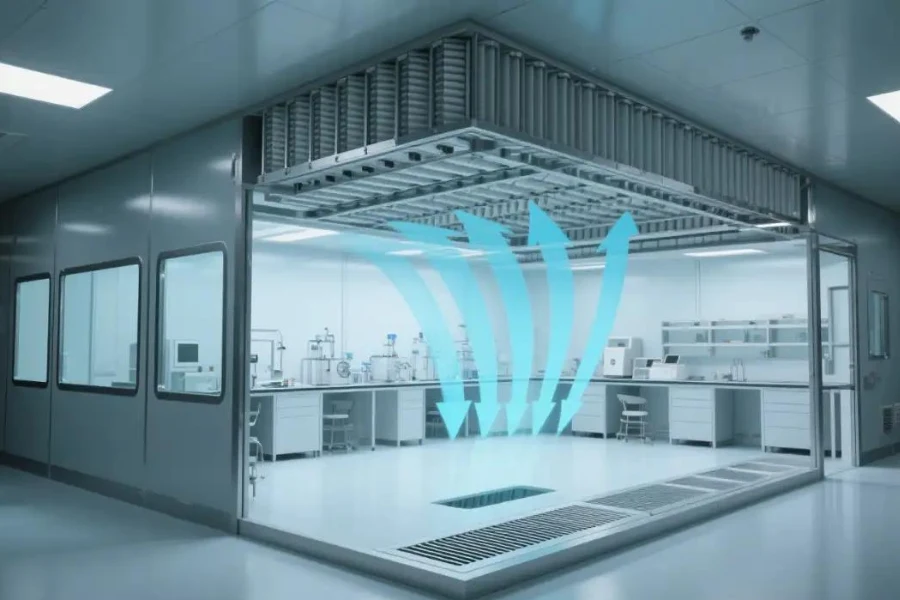
A cleanroom is a controlled environment where airborne particles, microbes, temperature, and humidity are maintained within defined limits.
Cleanrooms are classified under ISO standards. Lower ISO class numbers indicate stricter particle control and higher environmental control intensity.
Why Cleanrooms Are Used in Medical Injection Molding
Cleanrooms are typically applied when contamination can affect product performance or compliance.
Common use cases include:
- disposable medical consumables
- diagnostic components
- parts requiring controlled packaging
Not all components require the same level of control. Cleanroom requirements are usually defined based on product risk and intended use.
How Cleanroom Requirements Change Manufacturing Cost Structure
Environmental Control Becomes a Continuous CostCleanroom production depends on systems that operate continuously, especially in cleanroom injection molding environments.
These include:
- airflow and pressure control
- high-efficiency filtration
- temperature and humidity regulation
Unlike standard manufacturing, these systems run throughout production, contributing to both installation cost and ongoing energy use.
Materials and Surfaces Must Support Controlled Environments
Cleanroom-compatible materials are selected to reduce contamination risk and support repeated cleaning.
Typical requirements include:
- non-porous surfaces
- chemical resistance
- smooth finishes without particle traps
Material selection is often evaluated early in development, especially when working with medical-grade elastomers such as LSR injection moulding materials.
Operator Workflow Becomes More Restricted
Operators cannot move freely between areas without following controlled procedures.
In practice:
- entry requires gowning and airlock transitions
- re-entry after breaks repeats the process
- adjustments to machines must follow contamination control rules
These constraints reduce available working time and affect production efficiency.
Process Flow Requires Additional Control Steps

Cleanroom requirements change how materials move through production.
Typical adjustments include:
- controlled transfer through pass-through systems
- separation between molding, assembly, and packaging zones
- limits on material exposure to open environments
These processes often extend into secondary operations under controlled conditions, increasing coordination and handling complexity.
Quality Control Expands Beyond Product Inspection
Cleanroom manufacturing includes environmental control as part of quality assurance.
This introduces:
- particle monitoring
- environmental validation
- batch-level traceability
Inspection extends beyond product quality to include environmental verification.
Packaging Becomes Part of the Manufacturing Process
9
For many medical products, packaging must be performed under controlled conditions, often through medical device packaging in controlled environments.
This leads to:
- additional process steps within the cleanroom
- stricter handling procedures
- integration of packaging into production workflows
Packaging becomes a direct contributor to manufacturing cost.
Maintenance and Energy Are Ongoing Cost Drivers
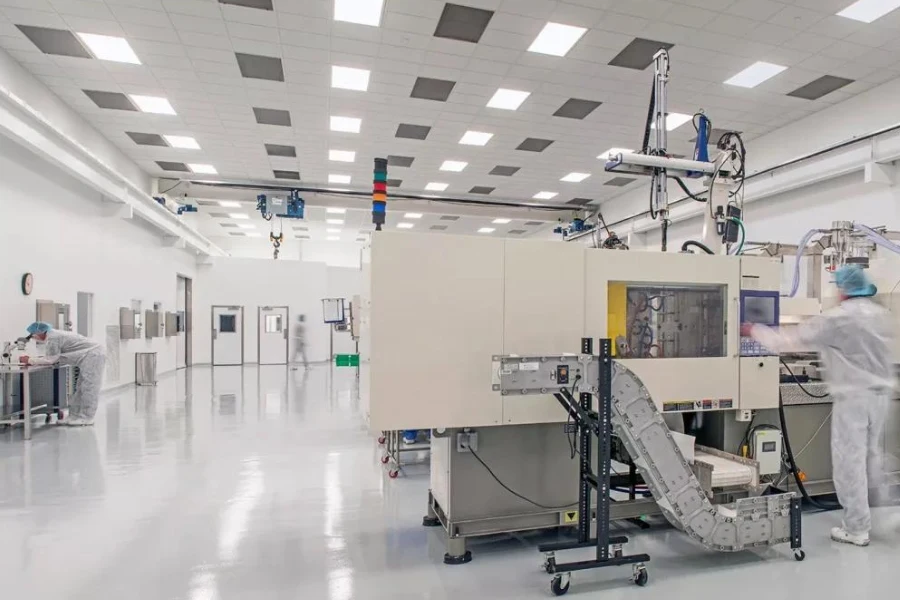
Cleanroom systems require continuous upkeep.
Recurring activities include:
- filter replacement
- scheduled cleaning
- system calibration
- continuous energy consumption
These costs accumulate over time and are part of the overall production structure.
Cleanroom vs Standard Manufacturing – Key Cost Differences
| Factor | Standard Manufacturing | Cleanroom Manufacturing |
|---|---|---|
| Air control | Basic ventilation | Continuous filtered airflow |
| Labor efficiency | Flexible movement | Restricted by gowning and protocols |
| Material handling | Open transfer | Controlled transfer systems |
| Quality control | Product-focused | Product and environment |
| Packaging | Separate step | Integrated in controlled space |
| Energy use | Moderate | High due to continuous systems |
Cleanroom production introduces system-level constraints that increase manufacturing cost.
How Cleanroom Classification Affects Cost Levels
ISO Class and Cost Relationship
Higher cleanroom classifications require tighter control over airborne particles.
This typically leads to:
- increased air change rates
- more advanced filtration
- stricter monitoring systems
Cost increases as control requirements become more demanding.
Differences Between ISO 8 and Higher Levels
ISO 8 environments are widely used for many medical plastic components.
Higher classifications require:
- more intensive airflow control
- tighter environmental limits
- increased monitoring frequency
The cost increase is not proportional. Small improvements in cleanliness often require significantly more complex systems.
When Cleanroom Production Is Necessary
Not All Medical Parts Require Full Cleanroom Molding
Some products follow a segmented approach:
- molding in a standard environment
- assembly or packaging in a cleanroom
For high-precision applications, techniques such as micro injection molding for medical components may still require controlled environments depending on tolerances and contamination sensitivity.
Factors That Determine Cleanroom Use
Cleanroom requirements are typically defined by:
- product function and sensitivity
- regulatory expectations
- downstream sterilization or packaging needs
Over-specifying cleanroom conditions can increase cost without improving functional outcomes.
Practical Ways to Control Costs Under Cleanroom Requirements
Align Cleanroom Level With Product Needs
Selecting the appropriate ISO class helps avoid unnecessary system complexity.
Separate Critical and Non-Critical Processes
Limiting cleanroom use to essential steps reduces controlled space and operating cost.
Design Products for Controlled Manufacturing
Product design can reduce cost by:
- minimizing handling steps
- reducing contamination risk during ejection and transfer
- simplifying assembly
These decisions are often supported through early-stage services such as product development and design for manufacturing and custom mold design.
Plan Early in Development
Early-stage planning affects long-term cost.
This includes:
- material selection
- tooling strategy
- packaging integration
Prototyping methods such as 3D prototype printing are commonly used to validate design decisions before production.
Cleanroom Manufacturing in Real Production Scenarios
In real production, cleanroom requirements are often applied across multiple stages.
For example:
- molded components may be transferred into cleanrooms for assembly
- packaging may require controlled environments even if molding does not
- assembly processes may be performed using cleanroom medical device assembly workflows
Manufacturers that integrate molding, assembly, and packaging within a coordinated workflow can reduce transfer risk and improve process stability. This approach is commonly used in medical device contract manufacturing, where multiple controlled steps are managed within a unified system.
SeaSkyMedical supports this type of integrated manufacturing structure through ISO-controlled environments that align molding, assembly, and packaging processes.
Conclusion
Cleanroom requirements influence manufacturing costs by reshaping the entire production system.
They affect:
- environmental control systems
- operator workflow
- material handling
- quality assurance
- packaging processes
- ongoing maintenance and energy use
A cleanroom is not only a facility condition. It defines how manufacturing is executed.
Understanding these factors allows manufacturers to balance cost, compliance, and production efficiency more effectively.
FAQ
Does cleanroom manufacturing always increase cost
Cleanroom manufacturing generally increases cost because it introduces environmental control systems, additional procedures, and stricter quality requirements. The impact depends on the cleanroom level and how much of the production process is performed under controlled conditions.
What drives most of the cost in cleanroom production
Air handling and filtration systems are major contributors. These systems operate continuously and require precise control, which affects both installation cost and ongoing energy and maintenance expenses.
Can injection molding be done outside a cleanroom
Yes. Some medical components are molded outside controlled environments and later transferred into cleanrooms for assembly or packaging. This approach is commonly used to balance cost and cleanliness requirements.
How does cleanroom control affect production efficiency
Cleanroom control introduces additional procedures such as gowning, controlled movement, and restricted access. These requirements reduce operator efficiency and increase handling time, which can affect overall production output.
Is ISO 8 enough for most medical plastic parts
ISO 8 is commonly suitable for many non-sterile medical components. Higher classifications are typically required for products with stricter contamination control needs or specific regulatory expectations.