Introduction
The materials that perform best under gamma sterilization typically include high-performance aromatic polymers such as PEEK, PSU, and PES, stabilized polyolefins such as polyethylene and medical-grade polypropylene, as well as metals like stainless steel and ceramics such as alumina. These materials maintain structural integrity, mechanical properties, and dimensional stability after exposure to typical sterilization doses.
Gamma sterilization is widely applied across medical, pharmaceutical, and packaging industries because it allows products to be sterilized after final packaging while maintaining sterility without heat or moisture. However, improper material selection can lead to embrittlement, discoloration, or long-term degradation, which is why early-stage design and manufacturing planning in medical device contract manufacturing plays a critical role in ensuring product reliability.
Best Materials for Gamma Sterilization
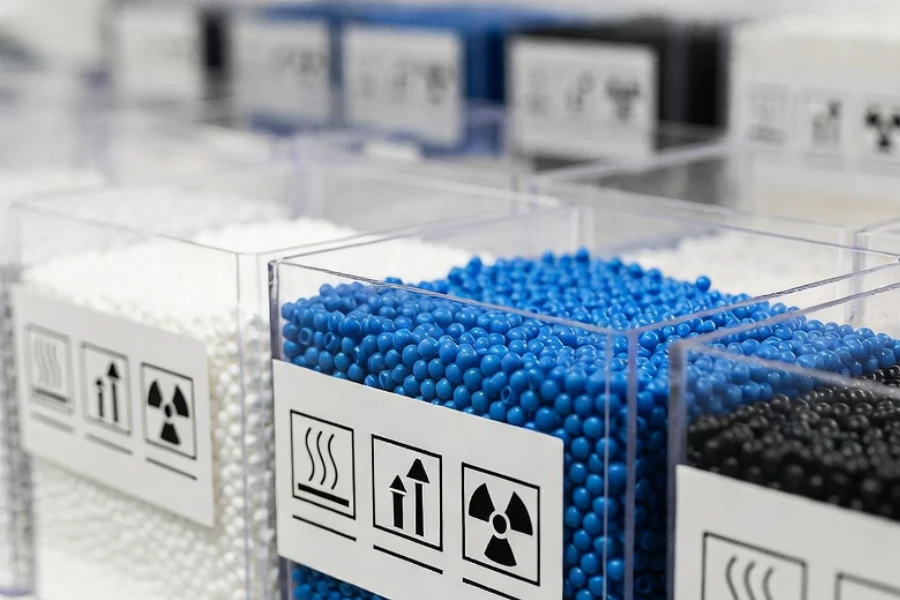
The following table provides a high-level comparison of commonly used materials based on their compatibility with gamma radiation.
| Material Category | Examples | Compatibility | Key Behavior |
|---|---|---|---|
| High-performance polymers | PEEK, PSU, PES | High | Minimal degradation, stable mechanical properties |
| Polyolefins | PE, stabilized PP | High to moderate | Crosslinking or controlled degradation |
| Engineering plastics | PC, Nylon | Moderate | Discoloration or gradual property loss |
| Low-resistance polymers | PTFE, POM, PS | Low | Chain scission and embrittlement |
| Elastomers | FKM, NBR, Silicone | Moderate to high | Elasticity changes over time |
| Metals | Stainless steel, titanium | High | No structural impact |
| Ceramics and glass | Alumina, borosilicate glass | High | Chemically and structurally stable |
These material choices are typically evaluated within a structured material selection process to ensure compatibility with sterilization and manufacturing constraints.
Fundamentals of Gamma Sterilization
Principle of Gamma Sterilization
Gamma sterilization relies on high-energy ionizing radiation, typically generated from Cobalt-60, to disrupt microbial DNA and achieve sterility assurance levels required in medical applications. The process typically operates within a dose range of 25 to 50 kGy and is validated according to ISO 11137.
Advantages of Gamma Sterilization
Gamma radiation provides deep penetration through dense materials and sealed packaging, allowing complete sterilization without requiring elevated temperatures or moisture exposure. This makes it suitable for heat-sensitive polymers and complex assembled components.
Comparison With Other Sterilization Methods
Compared with electron beam sterilization, gamma radiation penetrates deeper but operates at a lower dose rate, which increases the potential for oxidative degradation in sensitive polymers. Ethylene oxide sterilization avoids radiation damage but introduces concerns related to residual gas removal, while steam sterilization exposes materials to thermal and hydrolytic stress that many plastics cannot tolerate.

How Gamma Sterilization Affects Materials
Gamma radiation interacts with materials at the molecular level, producing free radicals that lead to structural changes over time.
Chain scission occurs when polymer chains break, reducing molecular weight and causing embrittlement, which is commonly observed in materials such as PTFE and POM. Crosslinking forms bonds between polymer chains, increasing stiffness and reducing elongation, which is typical in polyethylene and certain elastomers. Oxidation further accelerates degradation, especially in polymers exposed to oxygen during irradiation.
Polypropylene illustrates this behavior clearly, as its tertiary carbon structure makes it highly susceptible to oxidative chain scission, leading to continued degradation after sterilization unless stabilized. In contrast, aromatic polymers such as PEEK and PSU benefit from resonance-stabilized molecular backbones, which significantly improve radiation resistance.
Key Factors Affecting Material Compatibility With Gamma Sterilization
Radiation Dose
Higher radiation doses increase the likelihood of molecular damage, and the half-value dose is commonly used to quantify the point at which a material loses half of its mechanical performance.
Material Structure and Composition
Aromatic polymers generally outperform aliphatic polymers due to their stable molecular structures, while crosslinked materials often demonstrate improved resistance compared to purely thermoplastic systems. Additives such as antioxidants and stabilizers play a critical role in controlling degradation, and these formulations are often validated during PP injection molding or TPE injection molding to ensure consistent radiation resistance.
Environmental Conditions
The presence of oxygen significantly accelerates oxidative degradation, while temperature and humidity can further influence material behavior during irradiation. Materials with high surface exposure or thin sections tend to degrade faster due to increased interaction with oxygen.
Post-Sterilization Aging
Residual free radicals can continue reacting after irradiation, leading to delayed degradation, which is particularly important for polypropylene and similar materials used in medical devices.
Material Compatibility by Category
Polymers
Polyethylene shows strong compatibility due to its tendency to crosslink under radiation, while polycarbonate and high-performance polymers such as PEEK maintain structural integrity with minimal degradation. Stabilized polypropylene can be used for single-use applications, although it requires careful formulation.
Low-resistance polymers such as polystyrene, PTFE, and polyoxymethylene undergo rapid chain scission, making them unsuitable for gamma sterilization. In practical applications, these materials are commonly processed through medical plastic injection molding where formulation stability and processing conditions directly affect radiation performance.
Elastomers
Fluoroelastomers and nitrile rubber maintain sealing performance even after repeated exposure, while silicone may gradually lose elasticity due to increased crosslink density.
Metals
Metals such as stainless steel and titanium are not affected by gamma radiation, making them ideal for reusable surgical instruments and implantable components.
Ceramics and Glass
Ceramics and glass materials remain stable under gamma radiation due to their inorganic structure, with borosilicate glass widely used in pharmaceutical packaging applications.
Methods to Improve Gamma Radiation Resistance
Material performance can be enhanced through the use of antioxidants and stabilizers, which reduce oxidative degradation and improve long-term stability. Polymer blending allows engineers to combine mechanical performance with radiation resistance, while controlled compounding and process optimization are often implemented alongside custom plastic molding to ensure consistent results in production.
Post-irradiation annealing is sometimes used to promote free radical recombination and partially restore material properties. In applications where radiation sensitivity remains a concern, alternative sterilization methods such as electron beam irradiation may be considered.
Material Property Changes After Gamma Sterilization
Gamma radiation may cause discoloration due to the formation of chromophoric groups, particularly in transparent polymers. Chain scission reduces molecular weight and mechanical strength, while crosslinking increases stiffness and reduces flexibility. These changes may lead to surface cracking, reduced elongation, or the release of degradation byproducts, depending on the material and dose.
Relevant Testing Standards and Validation Methods
Standards such as ISO 11137 are used to validate sterilization dose and ensure sterility assurance in medical devices, while ISO 10437 defines radiation exposure procedures and ISO 11357 evaluates thermal behavior after irradiation. ISO 15540 and ASTM E1908 provide guidance on mechanical property evaluation and radiation effects.
In practice, validation often begins with early-stage prototyping using 3D prototype printing before transitioning into production tooling. This approach allows manufacturers to evaluate material behavior under controlled conditions before scaling up to mass production.
Material Selection in Medical Manufacturing Context
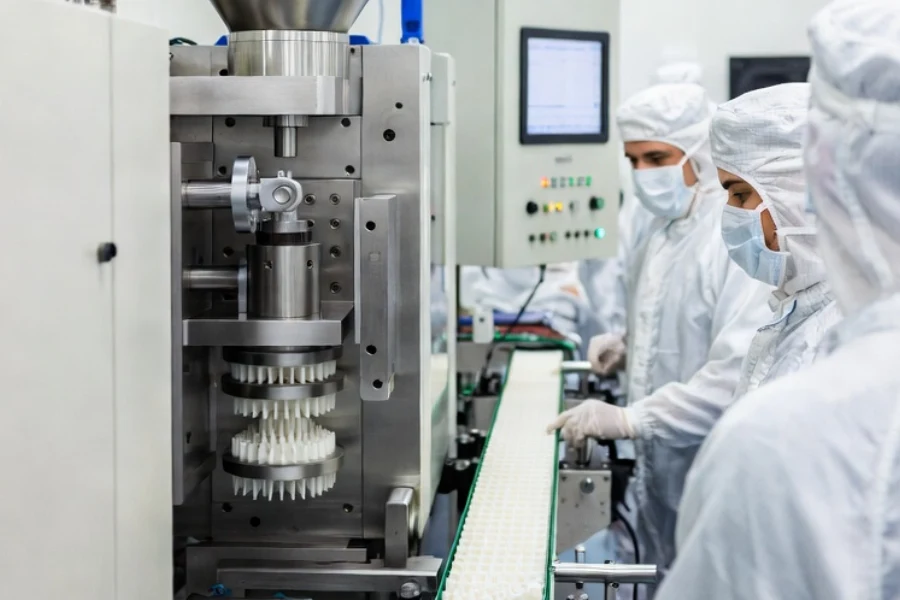
Material selection for gamma sterilization is closely linked to manufacturing considerations, particularly in injection molding processes where wall thickness, residual stress, and material flow orientation influence how components respond to radiation.
Thin-wall components tend to degrade faster due to increased oxygen exposure, while molded-in stresses can accelerate crack formation after irradiation. These factors are often addressed during mold making to ensure structural consistency and reliability.
Precision components may require advanced techniques such as micro injection molding to achieve tight tolerances, while multi-material designs often rely on 2K injection molding to optimize both performance and integration.
By aligning material selection with mold design, processing conditions, and sterilization requirements, manufacturers can avoid performance issues that may only become visible after sterilization. This integrated approach is commonly applied in medical molding environments such as those used by SeaSkyMedical.
Application Scenarios and Material Selection Recommendations
Single-use medical devices typically rely on stabilized polypropylene, polyethylene, or gamma-compatible elastomers due to their balance of cost and performance. Reusable surgical instruments require materials such as stainless steel, titanium, or PEEK to withstand repeated sterilization cycles without degradation.
Pharmaceutical packaging applications commonly use borosilicate glass or cyclic olefin polymers to ensure chemical stability and low extractables, while food and cosmetic packaging applications require validated formulations to maintain both safety and visual consistency.
Final product performance also depends on downstream processes such as medical device assembly and medical device packaging, which must preserve sterility after irradiation.
FAQ
Q1: Which plastic offers the highest resistance to gamma sterilization
High-performance polymers such as PEEK and PSU provide excellent resistance and can tolerate high radiation doses, while stabilized polyethylene and polypropylene are commonly used for cost-sensitive applications.
Q2: Why is polypropylene sometimes considered unsuitable
Unstabilized polypropylene undergoes oxidative chain scission and continues degrading after irradiation, while stabilized medical-grade formulations can safely withstand standard sterilization doses.
Q3: Can silicone be used for repeated sterilization
Silicone can tolerate limited cycles, but repeated exposure increases crosslink density and reduces elasticity, which may affect long-term performance.
Q4: Does discoloration affect performance
Discoloration is typically cosmetic and does not impact mechanical performance, although it may be unacceptable in applications requiring transparency.
Q5: Are metals affected by gamma radiation
Common medical metals such as stainless steel and titanium are not affected, although non-passivated metals may be susceptible to corrosion under certain conditions.
Q6: Why is PTFE not recommended
PTFE undergoes rapid chain scission under gamma radiation, resulting in severe mechanical degradation even at relatively low doses.
Conclusion
Gamma sterilization is an effective and widely used non-thermal sterilization method, but its success depends on selecting materials that can maintain performance under radiation exposure. Aromatic polymers, stabilized polyolefins, metals, and ceramics provide reliable solutions, while materials prone to chain scission should be avoided.
Because material behavior depends on both radiation conditions and manufacturing variables, integrating material selection, product design, and process validation early in development is essential. Working with an experienced partner such as SeaSkyMedical allows manufacturers to integrate product development with OEM medical components manufacturing to ensure material compatibility and production reliability.