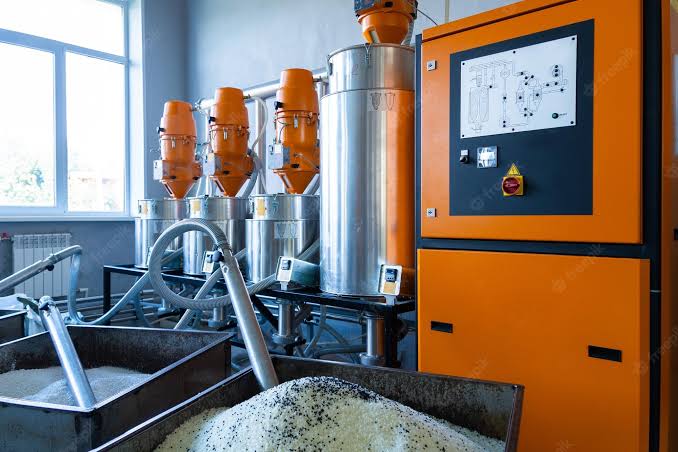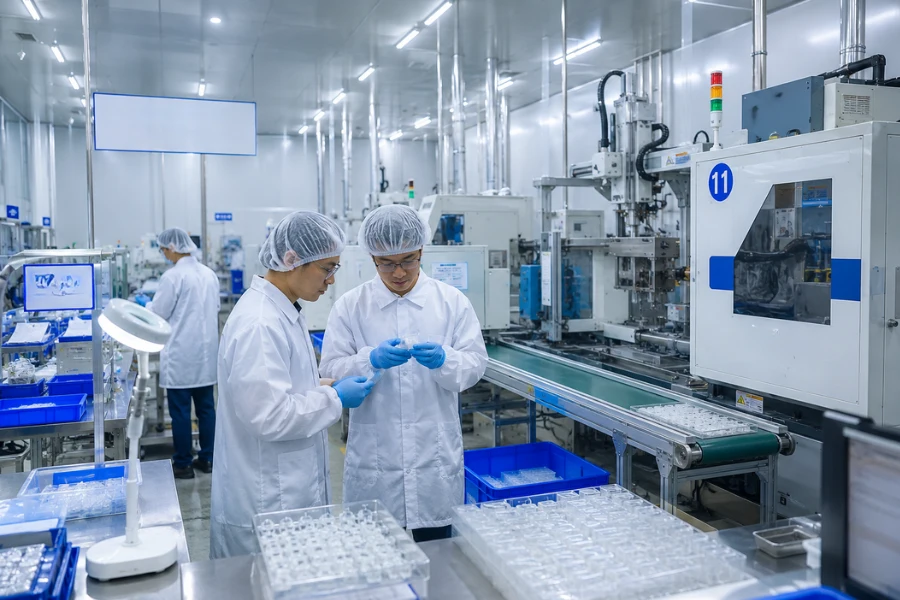
In regulated medical injection molding, traceability is not limited to placing a barcode on a package or recording a production date inside a shipping system. The real objective is to create a controlled manufacturing history that connects incoming resin lots, processing conditions, molding equipment, inspection activities, assembly operations, and final product identification into one verifiable information chain.
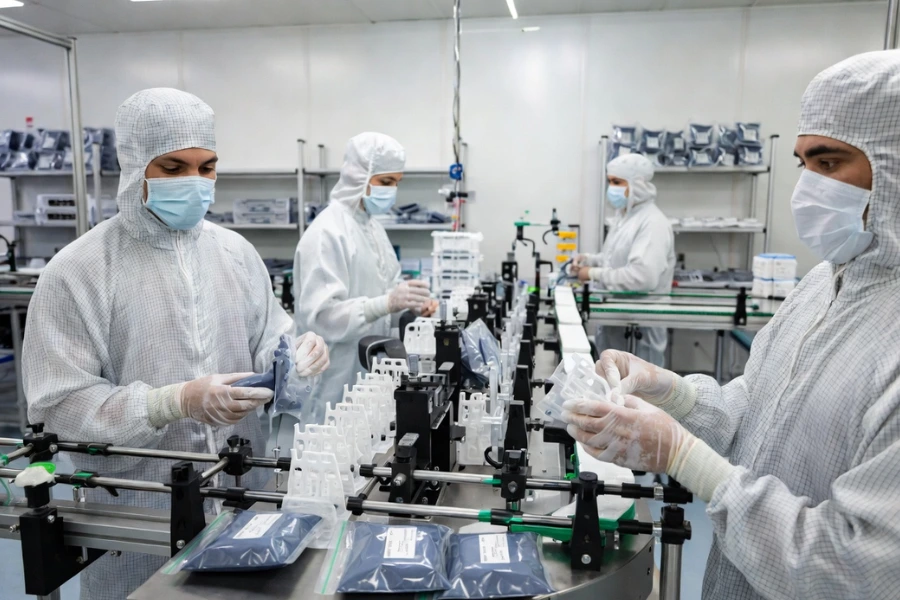
For medical components such as syringe barrels, surgical instrument housings, catheter connectors, diagnostic consumables, and implantable device parts, material consistency directly affects sterilization compatibility, dimensional stability, biological safety, and long-term product reliability. A contamination event, undocumented resin substitution, or uncontrolled process deviation can create quality risks that extend far beyond a single molding batch.
This is why modern medical plastic injection molding environments commonly implement documented resin genealogy systems designed to support FDA requirements, EU MDR expectations, ISO 13485 quality management practices, and internal recall readiness procedures.
What Does Material Traceability Mean in Medical Injection Molding?
In regulated molding environments, traceability refers to the ability to identify, document, and retrieve the complete manufacturing history associated with the materials used in a molded medical component, including where the resin originated, how it was processed, which equipment handled it, and which finished products ultimately contained it.
Unlike conventional product tracking systems that mainly support external identification through expiration dates, lot numbers, or distribution labels, internal manufacturing traceability is intended to support quality investigations, process verification, audit readiness, and recall containment.
A controlled medical molding workflow typically includes records covering:
| Manufacturing Stage | Typical Records Maintained |
|---|---|
| Material receiving | Resin grade, supplier batch number, COA, incoming inspection |
| Material preparation | Drying parameters, blend ratio, handling records |
| Injection molding | Machine ID, mold ID, cavity code, process settings |
| Secondary processing | Assembly linkage, sterilization records, operator logs |
| Packaging and release | Batch labeling, inspection approval, shipping history |
In practice, manufacturers are often expected to determine not only which resin was used in a device, but also which molding machine processed it, which cavity produced the component, which operators handled the production run, and whether the material was exposed to any nonconforming conditions during manufacturing.
Why Is Resin Genealogy Especially Important in Medical Molding?
Medical injection molding operations function under much tighter process control requirements than conventional plastics manufacturing because the molded components may eventually become part of products used in direct patient care, diagnostic systems, surgical procedures, or implantable assemblies.
Without controlled production material records, manufacturers may struggle to demonstrate compliance during FDA inspections or ISO 13485 audits because regulators generally expect objective evidence showing how raw materials, production conditions, and released products remain connected throughout the manufacturing lifecycle.
Regulatory Compliance and Audit Readiness
Medical device manufacturers and contract molding suppliers are typically required to maintain documented records capable of supporting device history reviews, nonconformance investigations, and corrective action activities.
When auditors request evidence associated with a specific production lot, the manufacturer should be able to retrieve linked resin records, process parameters, inspection data, cavity information, and packaging documentation without gaps in the production history.
For this reason, regulated molding facilities commonly establish SOPs describing how raw material identifiers are assigned, transferred, verified, and archived throughout manufacturing.
Recall Containment and Root Cause Analysis
If a resin supplier later identifies contamination, excessive moisture variation, or formulation instability affecting a specific material batch, a well-structured genealogy system allows manufacturers to identify precisely which molding runs used the affected resin instead of quarantining unrelated inventory.
This level of containment becomes especially important in high-volume disposable medical production where a single manufacturing campaign may involve millions of molded parts distributed across multiple healthcare markets.
Cross-Contamination Prevention
Medical molding environments frequently process different polymers, additives, and colorants within the same production facility. Without controlled segregation procedures, crossover may occur during hopper loading, purging, grinding, drying, or material transfer operations.
Traceable manufacturing workflows help document material movement between storage, preparation, molding, assembly, and cleanroom injection molding areas while reducing the risk of unapproved resin mixing.
Process Optimization and Risk Reduction
Production material records also support engineering analysis because manufacturers can evaluate relationships between resin properties and molding conditions over time.
Variables such as melt flow index, moisture level, mold temperature, injection pressure, and cooling performance may later become critical when investigating dimensional instability, brittleness, flash, sink marks, or sterilization failures.
By linking production conditions to specific resin lots, engineering teams can identify trends earlier and implement corrective actions before larger quality issues develop.
Which Regulations Require Material Traceability in Medical Molding?
Several international regulatory frameworks directly or indirectly require manufacturers to maintain controlled traceability systems capable of linking medical products to manufacturing records and raw material history.
| Region | Regulation or System | Impact on Medical Molding Operations |
|---|---|---|
| United States | FDA UDI – 21 CFR Part 830 | Production identifiers must connect to manufacturing records |
| United States | GUDID | Device identification data must align with controlled production documentation |
| European Union | EU MDR + UDI | Requires lifecycle traceability systems for regulated devices |
| International | ISO 13485:2016 Clause 7.5.9 | Requires identification and traceability records |
| United States | FDA Tracking Orders | Certain implantable or life-supporting products require patient-level tracking |
Although FDA UDI regulations focus heavily on finished device identification, molding suppliers still need internal systems capable of connecting production identifiers back to resin genealogy records.
In practice, this commonly involves maintaining documented relationships between:
- Supplier resin lots
- Internal production batches
- Molding machine records
- Mold cavity identification
- Inspection and packaging data
- Final UDI production identifiers
For higher-risk applications, manufacturers may additionally integrate cavity coding, laser marking systems, serialized packaging workflows, or automated inspection platforms to strengthen downstream traceability.
How Is Material Traceability Implemented in Regulated Medical Molding?
Step 1 – Define Regulatory Scope and Documentation Requirements
Implementation generally begins by identifying which products require controlled genealogy records and determining the level of detail expected by regulators, customers, and internal quality systems.
Class II and Class III medical products usually require more extensive documentation because failures may directly affect patient safety or long-term clinical outcomes.
Manufacturers commonly define mandatory production records including:
- Resin supplier information
- Material batch numbers
- COA documentation
- Drying conditions
- Blend ratios
- Machine and mold identification
- Production timestamps
- Inspection and release records
This stage also establishes retention requirements, recall procedures, and verification responsibilities.
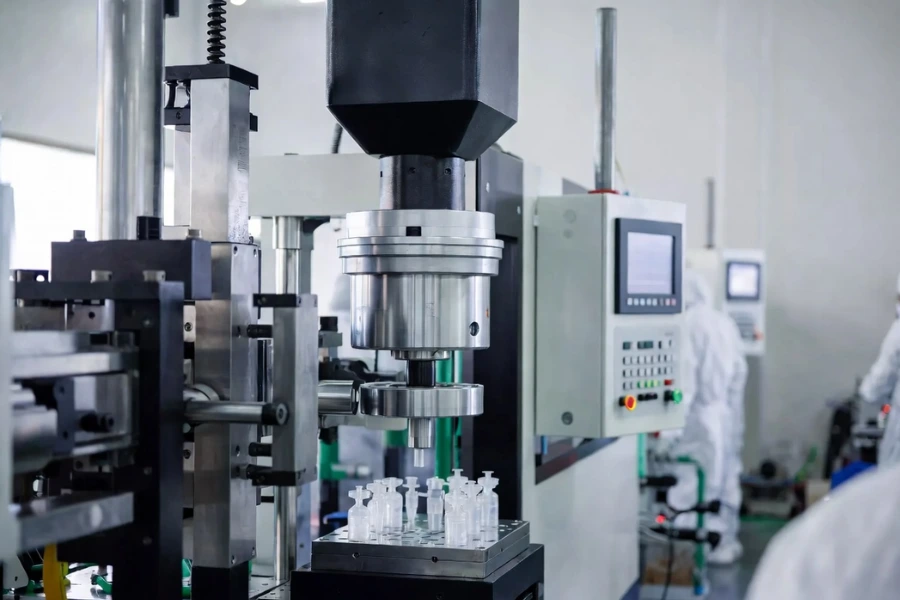
Step 2 – Establish Incoming Material Control
A reliable genealogy system becomes difficult to maintain if incoming material control is weak at the receiving stage.
When medical-grade resin enters the facility, manufacturers typically record supplier batch information, material grade, receiving date, storage condition, and inspection status before releasing the material to production. Incoming verification may include moisture testing, melt flow analysis, packaging integrity inspection, or review of biological compatibility documentation depending on the application.
At SeaSkyMedical, certified raw materials used for regulated molding programs are processed under controlled manufacturing procedures designed to support documentation consistency throughout molding, assembly, inspection, and medical device packaging operations.
Many ISO-controlled molding facilities also assign internal batch identifiers to improve consistency across ERP, MES, and electronic production record systems.
Step 3 – Maintain Control During Mixing and Regrind Operations
Material blending introduces additional complexity because multiple inputs may become associated with the same manufacturing batch.
If colorants, additives, or approved regrind materials are introduced into production, manufacturers typically establish new blend identifiers linked to the original material lots, mixture ratios, mixing equipment, and operator activities.
For critical medical components, uncontrolled regrind usage is often prohibited because recycled material can introduce variability affecting mechanical performance, sterilization resistance, or biocompatibility.
When regrind is permitted for lower-risk applications, manufacturers commonly maintain separate records documenting:
- Source production lot
- Grinding conditions
- Blend ratio
- Usage limitations
- Final production allocation
Purging and transition material generated during machine cleaning procedures are also typically segregated and documented separately to reduce contamination risk.
Step 4 – Link Resin Lots to Machines, Molds, and Cavities
One of the most important elements of medical molding genealogy involves connecting the active material batch to the exact molding conditions used during production.
Modern MES platforms frequently associate the following information with each production run:
| Production Variable | Example Record |
|---|---|
| Injection molding machine | Machine ID |
| Mold tooling | Mold number and revision |
| Cavity identification | Cavity code or gate marking |
| Process conditions | Melt temperature, injection pressure, cooling time |
| Material usage | Resin lot and blend identifier |
| Operator activity | Shift approvals and production logs |
For multi-cavity molds, cavity-level traceability becomes particularly valuable because dimensional variation, localized contamination, or tool wear may affect only specific cavities rather than the entire mold.
Some manufacturers integrate cavity coding directly into molded components through mold-making processes, gate marks, or laser identification systems so defective parts can later be traced back to a specific tooling location.
Step 5 – Apply Readable Identification to the Product or Packaging
After molding, manufacturers generally apply machine-readable or human-readable identifiers that connect finished products to internal production history records.
The identification method depends on part geometry, sterilization requirements, resin compatibility, and regulatory expectations.
| Marking Method | Typical Medical Molding Application | Advantages | Key Limitations |
|---|---|---|---|
| UV laser marking | Implantable or reusable medical components | Permanent, sterilization resistant, highly precise | Higher upfront equipment investment |
| In-mold labeling | Disposable medical consumables | Supports readable graphics and text | Limited resistance to some sterilization methods |
| Inkjet or thermal transfer | External packaging | Flexible variable data printing | Less durable on product surfaces |
| Molded cavity characters | Static cavity or batch codes | Minimal operating cost | Limited flexibility for dynamic data |
Among these options, direct laser marking is commonly preferred for regulated medical applications because the marks remain stable after sterilization exposure, chemical cleaning, and repeated handling while supporting very small machine-readable codes.
This becomes especially important in miniature medical products produced through micro injection molding processes where available marking space may be extremely limited.
Step 6 – Verify Records and Maintain a Closed-Loop System
A genealogy system only remains effective if the recorded information stays accurate, complete, and retrievable during audits, investigations, or recall events.
For this reason, regulated medical molding facilities typically implement verification activities that include barcode readability inspection, electronic audit trails, production record reviews, and simulated recall exercises.
Vision inspection systems are frequently integrated directly into automated molding lines to verify code readability and reject nonconforming parts before packaging.
Some manufacturers also conduct periodic mock recall exercises in which finished products are traced backward through packaging, molding, inspection, and raw material records to confirm the effectiveness of the manufacturing traceability chain.
In many regulated environments, the ability to complete a full production investigation within several hours is considered a practical operational benchmark.
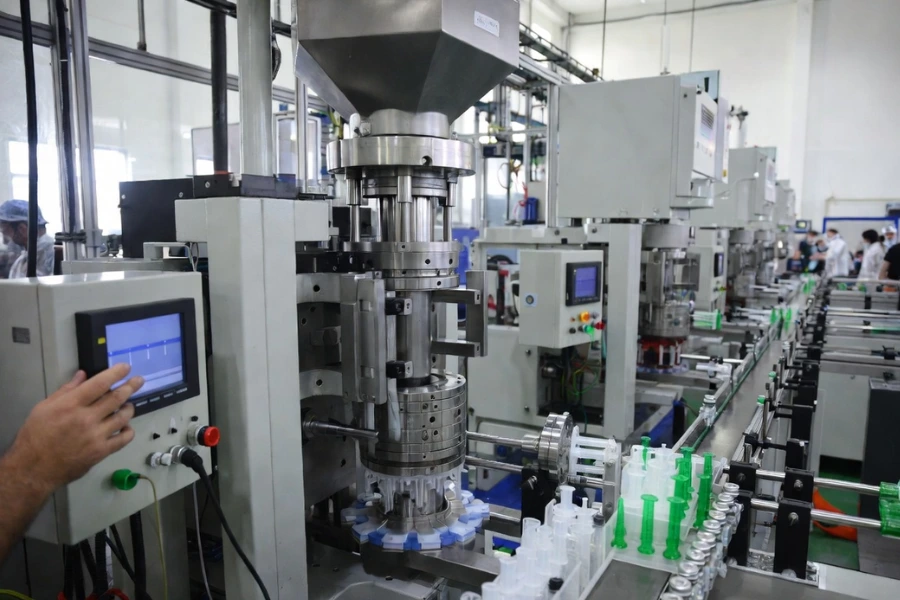
Comparing Common Traceability Marking Methods for Medical Injection Molding
Different identification technologies provide different levels of durability, precision, and regulatory suitability.
| Method | Suitable Applications | Advantages | Key Considerations |
|---|---|---|---|
| UV laser marking | Medical plastics including PC, PEEK, PP, PEI | Permanent and highly precise | Requires upfront capital investment |
| In-mold labeling | Disposable molded consumables | Supports readable graphics and text | May not tolerate aggressive sterilization |
| Pad printing | Irregular low-volume components | Can produce colored markings | Limited precision and durability |
| Dot peen marking | Metal injection molded components | Permanent identification | Surface deformation risk |
| Molded cavity characters | Static identification codes | Minimal operating cost | Cannot support dynamic serialization |
For regulated molding applications involving sterilization exposure, implantable products, or long service lifecycles, laser-based direct part marking is commonly viewed as the most reliable long-term option because it supports highly compact machine-readable codes while maintaining durability under demanding processing conditions.
What Happens When Production Material Records Are Incomplete?
Weak manufacturing traceability systems create operational, regulatory, and financial risks that can rapidly expand beyond a single production issue.
Patient Safety Risks
If nonmedical-grade resin accidentally enters production or contaminated material is processed without detection, the resulting components may fail mechanically, release extractables, or behave unpredictably during sterilization or clinical use.
Regulatory Exposure
Incomplete production records can lead to FDA observations, warning letters, or corrective action requirements because manufacturers may be unable to demonstrate process control or identify affected production lots during investigations.
Financial Impact
Without precise genealogy records, manufacturers often have no choice but to quarantine or discard all potentially affected inventory because the actual exposure scope cannot be determined accurately.
For high-volume disposable products, this may involve millions of molded components across multiple distribution channels.
Supplier and Customer Trust Loss
Large medical device companies increasingly expect medical device contract manufacturing partners to maintain audit-ready genealogy systems capable of supporting supplier qualification reviews, validation programs, and recall management procedures.
Manufacturers unable to provide reliable production documentation may eventually lose approved supplier status.
FAQ
Q1: Does medical molding traceability require tracking every individual part or only production batches?
Most molded medical components are tracked at the batch level, where each production lot is associated with specific material records and process conditions. Higher-risk implantable or life-supporting products may additionally require serialization at the individual device level together with cavity-level identification.
Q2: How are multiple molding batches linked to the same resin lot?
Manufacturers commonly establish one-to-many relationships inside MES or electronic batch record systems so a single resin lot can be associated with several molding runs while still maintaining accurate material consumption and inventory balance records.
Q3: How do manufacturers confirm that markings remain readable after sterilization?
Validation testing is typically performed after ethylene oxide, gamma, or steam sterilization cycles using scanners or optical inspection systems to confirm that the codes remain legible and compliant with readability requirements.
Q4: How is material crossover prevented during machine purging or material changes?
Facilities generally document purge procedures, transition material handling, cleaning verification, and waste segregation activities while maintaining equipment logs that record all material changes performed on the production line.
Q5: Can recycled material be used in regulated medical molding?
Critical medical applications often prohibit regrind unless extensive validation and customer approval exist. When regrind is permitted, manufacturers normally maintain separate records documenting source material, grinding conditions, blend ratios, and approved usage limitations.
Q6: How long should medical molding genealogy records be retained?
Retention periods commonly follow ISO 13485 and FDA expectations, which often require records to remain available for the device lifetime plus additional retention time, with some implantable device records maintained indefinitely.
Conclusion
In regulated medical molding, traceability is not simply a labeling activity because the real objective is to establish a controlled manufacturing history that connects raw materials, processing conditions, equipment usage, inspection activities, and finished medical products into one verifiable information chain.
Manufacturers that integrate genealogy controls directly into mold tooling, material handling workflows, MES architecture, cleanroom operations, downstream medical device assembly, and packaging systems generally achieve stronger audit readiness and faster recall response capabilities than facilities attempting to reconstruct production history after a quality event has already occurred.
As regulatory expectations and supply chain transparency requirements continue to increase across the medical device industry, production traceability increasingly becomes part of the overall manufacturing culture rather than a standalone compliance task.
Manufacturers such as SeaSkyMedical commonly integrate medical molding, assembly, inspection, and cleanroom packaging into unified production workflows designed to maintain consistent documentation integrity throughout the lifecycle of regulated OEM medical components.