Introduction
Material selection plays a critical role in medical device development because the chosen material directly affects device reliability, manufacturing feasibility, and long-term clinical performance. Unlike general industrial products, medical components must often satisfy multiple requirements simultaneously, including biocompatibility, sterilization resistance, dimensional stability, chemical resistance, and regulatory expectations.
For decades, metals such as titanium and stainless steel have been widely used in medical implants and surgical devices because of their excellent strength and established clinical history. However, their high stiffness, density, and imaging limitations have encouraged engineers to explore advanced polymer alternatives that can provide specific performance advantages while maintaining design flexibility.
Polyether ether ketone (PEEK) has become one of the most important high-performance polymers used in medical device manufacturing. Its combination of mechanical strength, chemical stability, lightweight characteristics, radiolucency, and bone-like elastic modulus makes it suitable for demanding applications such as spinal implants, surgical instruments, and precision medical components.
However, selecting PEEK is not simply a material upgrade decision. Compared with conventional engineering plastics, PEEK requires more advanced manufacturing capabilities due to its high processing temperature, high melt viscosity, semi-crystalline behavior, and strict process control requirements.
For medical OEM teams, understanding PEEK requires evaluating the complete relationship between material properties, device requirements, manufacturing processes, and validation expectations. Partnering with an experienced medical device contract manufacturing provider can help integrate material selection, engineering development, production processes, and quality requirements into a reliable manufacturing strategy.
What Is PEEK Material?
PEEK Structure and Material Classification
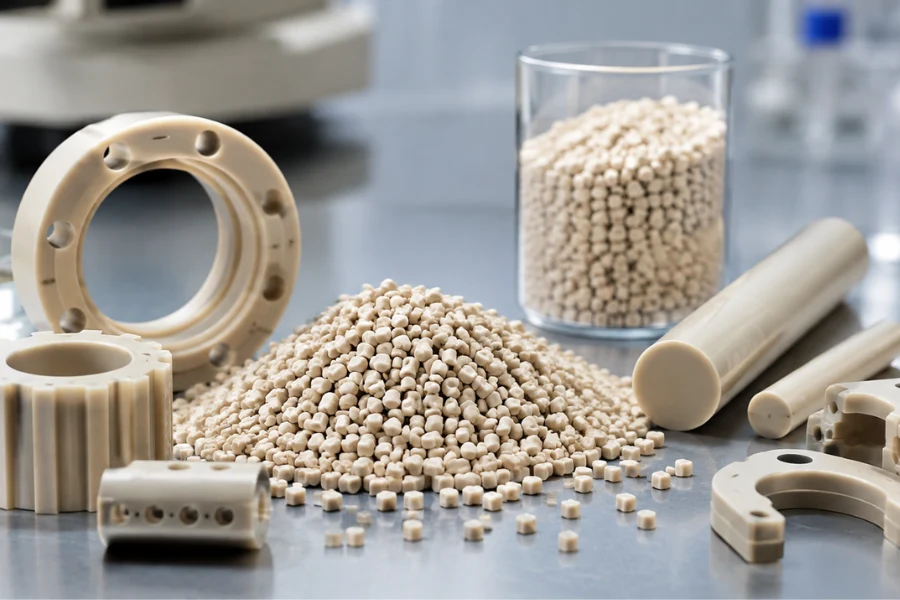
PEEK, or polyether ether ketone, is a high-performance semi-crystalline thermoplastic belonging to the polyaryletherketone (PAEK) polymer family.
Its molecular structure consists of aromatic rings connected through ether and ketone groups. This stable chemical structure provides excellent resistance to heat, chemicals, and mechanical stress compared with conventional engineering plastics.
Unlike commonly used polymers such as ABS, polypropylene, or standard polycarbonate, PEEK is designed for applications where component failure could affect device performance or patient safety.
The molecular structure of PEEK contributes to several important characteristics:
- High temperature resistance
- Excellent chemical stability
- Low moisture absorption
- Strong fatigue resistance
- Long-term dimensional stability
These properties make PEEK valuable for medical applications where components must maintain performance under challenging conditions, including:
- Repeated sterilization cycles
- Long-term implantation
- Chemical exposure
- Mechanical loading
Why PEEK Is Considered a High-Performance Medical Polymer
PEEK combines multiple properties that are difficult to achieve in a single polymer.
Typical properties of medical-grade PEEK include:
| Property | Typical Value |
|---|---|
| Melting temperature | Approximately 343°C |
| Glass transition temperature | Approximately 143–150°C |
| Continuous service temperature | Up to approximately 260°C |
| Tensile strength | Around 98 MPa |
| Elongation at break | Around 45% |
| Flexural modulus | Around 3.8 GPa |
| Density | Approximately 1.3 g/cm³ |
Compared with standard medical plastics, PEEK provides significantly higher thermal performance, chemical resistance, and mechanical durability.
However, PEEK should not be considered the universal solution for every medical device. The correct material selection depends on:
- Mechanical loading requirements
- Device lifetime
- Sterilization environment
- Regulatory requirements
- Manufacturing method
- Cost considerations
For engineers, the key question is not whether PEEK is a high-performance material, but whether its advantages justify the additional material and manufacturing investment for a specific application.
Key Properties of PEEK for Medical Devices
Mechanical Properties and Bone-Like Elastic Modulus
One of the most important advantages of PEEK in medical applications is its mechanical similarity to human bone.
The elastic modulus of PEEK is approximately 3–4 GPa, which is close to the modulus of cortical bone.
| Material | Elastic Modulus |
|---|---|
| Cortical bone | 3–4 GPa |
| PEEK | 3–4 GPa |
| Titanium alloy | Approximately 110 GPa |
| Stainless steel | Approximately 200 GPa |
This difference is particularly important for implant applications.
Metal implants such as titanium and stainless steel are much stiffer than natural bone. This mismatch can contribute to stress shielding, where the implant carries a larger portion of mechanical load while surrounding bone receives less mechanical stimulation.
PEEK provides a mechanical response closer to natural bone, which makes it attractive for applications such as:
- Spinal fusion devices
- Orthopedic components
- Cranial implants
- Dental structures
However, engineers must also consider that PEEK does not replace metals in every structural application. Titanium and stainless steel may still be preferred where maximum strength and load-bearing capability are the primary requirements.
The selection process should consider the complete device design rather than comparing material strength alone.
Thermal Stability and Sterilization Resistance
PEEK’s high thermal performance is another reason it is widely used in medical applications.
With a melting temperature of approximately 343°C and glass transition temperature around 143–150°C, PEEK maintains structural stability under temperatures far beyond many conventional medical plastics.
This makes it suitable for applications involving:
- Steam sterilization
- Repeated cleaning cycles
- Thermal exposure
- Long-term operating environments
For reusable medical devices, material stability during repeated sterilization is critical.
Compared with materials such as ABS or standard polycarbonate, PEEK provides:
- Higher temperature capability
- Better resistance to thermal degradation
- More stable mechanical performance
However, sterilization compatibility must always be evaluated at the finished device level. Material grade, processing history, component geometry, and sterilization method can all influence final performance.
Chemical Resistance and Long-Term Stability
PEEK has excellent resistance to many chemicals, including acids, solvents, and hydrocarbons.
This chemical stability allows PEEK components to maintain performance in environments involving:
- Cleaning agents
- Disinfectants
- Biological fluids
- Pharmaceutical exposure
For medical devices designed for long service periods, chemical resistance helps reduce risks related to material degradation and dimensional changes.
This is especially valuable for reusable surgical devices and implanted components where long-term reliability is essential.
Biocompatibility and Implant Safety Considerations
Biocompatibility is one of the most important reasons why PEEK has become widely adopted in medical device applications, particularly for components that contact bone, tissue, or body fluids for extended periods.
Medical-grade PEEK is valued for its biological stability and ability to maintain structural integrity in the human body. Unlike materials that may degrade or release unwanted substances under physiological conditions, PEEK demonstrates strong chemical inertness and stable long-term performance.
Medical-grade PEEK materials are commonly evaluated according to biological safety standards such as ISO 10993, which provides a framework for assessing potential biological responses related to medical device materials.
Key advantages of PEEK include:
- Good tissue compatibility
- Low cytotoxicity potential
- Stable chemical structure
- Long-term mechanical reliability
- Compatibility with implantable applications
These characteristics have supported the use of PEEK in:
- Spinal implants
- Orthopedic devices
- Cranial implants
- Dental components
- Long-term medical devices
However, engineers should also consider an important limitation: conventional PEEK has relatively limited natural bone integration capability compared with bioactive materials.
Although PEEK provides excellent mechanical compatibility and biological stability, its surface is relatively bio-inert, which can limit direct bone bonding. To improve this characteristic, researchers and medical device developers have explored technologies including:
- Porous PEEK structures
- Surface modification
- Bioactive coatings
- Composite material approaches
For medical OEM teams, this means PEEK selection should consider not only the base material but also the final device design, surface treatment strategy, manufacturing process, and validation requirements.
Radiolucency: Why PEEK Provides Advantages Over Metal Implants
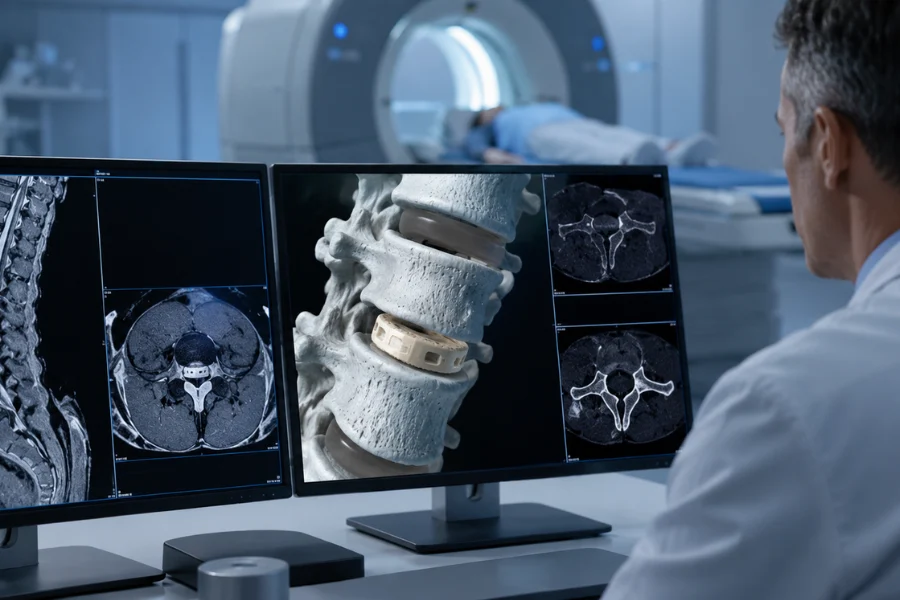
One of PEEK’s most distinctive advantages in medical applications is its radiolucent property.
Because PEEK is a non-metallic polymer, it allows X-rays to pass through with minimal interference and produces significantly fewer artifacts during CT and MRI examinations.
This provides several clinical advantages:
- Clear visualization of surrounding tissues
- Improved postoperative monitoring
- Easier evaluation of bone healing
- Reduced imaging interference
For example, spinal implants manufactured from titanium may create imaging artifacts that make it more difficult to evaluate bone fusion. PEEK implants allow clinicians to better observe bone growth around the implant area.
This imaging compatibility has made PEEK particularly valuable for:
- Spinal fusion cages
- Cranial reconstruction implants
- Orthopedic implants
- Long-term implantable components
For medical device designers, radiolucency is not only a material advantage but also a factor that can improve the clinical monitoring process throughout the device lifecycle.
Selecting the Right PEEK Grade for Medical Applications
Although PEEK is often discussed as a single material, different grades are available to achieve different combinations of stiffness, wear resistance, dimensional stability, and manufacturability.
Choosing the appropriate PEEK grade requires evaluating:
- Mechanical requirements
- Device function
- Manufacturing method
- Sterilization conditions
- Regulatory expectations
Unfilled PEEK
Unfilled PEEK is the standard grade that provides a balanced combination of strength, toughness, chemical resistance, and processability.
Key characteristics include:
- High material purity
- Excellent chemical resistance
- Good fatigue performance
- Balanced mechanical properties
Because it maintains better flow characteristics than reinforced grades, unfilled PEEK is often preferred for complex medical components produced through injection molding.
Typical applications include:
- Medical device housings
- Precision plastic components
- Surgical instrument parts
- Functional medical assemblies
For medical injection molding, unfilled PEEK is often easier to process when compared with fiber-reinforced materials because it reduces challenges related to fiber orientation and anisotropic shrinkage.
Glass Fiber Reinforced PEEK
Glass fiber reinforced PEEK is selected when higher stiffness and dimensional stability are required.
The addition of glass fibers improves:
- Mechanical rigidity
- Structural stability
- Load-bearing capability
- Resistance to deformation
This makes it suitable for components exposed to higher mechanical loads.
However, reinforced PEEK introduces additional manufacturing considerations.
During injection molding, engineers need to evaluate:
- Fiber orientation effects
- Flow behavior
- Shrinkage variation
- Dimensional consistency
Improper process control may result in uneven mechanical properties or dimensional instability.
Therefore, reinforced PEEK components typically require more detailed mold flow analysis and process optimization.
Carbon Fiber Reinforced PEEK
Carbon fiber reinforced PEEK provides enhanced stiffness, wear resistance, and dimensional stability.
Compared with unfilled PEEK, carbon-filled grades typically offer:
- Higher strength-to-weight ratio
- Lower thermal expansion
- Improved wear resistance
- Better load performance
These characteristics make carbon-filled PEEK suitable for demanding mechanical applications, including:
- Wear-resistant medical components
- Mechanical assemblies
- High-load precision parts
However, increased reinforcement content can make processing more challenging. Manufacturers must carefully control:
- Material flow
- Mold filling behavior
- Cooling conditions
- Final dimensions
Implant Grade PEEK
Implant-grade PEEK is specifically developed for medical applications requiring long-term contact with the human body.
Compared with industrial-grade PEEK, implant-grade materials require stricter control of:
- Material purity
- Traceability
- Documentation
- Biological evaluation
Common applications include:
- Spinal fusion cages
- Cranial implants
- Orthopedic components
- Dental restoration frameworks
For implantable medical devices, material selection is only one part of the qualification process. The final device performance depends on:
- Product design
- Manufacturing controls
- Sterilization validation
- Regulatory evaluation
PEEK Grade Selection Guide for Medical Devices
A practical approach for engineers is to select PEEK grades based on the functional requirements of the device.
| Medical Requirement | Recommended PEEK Consideration |
|---|---|
| Implantable applications | Medical implant-grade PEEK |
| Complex injection molded components | Unfilled PEEK |
| Higher stiffness requirements | Glass fiber reinforced PEEK |
| Wear resistance requirements | Carbon fiber reinforced PEEK |
| High dimensional stability | Reinforced PEEK grades |
The goal is not to select the highest-performance grade available, but to choose the material that provides the required performance while maintaining manufacturing feasibility.
When Should Engineers Choose PEEK for Medical Devices?
PEEK provides significant advantages, but it is not suitable for every medical application.
Engineers should consider PEEK when the device requires a combination of:
Long-Term Performance
PEEK is suitable when components must maintain mechanical properties over extended periods, especially in implantable applications.
Examples:
- Spinal implants
- Orthopedic components
- Long-term medical devices
Sterilization Resistance
PEEK is a strong candidate for reusable medical devices exposed to repeated sterilization cycles.
Examples:
- Surgical instruments
- Sterilizable components
- Medical equipment parts
Imaging Compatibility
PEEK is preferred when postoperative imaging clarity is important.
Examples:
- Spinal fusion devices
- Implantable components requiring CT/MRI monitoring
Lightweight Alternative to Metals
PEEK may provide advantages when reducing device weight while maintaining engineering performance.
Examples:
- Surgical components
- Portable medical equipment
- Precision assemblies
However, PEEK may not be the ideal choice when:
- Extremely high mechanical strength is required
- The component is a low-cost disposable product
- Standard medical plastics already satisfy performance requirements
For cost-sensitive applications, materials such as PC, ABS, or polypropylene may provide a more practical solution.
The correct decision should balance:
- Clinical requirements
- Manufacturing complexity
- Regulatory expectations
- Total product cost
Medical Applications of PEEK Material
PEEK has become an important material in medical device manufacturing because it provides a combination of properties that are difficult to achieve with conventional polymers, including mechanical stability, sterilization resistance, chemical durability, lightweight performance, and imaging compatibility.
However, successful PEEK application depends on more than selecting a high-performance material. Medical OEM teams must evaluate the relationship between material properties, product design, manufacturing capability, and regulatory requirements.
Implantable Medical Devices
Implantable devices represent one of the most established application areas for PEEK.
Compared with metallic materials, PEEK provides several advantages:
- Lower density
- Reduced imaging interference
- Bone-like elastic modulus
- Good fatigue resistance
- Long-term chemical stability
These characteristics make PEEK particularly valuable for applications where long-term performance and clinical monitoring are important.
Spinal Implants
Spinal implants are among the most widely adopted medical applications for PEEK.
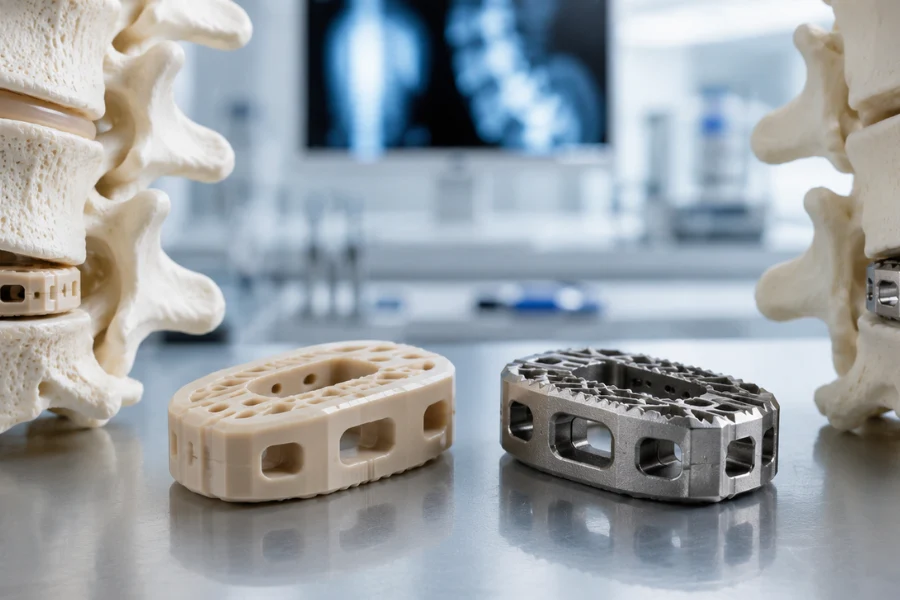
PEEK is commonly used in spinal fusion procedures because its elastic modulus is closer to human cortical bone compared with titanium and stainless steel.
Common applications include:
- Interbody fusion cages
- Cervical fusion devices
- Lumbar fusion implants
- Spinal spacers
For spinal applications, engineers evaluate several factors:
- Mechanical strength under repeated loading
- Dimensional accuracy
- Implant geometry
- Imaging requirements
- Long-term biological performance
PEEK’s radiolucency provides an additional clinical advantage because surgeons can monitor bone fusion and healing progress with fewer imaging artifacts.
However, PEEK does not completely replace metal implants. Titanium may still be preferred in applications requiring maximum mechanical strength or extensive clinical history.
Orthopedic and Trauma Applications
PEEK is also used in selected orthopedic applications where lightweight construction and fatigue resistance are important.
Examples include:
- Orthopedic fixation components
- Bone repair devices
- Sports medicine components
- Ligament repair devices
The decision to use PEEK depends on balancing:
- Mechanical loading conditions
- Device geometry
- Patient requirements
- Manufacturing feasibility
For orthopedic components, engineers must carefully evaluate whether PEEK provides sufficient mechanical performance compared with metal alternatives.
Cranial and Maxillofacial Implants
PEEK has become increasingly important in cranial and maxillofacial reconstruction because it supports both precision manufacturing and patient-specific designs.
Applications include:
- Cranial reconstruction implants
- Facial bone reconstruction components
- Custom anatomical implants
PEEK provides advantages including:
- Lightweight design
- Imaging compatibility
- Dimensional stability
- Compatibility with CNC machining and additive manufacturing
For patient-specific implants, PEEK can be manufactured into complex geometries that closely match individual anatomical requirements.
Dental Applications
PEEK is increasingly used in dental applications due to its lightweight properties, chemical stability, and metal-free design possibilities.
Common applications include:
- Implant abutments
- Dental frameworks
- Prosthetic components
- Implant-supported restoration structures
Compared with traditional metallic dental materials, PEEK offers:
- Lower density
- Reduced thermal conductivity
- Improved patient comfort
- Flexible design options
However, dental applications require high dimensional accuracy because small deviations can affect:
- Implant fit
- Occlusion
- Prosthetic stability
- Long-term performance
Manufacturing processes such as precision machining and medical injection molding must maintain consistent dimensional control.
Surgical Instruments and Reusable Medical Components
Beyond implant applications, PEEK is also valuable for reusable medical devices and surgical equipment.
Its lightweight characteristics and resistance to sterilization environments make it suitable for components exposed to repeated cleaning and thermal cycles.
Applications include:
- Surgical instrument handles
- Sterilizable fixtures
- Medical device assemblies
- Precision instrument components
Compared with metal components, PEEK can reduce overall device weight while maintaining resistance to chemicals and repeated sterilization.
For reusable medical devices, manufacturers must control:
- Surface finish
- Mechanical durability
- Dimensional stability
- Material consistency
These factors directly influence product reliability during repeated clinical use.
Catheters and Minimally Invasive Medical Components
PEEK is also used in precision medical components where dimensional accuracy and chemical resistance are critical.
Applications include:
- Catheter components
- Thin-wall tubing
- Multi-lumen structures
- Endoscopic components
- Blood management system parts
These applications typically require:
- Tight tolerances
- Complex geometries
- Reliable material performance
- Consistent manufacturing processes
For minimally invasive devices, even small dimensional variations may affect:
- Fluid flow performance
- Assembly accuracy
- Device functionality
Therefore, manufacturing control becomes a critical factor in successful PEEK medical component production.
PEEK Medical Manufacturing Process Flow
Producing reliable PEEK medical components requires more than selecting the correct material grade. The manufacturing process must control material preparation, tooling design, molding conditions, dimensional accuracy, and validation requirements.
A typical PEEK medical manufacturing workflow includes:
Material preparation → DFM review → Mold development → Process optimization → Quality inspection → Validation → Production scaling
Each stage affects final component performance.
Step 1: Material Preparation and Handling
Although PEEK has lower moisture absorption compared with many engineering plastics, proper material preparation remains important for consistent production.
Key considerations include:
- Material storage control
- Batch traceability
- Drying conditions
- Contamination prevention
Medical-grade PEEK requires strict material control because changes in material quality can affect:
- Mechanical performance
- Biological evaluation
- Production consistency
For regulated medical applications, maintaining complete material traceability from resin batch to finished component is essential.
Step 2: DFM Review and Component Design Optimization
Design for Manufacturing (DFM) is especially important when developing PEEK medical components.
Because PEEK has:
- High melt viscosity
- High processing temperature
- Semi-crystalline behavior
design decisions directly influence manufacturing stability.
During DFM review, engineers typically evaluate:
Wall Thickness
Uniform wall thickness helps reduce:
- Uneven cooling
- Internal stress
- Warpage
Flow Path Design
Because PEEK flows differently from conventional plastics, engineers need to analyze:
- Filling behavior
- Weld line locations
- Potential air traps
Tolerance Requirements
Medical components often require tight dimensional control.
Engineers must consider:
- Material shrinkage
- Crystallinity changes
- Manufacturing repeatability
Early DFM evaluation can reduce tooling modifications and production risks.
Step 3: PEEK Injection Molding and Process Optimization
Injection molding is one of the most important manufacturing methods for high-volume PEEK medical components.
It is suitable for:
- Complex geometries
- Repeat production
- Precision components
- Scalable manufacturing
Typical PEEK injection molding parameters include:
| Parameter | Typical Range |
|---|---|
| Melt temperature | 360–400°C |
| Mold temperature | 160–200°C |
| Drying temperature | 120–150°C |
| Shrinkage | Approximately 1% or higher depending on grade |
However, compared with conventional medical plastics, PEEK injection molding requires more advanced process control.
Key process variables include:
- Melt temperature
- Injection pressure
- Holding pressure
- Cooling rate
- Mold temperature
- Residence time
Incorrect process settings can affect:
- Filling performance
- Crystallinity
- Mechanical properties
- Dimensional stability
Step 4: Tooling Development for PEEK Components
PEEK requires specialized tooling considerations because of its high processing temperature and demanding thermal behavior.
Important tooling factors include:
Mold Material Selection
PEEK processing temperatures place higher demands on mold durability.
Tooling must consider:
- Wear resistance
- Thermal stability
- Long-term dimensional accuracy
Cooling System Design
Because crystallization affects PEEK performance, uniform cooling is essential.
Poor cooling control may result in:
- Uneven shrinkage
- Warpage
- Dimensional variation
Venting and Filling Design
Proper venting helps reduce:
- Air traps
- Burn marks
- Incomplete filling
Gate and runner design must also account for PEEK’s high melt viscosity.
For medical OEM projects, mold design decisions made early in development can significantly influence production reliability.
PEEK Injection Molding Defects and Manufacturing Solutions
Although PEEK provides outstanding performance for medical applications, achieving consistent production quality requires careful control of material behavior, tooling design, and processing conditions.
Compared with conventional medical plastics, PEEK has a narrower processing window because of:
- High melting temperature
- High melt viscosity
- Semi-crystalline structure
- Crystallization-related dimensional changes
For medical OEM projects, controlling manufacturing risks during the early development stage is essential because defects discovered after tooling completion can significantly increase development time and cost.
Common PEEK Injection Molding Defects
| Defect | Main Cause | Engineering Consideration |
|---|---|---|
| Short shot | High melt viscosity, insufficient filling pressure, poor gate design | Optimize melt temperature, injection pressure, and flow path |
| Flash | Excessive pressure, insufficient mold clamping force, parting line issues | Improve tooling precision and molding parameters |
| Warpage | Uneven cooling, crystallization differences, residual stress | Improve mold temperature control and cooling design |
| Black spots or discoloration | Thermal degradation, excessive residence time | Control processing temperature and material residence time |
| Internal stress cracking | Molecular orientation and uneven cooling | Optimize cooling cycle and apply stress relief treatment |
| Dimensional variation | Shrinkage changes and crystallinity differences | Improve process stability and shrinkage compensation |
Short Shot and Filling Difficulties
Short shots are one of the most common challenges during PEEK injection molding.
Because PEEK has higher melt viscosity than many conventional medical plastics, it requires carefully optimized filling conditions.
Potential causes include:
- Insufficient melt temperature
- Low injection pressure
- Poor gate location
- Excessively thin wall sections
- Long flow distances
Possible solutions include:
- Increasing melt temperature within the safe processing range
- Optimizing injection pressure
- Improving gate size and position
- Adjusting part geometry during DFM review
However, simply increasing temperature is not always the best approach. Excessive thermal exposure may accelerate degradation and negatively affect material performance.
Flash Formation
Flash occurs when molten material escapes from the mold parting line or other gaps during injection.
For PEEK components, flash can result from:
- Excessive injection pressure
- Mold wear
- Poor mold alignment
- Incorrect clamping conditions
Medical components require strict dimensional control, so flash can create problems during:
- Assembly
- Functional testing
- Sterilization validation
Preventing flash requires:
- High-precision tooling
- Proper mold maintenance
- Controlled injection parameters
- Accurate process monitoring
Warpage and Dimensional Instability
Warpage is a critical concern for precision medical components because even small dimensional changes can affect device performance.
PEEK warpage is closely related to:
- Crystallization behavior
- Cooling uniformity
- Fiber orientation in reinforced grades
- Residual stress
Engineering solutions include:
- Optimizing mold temperature distribution
- Improving cooling channel design
- Adjusting holding pressure
- Selecting appropriate material grades
For high-precision medical components, dimensional validation should be performed throughout the production process rather than relying only on final inspection.
Thermal Degradation and Black Spots
PEEK requires high processing temperatures, but excessive thermal exposure can cause degradation.
Common causes include:
- Excessive barrel temperature
- Long residence time
- Material stagnation in the flow path
- Poor equipment cleaning
Possible results include:
- Black particles
- Material discoloration
- Reduced mechanical performance
Manufacturers can reduce these risks through:
- Controlled residence time
- Proper machine setup
- Regular equipment maintenance
- Optimized processing parameters
Validation and Quality Control for PEEK Medical Components
For medical device manufacturing, producing a dimensionally correct component is only one part of quality assurance.
Medical OEM projects require controlled processes that demonstrate repeatability and reliability.
Material Traceability
Medical-grade PEEK production requires strong material management systems.
Important controls include:
- Resin batch traceability
- Supplier documentation
- Material certificates
- Production records
Traceability allows manufacturers to connect:
Raw material → Manufacturing process → Finished component
This is particularly important for implantable and long-term medical devices.
Dimensional Inspection and Process Monitoring
PEEK components often require precise inspection because manufacturing conditions influence final dimensions.
Quality control may include:
- Dimensional measurement
- Visual inspection
- Mechanical testing
- Process monitoring
For precision medical components, manufacturers should monitor not only final dimensions but also process consistency.
Important parameters include:
- Mold temperature stability
- Injection pressure variation
- Cycle repeatability
- Material handling conditions
Process Validation Considerations
Medical device manufacturing requires validated and repeatable processes.
Depending on the device application, manufacturers may need to establish:
- Defined processing parameters
- Inspection methods
- Production controls
- Documentation systems
A controlled manufacturing process helps ensure that every production batch meets established requirements.
Quality systems such as ISO 13485 provide a framework for medical device manufacturing organizations to manage documentation, risk control, and production consistency.
It is important to distinguish between:
- PEEK material properties
- Medical device manufacturing quality systems
The polymer itself does not make a device compliant. The complete manufacturing process, device design, testing, and validation determine final compliance.
PEEK Medical Manufacturing Supplier Evaluation Checklist
Selecting the right manufacturing partner is an important step when developing PEEK medical components.
Because PEEK requires specialized processing knowledge, medical OEM teams should evaluate suppliers based on engineering capability rather than manufacturing capacity alone.
Experience With High-Performance Medical Plastics
A qualified supplier should understand:
- PEEK material behavior
- High-temperature injection molding
- Precision component manufacturing
- Medical documentation requirements
Tooling and Engineering Capability
Successful PEEK production depends heavily on early engineering collaboration.
Important capabilities include:
- DFM review
- Mold design optimization
- Material selection support
- Process development
A supplier with strong tooling knowledge can identify potential risks before production begins.
Prototype-to-Production Support
Medical device development often requires several stages:
- Prototype evaluation
- Design refinement
- Process optimization
- Production scaling
A capable manufacturing partner should support the transition from early development to commercial production.
Quality and Documentation Capability
Medical OEMs should evaluate whether suppliers can provide:
- Material traceability
- Inspection records
- Process documentation
- Production consistency
For regulated medical applications, documentation capability is as important as manufacturing capability.
Working With an Experienced PEEK Medical Component Manufacturer
PEEK offers significant advantages for medical devices, but achieving reliable production requires integration between material knowledge, product design, tooling engineering, and manufacturing control.
For medical OEM teams, early collaboration with an experienced manufacturing partner can help reduce risks related to:
- Material selection
- Mold design
- Process optimization
- Production scalability
SeaSkyMedical supports medical device manufacturers with precision plastic component manufacturing solutions, including engineering review, tooling development, medical injection molding, and production support for complex medical applications.
Conclusion
PEEK has become one of the most valuable high-performance polymers in medical device manufacturing because it combines mechanical compatibility, biocompatibility, chemical resistance, thermal stability, and imaging advantages.
Its bone-like elastic modulus makes it particularly suitable for spinal implants and orthopedic applications, while its sterilization resistance and chemical stability support reusable medical devices and precision components.
However, PEEK is also one of the more challenging medical polymers to manufacture. High processing temperatures, crystallinity control, specialized tooling requirements, and strict dimensional requirements mean that successful production depends on careful engineering decisions throughout the entire development process.
For medical OEM teams, selecting PEEK should involve evaluating:
- Material performance
- Device requirements
- Manufacturing feasibility
- Validation strategy
- Total product lifecycle cost
The future of PEEK in medical manufacturing will continue to expand as advances in injection molding, additive manufacturing, surface modification, and patient-specific design create new opportunities for high-performance medical devices.