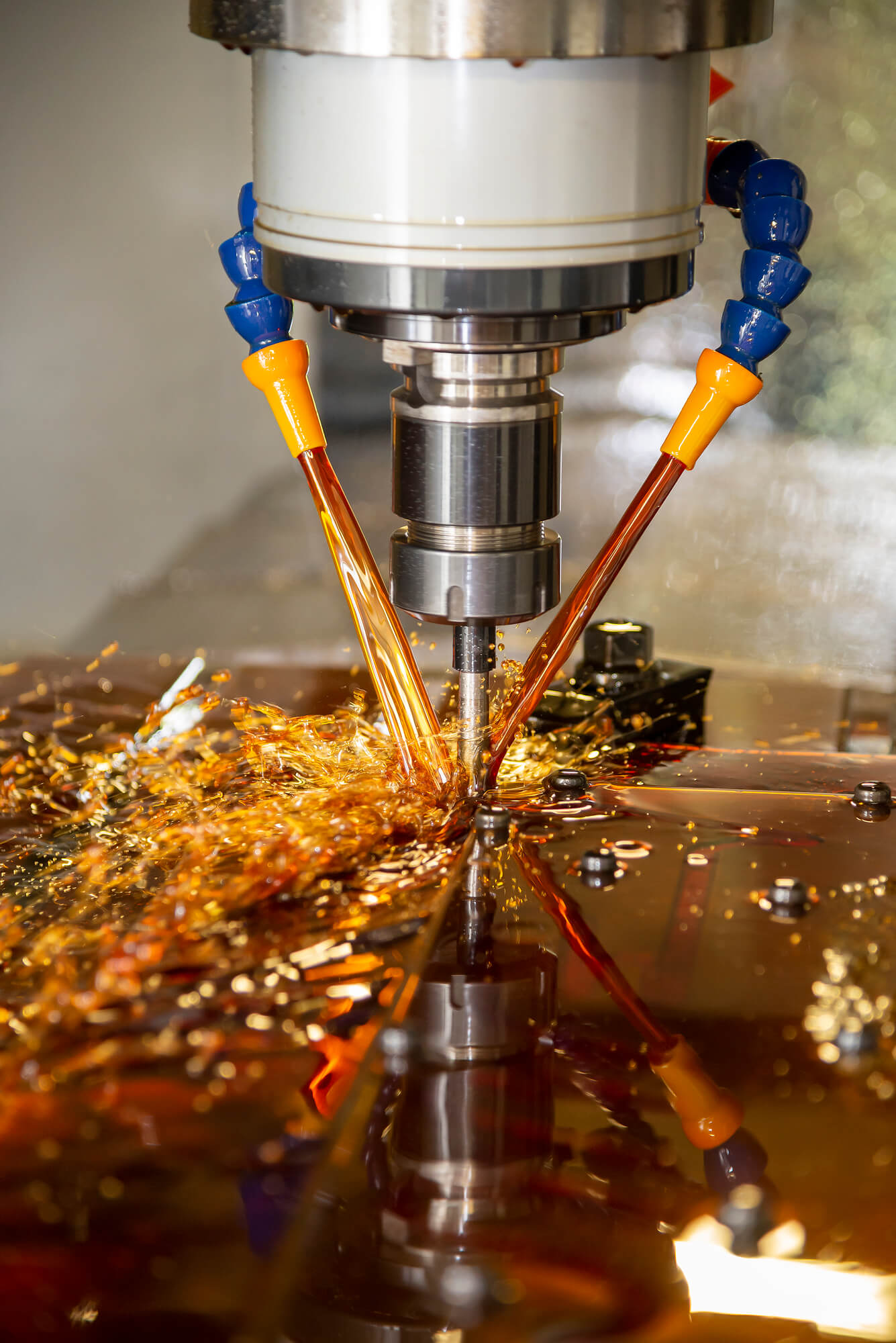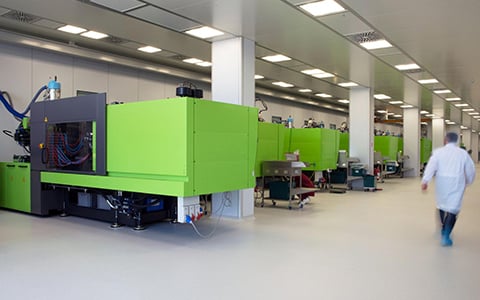
Medical device manufacturers often require transparent plastics that provide more than visual clarity. For diagnostic devices, laboratory components, and medical packaging, transparency can directly support inspection, workflow efficiency, and product reliability.
PETG, or polyethylene terephthalate glycol-modified, has become an important transparent medical plastic because it combines the optical clarity of PET-based materials with improved toughness and processing flexibility. Through glycol modification, PETG reduces crystallization during processing, allowing manufacturers to produce clear components with better impact resistance and easier fabrication.
However, selecting PETG for medical applications requires more than comparing basic material properties. Medical OEM teams must evaluate the complete manufacturing environment, including:
- Device function
- Sterilization method
- Temperature exposure
- Mechanical requirements
- Injection molding capability
- Validation requirements
- Long-term production stability
Medical plastic material selection should be evaluated together with tooling, processing, and quality requirements. Working with an experienced medical plastic injection molding manufacturer can help ensure that PETG material decisions are aligned with production feasibility and device requirements.
PETG can be a strong material choice for transparent diagnostic components, medical packaging, and healthcare products where visibility and manufacturing efficiency are important. However, it is not designed for every medical application. Understanding its advantages and limitations helps engineers make more reliable material decisions before tooling and production begin.
What Is Medical PETG?
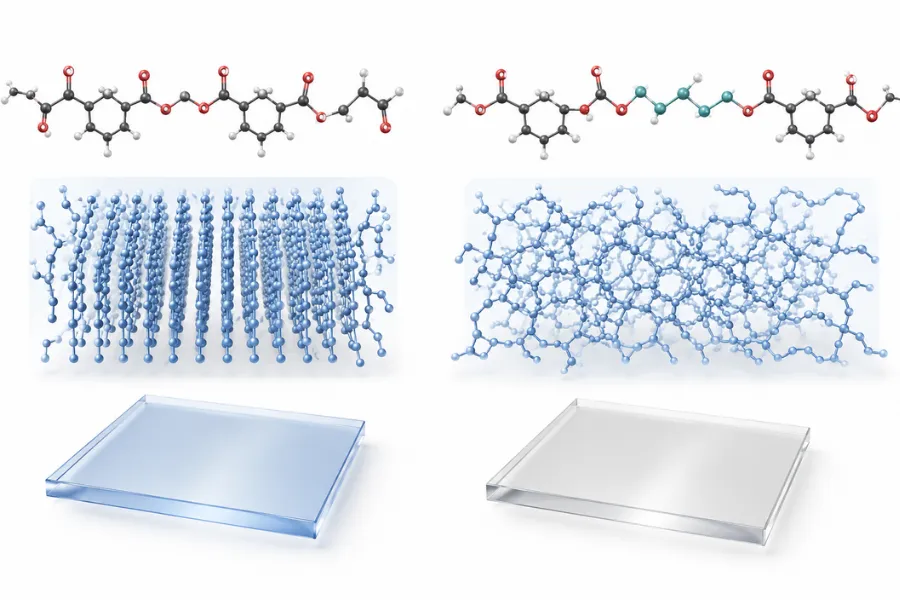
PETG is a glycol-modified copolyester derived from polyethylene terephthalate (PET). By introducing glycol-based components, commonly including CHDM (cyclohexanedimethanol), manufacturers modify the polymer structure and reduce crystallization during processing.
Unlike standard PET, which can develop crystalline regions during heating and cooling, PETG remains an amorphous thermoplastic. This structure allows PETG to maintain high transparency while improving toughness and processing performance.
For medical manufacturing, these characteristics create several advantages:
- High optical clarity
- Good impact resistance
- Improved forming performance
- Good chemical resistance
- Lower risk of crystallization-related haze
- Compatibility with several common sterilization methods
Medical-grade PETG refers to specific PETG formulations supported by documentation and testing for healthcare-related applications. Depending on the resin grade and intended use, manufacturers may evaluate requirements related to:
- ISO 10993 biological evaluation
- USP Class VI testing
- FDA material requirements
- Sterilization compatibility
Medical OEM teams should verify the exact material documentation before production because regulatory suitability depends on the final device design, processing conditions, and intended use.
Material selection is only one part of medical manufacturing. Engineers also need to evaluate resin compatibility, processing requirements, and regulatory expectations during the medical plastic material selection stage.
How Glycol Modification Improves PET Performance
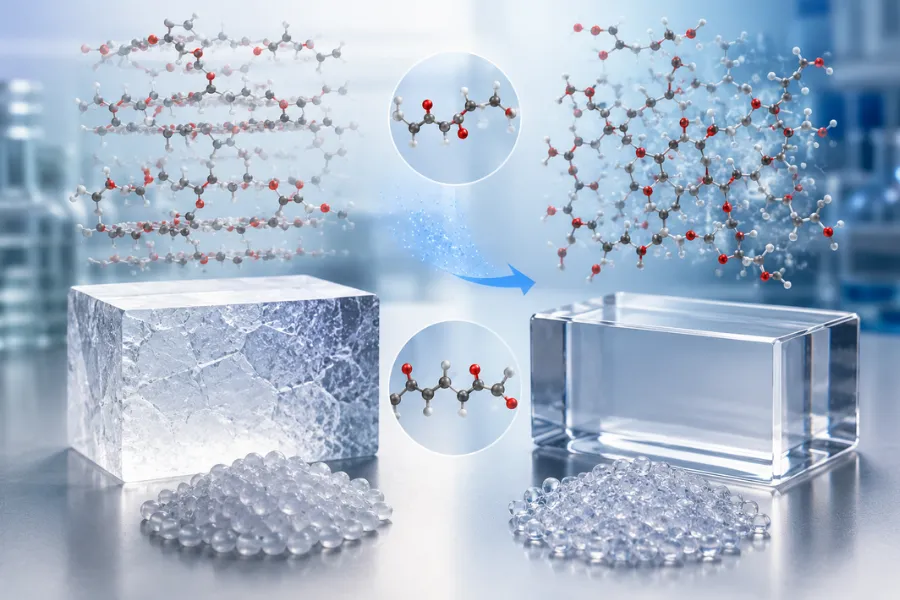
The main difference between PET and PETG is how the polymer behaves during thermal processing.
Standard PET can develop crystallization when exposed to specific heating and cooling conditions. This crystallization can reduce transparency and create a cloudy appearance.
The glycol modification used in PETG interrupts this crystallization process. As a result, PETG maintains a clearer appearance after forming and provides improved processing flexibility.
This difference creates several manufacturing advantages:
| Property | PETG Advantage |
|---|---|
| Optical clarity | Maintains transparent appearance after processing |
| Toughness | Better impact resistance compared with traditional PET |
| Processing | Easier forming and fabrication |
| Crystallization behavior | Reduced risk of haze after heating |
For medical components, this transparency has functional value.
A transparent PETG component can help users:
- Observe fluid movement
- Confirm sample placement
- Monitor internal device conditions
- Identify visible abnormalities
This is particularly valuable for diagnostic devices where visual confirmation is part of the product workflow.
Why Medical OEMs Choose PETG
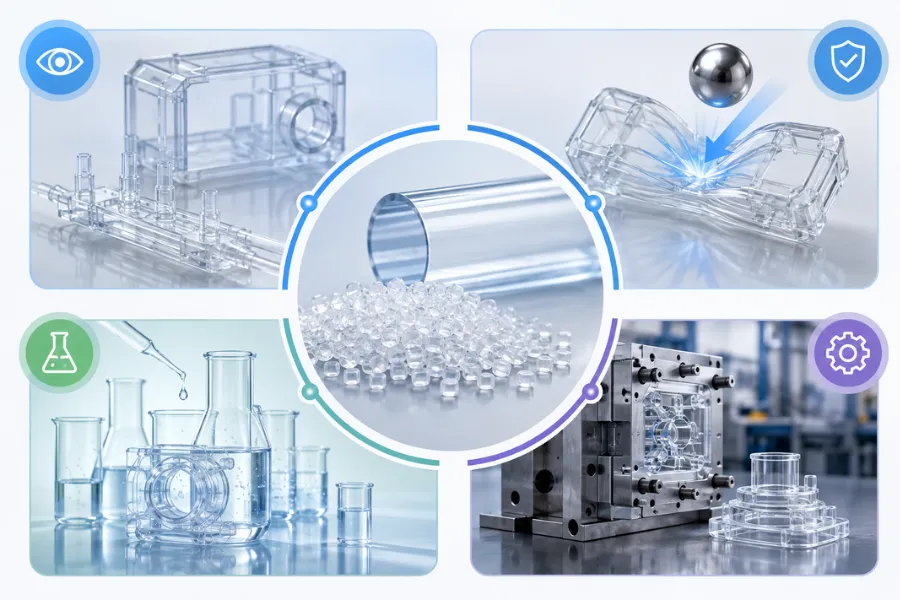
Medical material selection is usually based on balancing multiple requirements rather than selecting the material with the highest individual performance.
A successful medical plastic component must perform consistently throughout:
- Manufacturing
- Assembly
- Sterilization
- Transportation
- Clinical use
PETG is often selected because it provides a practical balance between:
- Transparency
- Toughness
- Chemical resistance
- Processing efficiency
- Cost control
Compared with glass, PETG reduces breakage risks while maintaining visibility.
Compared with higher-performance engineering plastics, PETG is generally easier to process and can provide a more efficient manufacturing solution for applications that do not require extreme mechanical or thermal performance.
However, PETG should not be selected only because it is transparent. Engineers must evaluate whether the material matches the actual device requirements.
For example:
- A diagnostic cartridge requiring visual inspection may benefit from PETG.
- A reusable surgical component exposed to repeated steam sterilization may require PPSU or PEEK.
- A high-impact protective enclosure may require polycarbonate.
The correct material choice depends on the relationship between product requirements and manufacturing limitations.
Optical Transparency for Diagnostic Applications
One of PETG’s most valuable characteristics is its optical clarity.
Medical-grade PETG can achieve approximately 89% to 92% light transmission depending on resin grade, additives, and part thickness.
This high transparency makes PETG suitable for applications where visual inspection is part of device functionality.
Common examples include:
- Diagnostic housings
- Transparent covers
- Microfluidic components
- Sample containers
- Laboratory inspection parts
For diagnostic devices, transparent materials allow operators to evaluate internal conditions without opening the system.
This can support observation of:
- Sample loading
- Fluid movement
- Reaction areas
- Air bubbles
- Flow interruptions
For microfluidic and diagnostic applications, these visual advantages can improve usability and reduce unnecessary inspection steps.
However, optical performance depends heavily on manufacturing control.
Even small defects can affect transparent medical parts, including:
- Flow marks
- Bubbles
- Weld lines
- Surface scratches
- Residual stress whitening
Therefore, PETG selection must be considered together with:
- Mold design
- Injection parameters
- Material preparation
- Surface requirements
A transparent material can only deliver its intended performance when the complete manufacturing process is properly controlled.
Impact Resistance and Safer Medical Components
PETG also provides a useful balance between transparency and toughness.
Compared with glass and acrylic, PETG offers improved impact resistance and reduced brittleness. This makes it suitable for medical products that require frequent handling or transportation protection.
Potential applications include:
- Diagnostic device covers
- Transparent medical housings
- Laboratory components
- Protective packaging
- Disposable medical products
For medical OEM teams, impact resistance can reduce the risk of damage during:
- Assembly
- Shipping
- Storage
- Clinical handling
However, PETG is not intended to replace every high-strength engineering plastic.
When selecting materials, engineers should consider:
- Required impact performance
- Part geometry
- Wall thickness
- Mechanical loading
- Environmental conditions
For applications requiring extreme impact resistance or elevated temperature performance, materials such as polycarbonate or high-performance polymers may provide better results.
Chemical Resistance and Cleaning Compatibility
PETG provides good resistance to many common chemicals and cleaning agents used in healthcare environments.
This makes it suitable for applications exposed to:
- Disinfectants
- Cleaning solutions
- Laboratory chemicals
- Environmental contamination risks
However, chemical compatibility must be evaluated based on actual service conditions.
Medical OEM teams should consider:
- Chemical concentration
- Exposure duration
- Temperature
- Mechanical stress during use
A PETG component may perform well under normal conditions but experience environmental stress cracking when chemical exposure combines with residual molding stress.
This is why medical plastic selection should evaluate both:
- Resin properties
- Manufacturing-induced stress
Factors such as injection pressure, cooling conditions, part geometry, and wall thickness can influence long-term chemical performance.
A DFM-focused approach helps reduce these risks before tooling development begins. Early collaboration with manufacturing specialists can improve material decisions and reduce redesign risks during later production stages.
Medical Applications of PETG
PETG is widely used in medical applications where transparency, toughness, and processing flexibility are important. Unlike many engineering plastics selected mainly for mechanical performance, PETG is often chosen because visibility itself provides functional value.
For medical OEM teams, PETG is especially suitable when a product requires:
- Visual inspection
- Transparent protection
- Moderate mechanical performance
- Sterilization compatibility
- Efficient manufacturing processes
However, the final material decision should always consider the complete product lifecycle, including regulatory expectations, production volume, and operating conditions.
Diagnostic Device Components
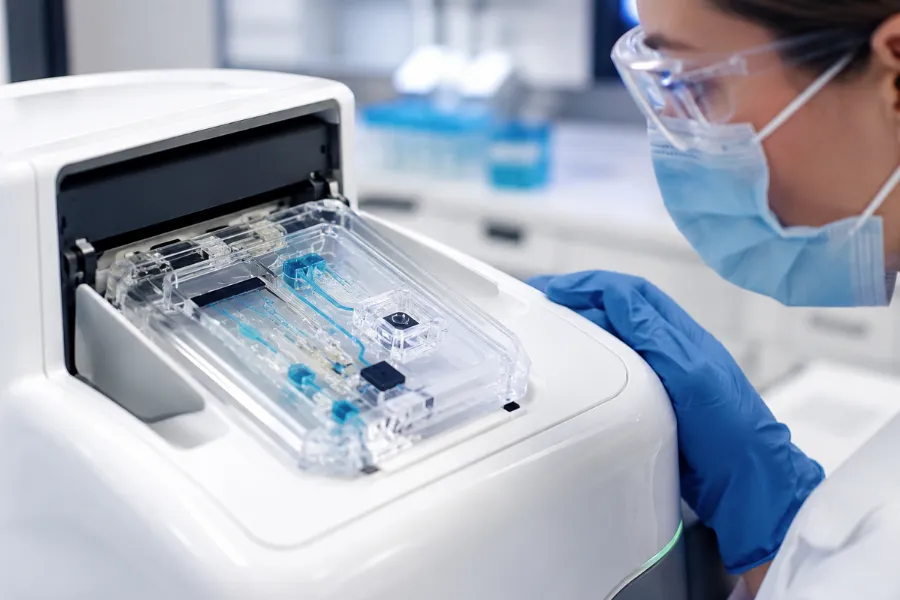
Diagnostic devices are one of the most suitable application areas for PETG because transparency can directly support product functionality.
PETG may be used for:
- Diagnostic housings
- Transparent covers
- Microfluidic components
- Sample containers
- Laboratory testing components
- Fluid monitoring parts
In diagnostic systems, transparent PETG components allow users to observe internal conditions without opening the device.
For example, transparent microfluidic components can help operators evaluate:
- Sample loading
- Fluid movement
- Reaction areas
- Air bubble formation
- Flow interruptions
This visual feedback can improve workflow efficiency and support faster identification of potential issues during testing.
Many of these applications fall under OEM medical component development, where material selection, tooling, molding, and production control must work together. SeaSkyMedical supports these projects through OEM medical components manufacturing solutions designed for complex medical plastic parts.
However, diagnostic components often have strict optical requirements. A part that meets mechanical requirements may still fail acceptance criteria if molding defects affect transparency.
Manufacturers should control:
- Material moisture
- Injection molding conditions
- Mold surface quality
- Gate location
- Cooling consistency
to maintain optical performance throughout production.
Medical Device Packaging
Medical device packaging is one of the most established applications for PETG.
PETG is commonly used for rigid medical packaging because it provides:
- High clarity
- Good impact resistance
- Easy forming characteristics
- Dimensional stability
- Compatibility with common sterilization methods
Typical applications include:
- Sterile trays
- Clinical procedure trays
- Device packaging containers
- Blister packaging
- Protective packaging components
The transparency of PETG allows healthcare personnel to identify packaged devices before opening the sterile barrier system.
This supports:
- Product identification
- Procedure preparation
- Inventory management
- Packaging inspection
Compared with brittle transparent materials, PETG provides better protection against damage during transportation and handling.
For medical packaging projects, manufacturers must evaluate more than material properties. Important considerations include:
- Sterile barrier performance
- Seal integrity
- Packaging validation
- Material traceability
- Sterilization exposure
The selected material must maintain performance from production through sterilization, storage, transportation, and clinical use.
For regulated healthcare products, PETG packaging development often requires coordination between material selection, forming processes, and final packaging requirements. SeaSkyMedical provides medical device packaging solutions as part of its broader medical manufacturing capabilities.
Laboratory and Healthcare Components
PETG is also considered for laboratory and healthcare components where transparency and chemical resistance are valuable.
Examples include:
- Containers
- Connectors
- Fluid handling components
- Protective covers
- Laboratory accessories
In these applications, transparency enables visual monitoring and inspection.
However, medical engineers should evaluate whether PETG’s performance matches the operating environment.
Applications involving:
- High mechanical loads
- Continuous thermal exposure
- Repeated sterilization cycles
- Long-term structural stress
may require alternative engineering plastics.
PETG performs best when transparency and manufacturing efficiency are primary requirements rather than extreme thermal or mechanical performance.
Dental and Transparent Medical Applications
PETG’s clarity and forming capability make it suitable for selected dental applications.
Examples include:
- Dental aligners
- Transparent dental devices
- Custom formed components
The material can achieve detailed geometries while maintaining a clear appearance.
For these applications, manufacturers must maintain:
- Consistent thickness
- Surface quality
- Dimensional accuracy
- Low residual stress
Poor processing control may result in:
- Stress whitening
- Surface defects
- Reduced optical clarity
- Dimensional variation
These issues can affect both appearance and product performance.
PETG for Medical Prototyping and Product Development
PETG can also support early-stage medical product development.
During prototype development, engineers may use PETG to evaluate:
- Product appearance
- Assembly concepts
- Fluid visibility
- User interaction
- Design assumptions
Its combination of:
- Transparency
- Easy processing
- Availability
- Good toughness
makes it useful for design verification before production tooling begins.
For early medical device development, teams may combine prototype evaluation with medical product development services to assess design feasibility before moving into full-scale manufacturing.
However, prototype material selection should consider the future manufacturing pathway.
A prototype material that performs well during early testing may not always represent the final production material.
Medical OEM teams should evaluate whether the material supports future requirements related to:
- Sterilization
- Regulatory submission
- Injection molding production
- Process validation
- Long-term supply stability
PETG Injection Molding Considerations for Medical Components
Although PETG is widely recognized for thermoforming and packaging applications, medical-grade PETG can also be used for injection molded medical components when the process is properly controlled.
For medical injection molding projects, success depends on controlling the relationship between:
- Material preparation
- Mold design
- Processing parameters
- Quality requirements
- Validation strategy
Transparent medical components require additional attention because defects that may be acceptable in opaque parts can become visible and affect product acceptance.
Material Preparation and Drying Requirements
Proper material preparation is one of the first steps in producing consistent PETG medical components.
Although PETG generally has easier processing characteristics than some engineering plastics, excessive moisture can negatively affect part quality.
Insufficient drying may contribute to:
- Reduced mechanical performance
- Surface imperfections
- Optical defects
- Material degradation
For applications requiring high transparency, moisture control becomes especially important.
Medical PETG processing typically requires moisture levels controlled below approximately 0.04% before molding.
Manufacturers should establish controlled material handling procedures, including:
- Verified drying parameters
- Proper resin storage
- Moisture monitoring
- Lot traceability
This is particularly important in medical manufacturing because material variation can influence process validation results.
Injection Molding Process Window Considerations
Medical PETG components require a stable processing window to achieve repeatable production.
Important process variables include:
- Melt temperature
- Injection speed
- Holding pressure
- Cooling time
- Mold temperature
- Residence time
Incorrect process conditions may create quality issues.
Excessive Injection Stress
High injection pressure or unsuitable filling conditions can increase residual stress.
Potential effects include:
- Stress whitening
- Reduced chemical resistance
- Dimensional instability
Poor Optical Quality
Unstable filling conditions may contribute to:
- Flow marks
- Weld lines
- Uneven transparency
Dimensional Variation
Inconsistent cooling or pressure control may affect:
- Part dimensions
- Assembly fit
- Product repeatability
For medical OEM production, the objective is not simply producing acceptable samples. The process must remain stable across repeated production cycles.
Mold Design Considerations for PETG Medical Parts
Mold design directly affects PETG part quality, especially for transparent components.
Key considerations include:
Draft Angle
A suitable draft angle helps reduce ejection stress and protect surface quality.
A draft angle of approximately 1° to 3° is commonly considered depending on:
- Part geometry
- Surface finish
- Mold texture
- Ejection requirements
Insufficient draft can increase:
- Ejection force
- Surface stress
- Risk of scratches
- Residual stress
Gate Design and Flow Management
Gate design influences:
- Melt flow behavior
- Weld line position
- Optical appearance
- Dimensional consistency
For transparent PETG parts, gate location should minimize visible defects.
Poor gate design may lead to:
- Visible weld lines
- Uneven filling
- Localized stress concentration
Venting Requirements
Proper venting helps remove trapped gases during filling.
Poor venting can cause:
- Burn marks
- Internal bubbles
- Short shots
- Surface defects
For diagnostic components, effective venting is especially important because internal defects can interfere with visual inspection.
Cooling System Design
Uniform cooling helps maintain:
- Dimensional stability
- Consistent shrinkage
- Reduced warpage
This is particularly important for medical components requiring precise assembly with other device parts.
PETG Tooling Strategy for Medical Injection Molding
For medical PETG components, material selection is only the first step in achieving reliable production. Tooling strategy directly affects part quality, production stability, validation requirements, and long-term manufacturing performance.
Compared with general plastic products, medical components often require:
- Consistent dimensional performance
- Controlled cosmetic appearance
- Repeatable production conditions
- Documented manufacturing processes
- Long-term supply reliability
For this reason, medical OEM teams should evaluate tooling decisions together with expected production volume, device lifecycle, sterilization requirements, and validation planning.
Professional medical mold making capability is an important factor when developing PETG medical components because transparent parts require careful control of mold precision, surface quality, and production consistency.
Prototype Tooling vs Production Tooling for PETG Medical Parts
The appropriate tooling approach depends on the development stage, production volume, and regulatory requirements of the medical device project.
Prototype Tooling
Prototype tooling is commonly considered during:
- Early product development
- Design verification
- Engineering testing
- Clinical evaluation stages
- Low-volume production
The main advantages include:
- Faster development cycles
- Lower initial investment
- Easier design modifications
Prototype tooling allows engineers to evaluate:
- Part geometry
- Assembly performance
- Material behavior
- Visual appearance
- General molding feasibility
However, prototype results may not always represent final production conditions.
Medical OEM teams should evaluate whether prototype tooling accurately reflects future requirements related to:
- Tool life
- Dimensional repeatability
- Production consistency
- Validation strategy
A prototype part that performs well during initial testing may still require design adjustments before moving into validated production.
Production Tooling
Production tooling is designed for long-term manufacturing requirements.
Compared with prototype tooling, production molds typically focus on:
- Extended service life
- Stable cavity performance
- Repeatable process conditions
- Reduced maintenance requirements
For commercial medical devices, production tooling must support consistent part quality across repeated manufacturing cycles.
Key considerations include:
- Expected annual volume
- Device lifecycle
- Mold maintenance requirements
- Material characteristics
- Validation requirements
Choosing the correct tooling approach early can help reduce costly changes after production qualification.
Mold Material Selection for PETG Medical Components
Mold material selection can influence:
- Tooling cost
- Development time
- Production stability
- Maintenance requirements
For lower-volume PETG medical components, aluminum tooling may provide advantages such as:
- Faster machining
- Lower initial investment
- Shorter development timelines
For higher-volume commercial production, steel tooling may be preferred because of:
- Longer tool life
- Better wear resistance
- More consistent long-term performance
The correct tooling material depends on the product lifecycle.
For example:
- A diagnostic prototype intended for design verification may benefit from faster prototype tooling.
- A disposable medical component expected to enter long-term production may require production tooling designed for repeated cycles.
The goal is not selecting the most expensive tooling option. The goal is selecting tooling that matches the expected manufacturing requirements.
Mold Surface Quality for Transparent PETG Parts
Transparent PETG components place additional requirements on mold surface quality.
Because optical defects are easily visible, mold finishing and surface control can directly influence final product acceptance.
Important considerations include:
- Mold polishing quality
- Parting line control
- Ejection system design
- Surface protection during production
Poor mold surface conditions may result in:
- Visible imperfections
- Reduced optical clarity
- Surface defects
- Cosmetic rejection
For diagnostic components and transparent medical housings, mold quality becomes part of the final product performance.
PETG DFM Requirements Before Tooling Development
Design for Manufacturability (DFM) should begin before mold manufacturing.
A detailed DFM review helps identify potential risks related to:
- Part geometry
- Wall thickness
- Assembly requirements
- Cosmetic surfaces
- Sterilization conditions
- Production volume
Early mold design support can help engineers evaluate tooling feasibility and identify potential manufacturing issues before production begins.
Key DFM Considerations for PETG Medical Parts
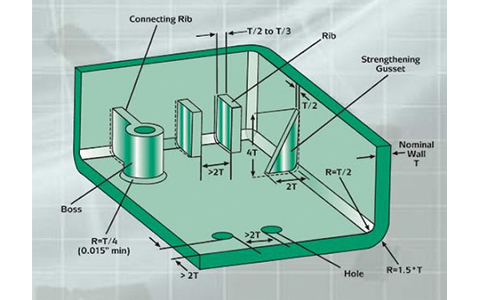
Uniform Wall Thickness
Maintaining consistent wall thickness helps improve:
- Filling behavior
- Cooling consistency
- Dimensional stability
Sudden thickness changes may increase the risk of:
- Sink marks
- Warpage
- Uneven shrinkage
Gate Location Planning
Gate location should be evaluated early because it influences:
- Melt flow direction
- Weld line position
- Cosmetic appearance
- Residual stress distribution
For transparent medical parts, gate placement can directly affect visible quality.
Stress Reduction Through Part Design
PETG components should be designed to minimize unnecessary stress concentration.
Design considerations include:
- Rounded corners
- Smooth transitions
- Appropriate draft angles
- Avoiding excessive thin sections
Reducing molded-in stress can improve:
- Chemical resistance
- Dimensional stability
- Long-term reliability
Assembly and Secondary Operations
Medical devices often require additional manufacturing steps after molding.
These may include:
- Assembly
- Bonding
- Labeling
- Packaging
- Inspection
Design decisions should consider how PETG components interact with downstream operations.
SeaSkyMedical provides additional medical device assembly and secondary operation support to help integrate molded components into complete medical products.
PETG Medical Component Quality Control
Medical plastic manufacturing requires more than producing parts within dimensional specifications.
Quality systems must control:
- Material consistency
- Process stability
- Visual requirements
- Traceability
- Production repeatability
For PETG components, quality control must address both functional requirements and transparent appearance standards.
Dimensional Inspection
PETG medical parts may require dimensional verification because variations can affect:
- Assembly fit
- Fluid pathways
- Component interfaces
- Device functionality
Important inspection areas may include:
- Critical dimensions
- Wall thickness
- Flatness
- Feature location
- Assembly interfaces
However, medical manufacturers should avoid unnecessary tolerance tightening.
Extremely tight tolerances can increase manufacturing difficulty and cost without improving device performance.
The best tolerance strategy is based on actual functional requirements.
Optical Quality Inspection
Transparent PETG medical components require additional inspection criteria compared with opaque plastic parts.
Manufacturers may evaluate:
- Transparency
- Surface appearance
- Flow marks
- Bubbles
- Scratches
- Stress whitening
For diagnostic devices, optical defects can directly influence usability.
For example:
A bubble inside a transparent fluid component may interfere with visual monitoring.
A visible flow mark may reduce confidence during inspection.
Therefore, cosmetic acceptance criteria should be defined during product development rather than after production begins.
Material Traceability
Medical manufacturing requires strong control over material history.
For PETG medical components, traceability may include:
- Resin batch information
- Supplier documentation
- Drying records
- Processing records
- Inspection results
Material consistency is especially important because resin variation can influence:
- Transparency
- Mechanical properties
- Processing behavior
A controlled material management system helps maintain consistent production performance.
PETG Process Validation for Medical Manufacturing
For regulated medical devices, production processes must demonstrate repeatability and control.
PETG injection molding projects may require validation activities based on:
- Device classification
- Customer requirements
- Regulatory pathway
- Manufacturing environment
A typical validation approach includes Installation Qualification (IQ), Operational Qualification (OQ), and Performance Qualification (PQ).
Installation Qualification (IQ)
IQ confirms that manufacturing equipment and tooling are installed correctly.
For PETG injection molding, IQ may verify:
- Injection molding machine installation
- Mold installation
- Drying systems
- Auxiliary equipment
- Environmental conditions
The purpose is to confirm that the production environment is prepared for manufacturing.
Operational Qualification (OQ)
OQ evaluates whether the molding process operates consistently within defined parameters.
For PETG components, OQ may evaluate:
- Melt temperature range
- Injection speed
- Holding pressure
- Cooling conditions
- Process limits
The objective is to establish a stable processing window.
A properly defined process window helps manufacturers reduce variation caused by unstable molding conditions.
Performance Qualification (PQ)
PQ confirms that the validated process can consistently produce acceptable parts during normal production.
Evaluation may include:
- Dimensional inspection
- Appearance inspection
- Functional testing
- Production repeatability
- Batch consistency
For transparent PETG medical components, PQ is particularly important because maintaining consistent optical quality is often a key product requirement.
PETG Sterilization Compatibility and Material Limitations
Sterilization requirements are among the most important factors when selecting PETG for medical applications.
A material that performs well during manufacturing may not remain suitable after repeated exposure to sterilization environments. For this reason, medical OEM teams should evaluate PETG compatibility together with:
- Sterilization method
- Exposure conditions
- Product lifecycle
- Temperature requirements
- Mechanical performance after sterilization
PETG is often selected for medical applications because it supports several commonly used low-temperature sterilization methods while maintaining transparency and dimensional stability.
PETG Compatibility With Common Sterilization Methods
PETG is generally compatible with several sterilization methods used for medical devices and packaging applications.
| Sterilization Method | PETG Suitability | Engineering Considerations |
|---|---|---|
| Ethylene oxide (EtO) | Suitable | Common option for temperature-sensitive medical products |
| Gamma irradiation | Suitable | Confirm resin grade and radiation exposure effects |
| Electron beam (E-beam) | Suitable | Evaluate long-term material performance |
| Autoclave sterilization | Limited | High temperature may affect dimensional stability |
For medical device packaging and disposable components, EtO, gamma, and E-beam sterilization are commonly considered because they operate at lower temperatures compared with steam sterilization.
However, sterilization compatibility should always be verified using the specific PETG resin grade, part geometry, and final application requirements.
Material performance can be influenced by:
- Part thickness
- Residual molding stress
- Radiation exposure level
- Packaging design
- Storage conditions
Why PETG Is Limited for High-Temperature Sterilization
PETG typically has a glass transition temperature between approximately 70°C and 81°C.
Because of this thermal limitation, PETG is generally not recommended for applications requiring repeated high-temperature sterilization cycles.
High-temperature exposure may affect:
- Dimensional accuracy
- Mechanical properties
- Optical clarity
- Long-term stability
For example, a transparent PETG diagnostic component may maintain excellent performance under EtO sterilization but experience deformation or reduced reliability under repeated steam autoclave cycles.
When high-temperature sterilization is required, medical OEM teams may need to evaluate alternative materials such as:
- PPSU
- PEEK
- Other high-temperature medical-grade polymers
The correct material decision depends on the complete operating environment rather than transparency requirements alone.
When PETG Should Not Be Selected for Medical Applications
Understanding when not to use PETG is equally important as understanding its advantages.
PETG provides an effective balance of clarity, toughness, and processing efficiency, but some medical applications require different material characteristics.
Applications Requiring Repeated Steam Sterilization
PETG may not be the preferred choice for devices exposed to repeated autoclave cycles.
Examples include:
- Reusable surgical instruments
- Steam-sterilized medical equipment components
- High-temperature reusable devices
These applications often require polymers with higher thermal resistance, such as PPSU or PEEK.
Applications Requiring Extreme Mechanical Performance
PETG provides good toughness, but it is not intended to replace high-performance engineering plastics.
Applications requiring:
- High structural loads
- Long-term mechanical stress resistance
- Extreme durability
may require materials such as:
- PEEK
- PPSU
- Polycarbonate
Material selection should consider actual device requirements rather than selecting a higher-performance polymer without a specific need.
Applications Requiring Maximum Surface Durability
PETG offers good impact resistance but has lower surface hardness compared with some transparent plastics.
Applications requiring:
- Frequent surface contact
- Long-term optical surface durability
- High scratch resistance
may require alternative materials or additional surface protection strategies.
PETG vs Other Medical Plastics
PETG is one option within a broader range of medical plastic materials.
The final selection depends on the relationship between:
- Functional requirements
- Manufacturing process
- Sterilization method
- Cost expectations
- Regulatory considerations
PETG vs Polycarbonate (PC)
Polycarbonate is one of the most common alternatives for transparent medical components.
| Performance Factor | PETG | Polycarbonate |
|---|---|---|
| Transparency | Excellent | Excellent |
| Impact resistance | Good | Higher |
| Temperature resistance | Lower | Higher |
| Processing difficulty | Easier | More demanding |
| Typical applications | Diagnostic components, packaging, transparent parts | Protective housings, high-impact components |
PETG is often preferred when manufacturers prioritize:
- Transparency
- Processing efficiency
- Easier molding
- Manufacturing flexibility
Polycarbonate may be preferred when applications require:
- Higher impact resistance
- Higher operating temperatures
- Greater mechanical strength
For example:
A transparent diagnostic cartridge may benefit from PETG’s optical clarity and easier processing.
A protective medical enclosure exposed to repeated mechanical impact may be better suited to polycarbonate.
The choice should be based on engineering requirements rather than one material being universally better.
PETG vs Acrylic (PMMA)
Acrylic is another transparent plastic frequently compared with PETG.
Both materials provide excellent optical clarity, but their mechanical characteristics differ.
| Performance Factor | PETG | Acrylic |
|---|---|---|
| Transparency | Excellent | Excellent |
| Impact resistance | Higher | Lower |
| Scratch resistance | Moderate | Higher |
| Forming capability | Excellent | More limited |
| Brittleness | Lower | Higher |
PETG is often preferred when:
- Impact resistance is important
- Complex forming is required
- Handling durability matters
Acrylic may be considered when:
- Surface hardness is the priority
- Scratch resistance is more important than toughness
For medical components requiring frequent handling and impact resistance, PETG can provide advantages over acrylic.
PETG vs PEEK
PEEK represents a different category of medical engineering polymer.
It is designed for demanding environments requiring extreme thermal and mechanical performance.
| Performance Factor | PETG | PEEK |
|---|---|---|
| Transparency | Excellent | Limited |
| Temperature resistance | Moderate | Very high |
| Mechanical performance | Moderate | Excellent |
| Sterilization capability | Suitable for lower-temperature methods | Suitable for demanding environments |
| Material cost | Lower | Higher |
PETG is suitable for:
- Transparent medical components
- Diagnostic devices
- Packaging applications
- Moderate-performance applications
PEEK is suitable for:
- High-temperature environments
- High-load applications
- Advanced medical devices requiring exceptional durability
These materials solve different engineering problems rather than directly competing with each other.
Medical OEM PETG Material Selection Guide
A structured material selection process helps reduce risks before tooling and production begin.
| Project Requirement | PETG Suitability | Alternative Consideration |
|---|---|---|
| Transparent diagnostic components | Excellent | PC for higher impact requirements |
| Medical packaging | Excellent | Depends on packaging validation needs |
| Gamma sterilization | Suitable | Confirm material grade |
| EtO sterilization | Suitable | Confirm application requirements |
| Autoclave sterilization | Limited | PPSU or PEEK may be preferred |
| High mechanical loading | Limited | PC, PPSU, or PEEK |
| Low to medium production volume | Suitable | Depends on tooling strategy |
Medical OEM teams should evaluate PETG based on the complete project requirements.
The key questions are:
- Does the device require transparency?
- What sterilization method will be used?
- What temperature range will the product experience?
- Does the part require high mechanical strength?
- What level of validation support is required?
- What production volume is expected?
A well-matched material choice helps reduce redesign risks and improves manufacturing stability.
Supporting Reliable PETG Medical Manufacturing
For medical OEM teams, selecting PETG is only the first step in developing reliable transparent medical components.
A successful PETG project requires coordination between:
- Material selection
- Product design
- Mold development
- Injection molding process control
- Quality inspection
- Validation planning
- Production scalability
Transparent medical components require additional attention because appearance defects, dimensional variation, and residual stress can influence both device performance and regulatory acceptance.
Manufacturers with experience in medical plastic manufacturing can help evaluate PETG projects from material selection through commercial production, ensuring that the chosen polymer, tooling strategy, and molding process work together effectively.
SeaSkyMedical supports medical OEM projects through medical device contract manufacturing, including material evaluation, mold development, injection molding, production support, and medical component manufacturing.
By combining material knowledge with DFM analysis and controlled manufacturing processes, medical manufacturers can reduce risks during prototype development, validation, and long-term production.
Frequently Asked Questions About Medical PETG
Is PETG suitable for medical devices?
Medical-grade PETG can be suitable for selected medical applications when the material grade, processing conditions, and regulatory requirements are properly evaluated.
PETG is commonly considered for:
- Diagnostic device components
- Transparent medical housings
- Medical packaging
- Laboratory components
- Disposable healthcare products
However, suitability depends on the final application, sterilization method, and performance requirements.
Is PETG considered a medical-grade plastic?
Certain PETG formulations are supplied as medical-grade materials with supporting documentation related to healthcare applications.
Depending on the resin supplier and intended use, medical OEM teams may evaluate:
- ISO 10993 testing
- USP Class VI compliance
- Regulatory documentation
- Sterilization compatibility
The selected material grade should always match the requirements of the final medical device.
Can PETG be used for injection molded medical components?
Yes. PETG can be used for injection molded medical components when manufacturers properly control:
- Material drying
- Mold design
- Injection parameters
- Quality inspection
- Process validation
PETG injection molding is commonly considered for transparent components where optical clarity and manufacturing efficiency are important.
Can PETG withstand medical sterilization?
PETG can be compatible with several common sterilization methods, including:
- Ethylene oxide (EtO)
- Gamma irradiation
- Electron beam sterilization
However, PETG has limited suitability for repeated high-temperature sterilization because of its relatively low glass transition temperature.
Applications requiring repeated steam autoclave cycles may require alternative materials such as:
- PPSU
- PEEK
- Other high-temperature medical polymers
Does PETG need drying before injection molding?
Yes. PETG should be properly dried before injection molding.
Excess moisture can contribute to:
- Optical defects
- Surface imperfections
- Reduced mechanical performance
- Material degradation
Medical manufacturers should maintain controlled material handling procedures, including drying records and resin traceability.
What are the main limitations of PETG in medical applications?
The main limitations of PETG include:
- Lower temperature resistance compared with high-performance polymers
- Limited suitability for repeated autoclave sterilization
- Lower mechanical performance than materials such as PEEK
- Potential chemical stress cracking under certain conditions
PETG is best suited for applications where transparency, toughness, and manufacturing efficiency are more important than extreme thermal or mechanical performance.
Is PETG better than polycarbonate for medical applications?
Neither material is universally better.
PETG is often preferred when medical OEM teams prioritize:
- Transparency
- Easier processing
- Manufacturing flexibility
- Cost efficiency
Polycarbonate may be preferred when applications require:
- Higher impact resistance
- Higher temperature performance
- Greater mechanical strength
The correct choice depends on the device requirements and operating environment.
PETG vs PET, what is the difference?
PETG is a glycol-modified version of PET.
The main differences include:
| Property | PETG | PET |
|---|---|---|
| Structure | Modified copolyester | Standard polyester |
| Transparency | Higher | Lower after crystallization |
| Toughness | Higher | Lower |
| Processing flexibility | Better | More limited |
The glycol modification allows PETG to maintain transparency and improve processing performance, making it more suitable for many transparent medical applications.
Final Considerations for Medical PETG Selection
PETG has become an important transparent medical plastic because it provides a practical balance between optical clarity, toughness, chemical resistance, and manufacturing efficiency.
For diagnostic devices, medical packaging, and transparent healthcare components, PETG can provide significant advantages when visibility is part of the product requirement.
However, successful material selection requires evaluating the entire manufacturing system rather than focusing on material properties alone.
Medical OEM teams should consider:
- Device function
- Transparency requirements
- Sterilization method
- Temperature exposure
- Mechanical performance
- Injection molding capability
- Tooling strategy
- Validation requirements
PETG is not the highest-performance polymer available, but it is often the right choice for applications that require clear visibility, reliable processing, and efficient production.
When material selection is combined with strong DFM planning, precision tooling, controlled injection molding, and validation support, PETG can become a reliable solution for a wide range of diagnostic and medical device applications.