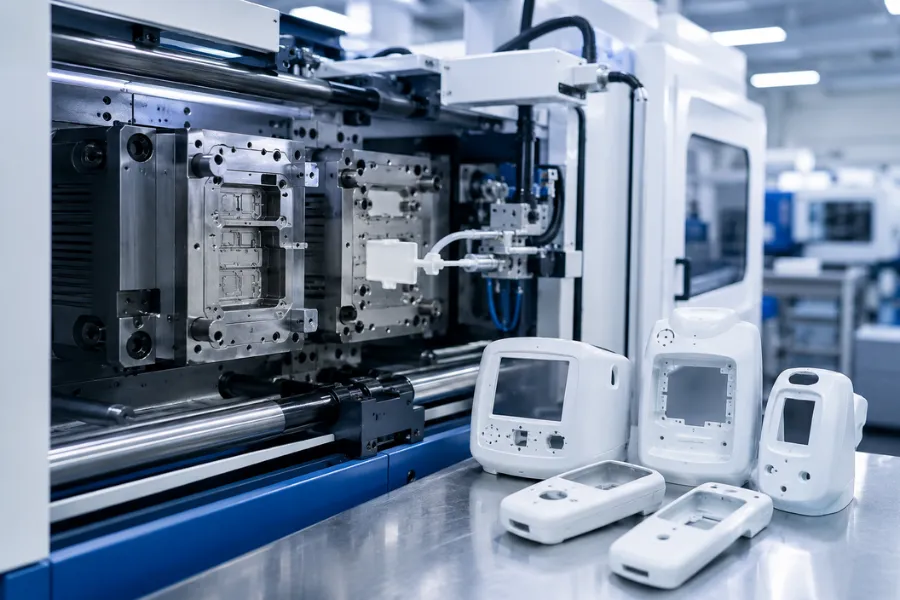
Quality control in medical injection molding is defined not only by dimensional inspection or visual checks, but by the ability to demonstrate, through structured records and linked data, that every product has been manufactured under validated and controlled conditions.
In regulated manufacturing environments, documentation and traceability work together to form a verifiable system in which every material, process parameter, and inspection result can be recorded, connected, and retrieved when required.

What Is Medical Injection Molding
Medical injection molding is a specialized process within medical plastic injection molding where molten plastic is injected into precision molds to produce components that meet strict requirements for accuracy, biocompatibility, and cleanliness under controlled conditions.
What distinguishes this process from general industrial molding is not the injection mechanism itself, but the surrounding system of validation, contamination control, and data management, where every step must be documented and traceable to ensure reproducibility and regulatory compliance.
Typical applications include syringes, inhalers, surgical instruments, diagnostic housings, and implantable device components, often produced through OEM medical components manufacturing programs that require consistent quality and full lifecycle traceability.
Standards and Regulatory Requirements for Documentation and Traceability
ISO 13485 and Structured Documentation
ISO 13485 establishes the framework for medical device quality management systems, which is essential in medical device contract manufacturing environments where processes must be controlled, validated, and continuously monitored.
Within injection molding operations, this includes maintaining detailed records of process parameters, material usage, validation protocols, and inspection outcomes, ensuring that each production batch can be reviewed and verified against predefined criteria.
FDA and EU MDR Traceability Expectations
Regulations such as FDA 21 CFR 820 and EU MDR 2017/745 extend these requirements by enforcing lifecycle traceability, where every finished product must be linked to its material origin, manufacturing conditions, and post-processing history.
In this context, documentation provides the evidence of compliance, while traceability ensures that all recorded data can be connected across the entire production lifecycle.
Common Medical-Grade Materials and Data Traceability
Medical-grade polymers such as polypropylene, polycarbonate, polyethylene, PEEK, and polysulfone are selected based on performance requirements, biocompatibility, and sterilization compatibility, but their role in quality control extends beyond material properties alone.
Each material batch is supplied with certification data, and this information must be documented and linked to specific production batches, allowing manufacturers to trace the relationship between raw material characteristics and final product performance.
This level of material traceability ensures that any variation in resin properties can be identified and correlated with process outcomes, supporting both root cause analysis and regulatory compliance.
Critical Process Considerations and Documentation Control
Mold Design and Process Validation Records
Mold design parameters such as cavity balance, wall thickness, and surface finish, often developed through advanced mold making capabilities, directly influence part consistency and must be validated and documented to establish a stable production baseline.
These records serve as reference points for future production, allowing manufacturers to reproduce validated conditions and maintain consistent quality across multiple runs.
Material Preparation and Environmental Monitoring
Moisture-sensitive materials require controlled drying processes, and the associated conditions, including temperature, duration, and humidity levels, must be recorded to prevent defects related to improper material handling.
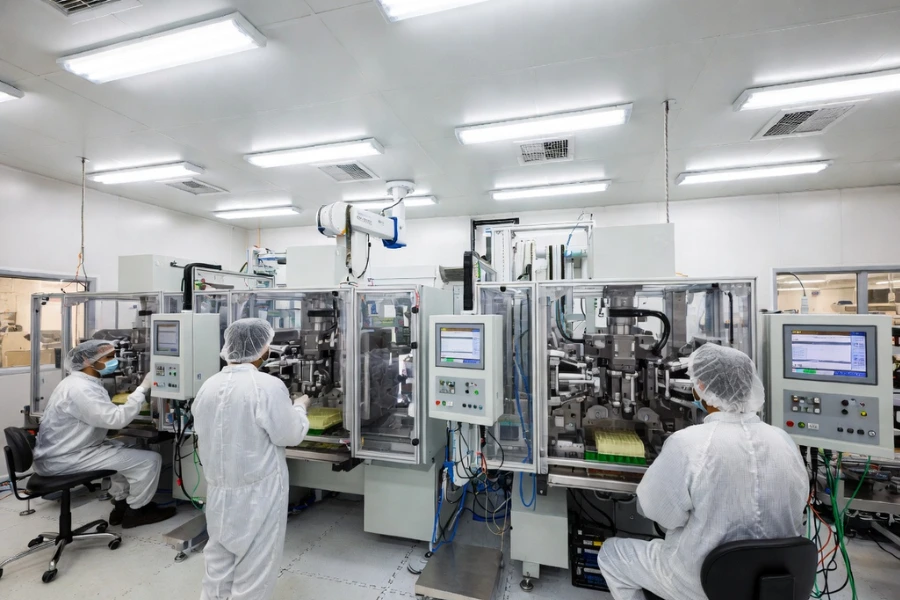
In cleanroom injection molding environments, where ISO Class 7 or 8 conditions are maintained, environmental data such as temperature, humidity, and particle counts are continuously monitored and documented, ensuring that contamination risks remain within acceptable limits.
Processing Parameters and Controlled Production
Critical molding parameters, including melt temperature, injection pressure, cooling time, and cycle duration, are recorded for each production batch, forming part of the documented process window that defines acceptable operating conditions, particularly in high-precision applications such as micro injection molding.
These records enable manufacturers to detect deviations, maintain process stability, and demonstrate that production remains within validated limits.
Post-Processing and Sterilization Documentation
Post-processing operations, including medical device assembly and sterilization, must be performed under validated conditions, and their parameters must be documented to confirm that material properties and product performance remain unchanged.
This documentation often extends to final medical device packaging records, ensuring traceability through to shipment and distribution.
Challenges in Maintaining Documentation and Traceability
Maintaining accurate and complete records across complex manufacturing environments presents several challenges, particularly as regulatory requirements demand both depth and consistency in data collection.
Documentation must capture detailed process information without introducing errors or gaps, while traceability systems must ensure that all data points remain connected and accessible over extended periods, often exceeding ten years.
In addition, tight tolerances, material sensitivity, and contamination control requirements increase the volume and complexity of data that must be managed, making system integration and process discipline essential.
How Documentation Supports Process-Level Quality Control
Documentation refers to the structured recording of all process data, including materials, parameters, validation results, and inspection outcomes, forming the foundation of a controlled manufacturing system.
By maintaining accurate and complete records, manufacturers are able to verify that each production step has been executed within validated limits, while also identifying trends that may indicate process drift before defects occur.
In regulated medical manufacturing, undocumented processes are treated as non-compliant, regardless of actual product quality, which makes comprehensive documentation essential for both operational control and regulatory acceptance.
How Traceability Enables Risk Control and Recall Management
While documentation captures individual data points, traceability connects them into a complete and navigable production history, allowing manufacturers to track the full lifecycle of a product, especially for complex assemblies produced using medical insert molding.
A typical traceability framework links material batches, production records, process parameters, inspection results, and shipment data, ensuring that any finished component can be traced back to its origin and manufacturing conditions.
This capability allows for rapid root cause analysis and targeted recall actions, reducing risk by limiting the scope of affected products rather than requiring broad or uncontrolled responses.
Advanced Traceability Systems and Digital Integration
Modern medical molding operations increasingly rely on integrated data systems that connect all stages of production into a unified digital record, enabling continuous tracking from design through manufacturing to final delivery.
Through this approach, data from product development stages, including design validation, material selection, process development, and inspection, are captured, time-stamped, and linked, forming a digital thread that enhances transparency and supports consistent process reproduction.
By integrating documentation and traceability into a single system, manufacturers can improve decision-making, reduce variability, and maintain a reliable knowledge base for future production cycles.
Best Practices for Documentation and Traceability in Medical Injection Molding
Effective implementation of documentation and traceability requires clearly defined procedures for recording, validating, and linking process data, ensuring that all information remains accurate, complete, and accessible.
This includes maintaining validated process parameters, ensuring batch-level material traceability, applying statistical process monitoring, and preserving records in accordance with regulatory retention requirements.
In ISO-certified environments such as those operated by SeaSkyMedical, supported by integrated capabilities in custom plastic molding and end-to-end production systems, these practices are implemented through controlled cleanroom production, validated process documentation, and integrated traceability systems that support consistent and compliant medical device manufacturing.
Conclusion
Documentation and traceability are central to quality control in medical injection molding, providing the structure and connectivity required to ensure that manufacturing processes remain consistent, verifiable, and compliant with regulatory standards.
By recording every critical parameter and linking data across the production lifecycle, manufacturers can achieve a controlled and reproducible system that supports both product reliability and long-term regulatory acceptance.