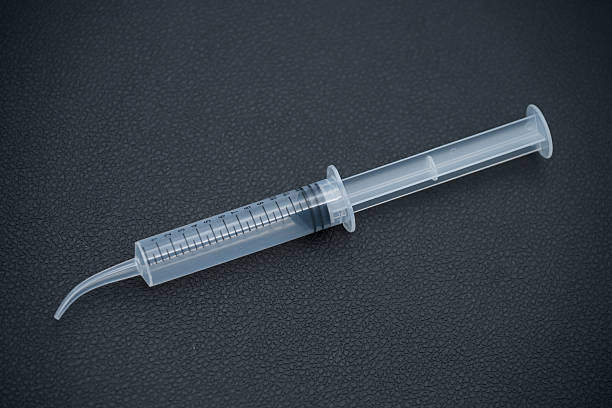
Introduction: Selecting Medical Grade TPE Requires More Than Material Flexibility
Selecting an elastomer for a medical device is rarely a simple material comparison.
Medical device engineers must balance flexibility, sealing performance, biocompatibility, sterilization compatibility, chemical resistance, and manufacturing scalability before selecting a suitable material grade.
Medical grade thermoplastic elastomer (TPE) has become an important material option for healthcare applications because it combines rubber-like elasticity with thermoplastic processing advantages. Unlike traditional thermoset elastomers, TPE can be processed through methods such as injection molding and extrusion while maintaining flexible mechanical performance.
This combination makes TPE suitable for many medical components, including tubing, seals, connectors, closures, and overmolded device parts.
However, choosing the correct TPE grade requires more than evaluating softness or flexibility. The final decision depends on the complete application environment, including patient contact requirements, sterilization conditions, tooling design, validation expectations, and long-term product reliability.
For medical OEM teams, material selection should be connected with manufacturing considerations from the beginning. A structured material selection process helps engineers evaluate polymer characteristics, production requirements, and lifecycle performance before moving into tooling and manufacturing.
What Is Medical Grade TPE?
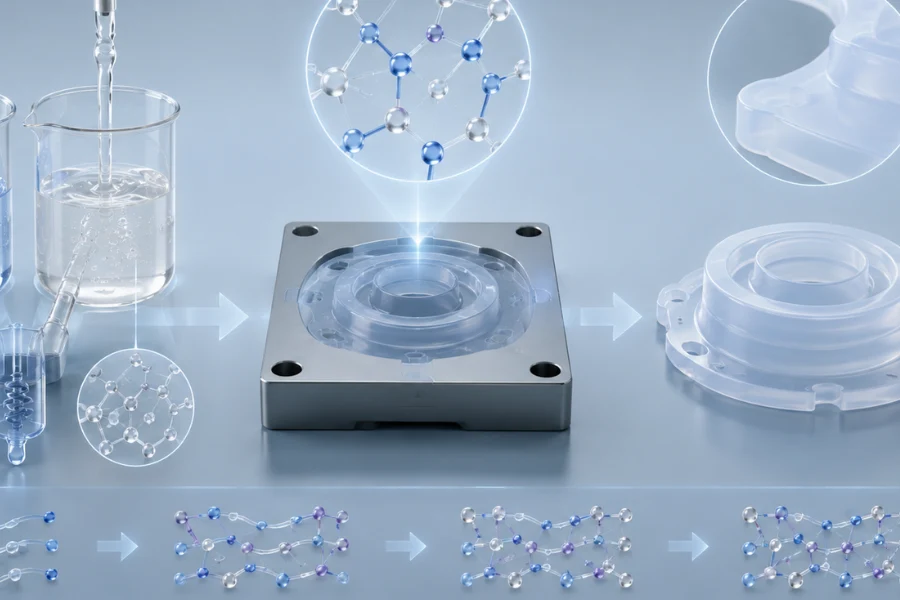
The Structure Behind Thermoplastic Elastomer Performance
Thermoplastic elastomers are a family of polymer materials that combine two different characteristics:
- Rubber-like elasticity
- Thermoplastic processing capability
The elastomeric phase provides:
- Flexibility
- Elastic recovery
- Low-temperature performance
- Soft tactile properties
The thermoplastic phase provides:
- Structural stability
- Melt processability
- Shape retention
- Manufacturing efficiency
This combination allows TPE materials to deform under stress and recover their original shape while still being processed using conventional thermoplastic equipment.
Unlike silicone rubber and other thermoset elastomers, TPE materials do not require an irreversible curing process during molding. This difference allows manufacturers to produce flexible components with shorter production cycles and greater design flexibility.
How Medical Grade TPE Differs From Standard TPE
TPE materials are widely used in consumer products, automotive components, electronics, and industrial applications. However, medical grade TPE requires additional control because components may contact patients, pharmaceutical products, or biological environments.
Medical grade TPE selection typically considers:
- Biocompatibility requirements
- Material purity
- Extractables and leachables
- Sterilization compatibility
- Batch consistency
- Regulatory documentation
Depending on the application, manufacturers may evaluate requirements related to:
- ISO 10993 biological evaluation
- USP Class VI testing
- FDA material compliance
The required evaluation depends on factors such as:
- Contact location
- Contact duration
- Device classification
- Intended use environment
For example, a TPE material used for an external medical device grip may have different requirements from a material used in a fluid pathway or pharmaceutical packaging component.
Medical material selection should therefore focus on the relationship between material performance and device function rather than selecting a polymer family based only on general properties.
Types of Medical Grade TPE Materials
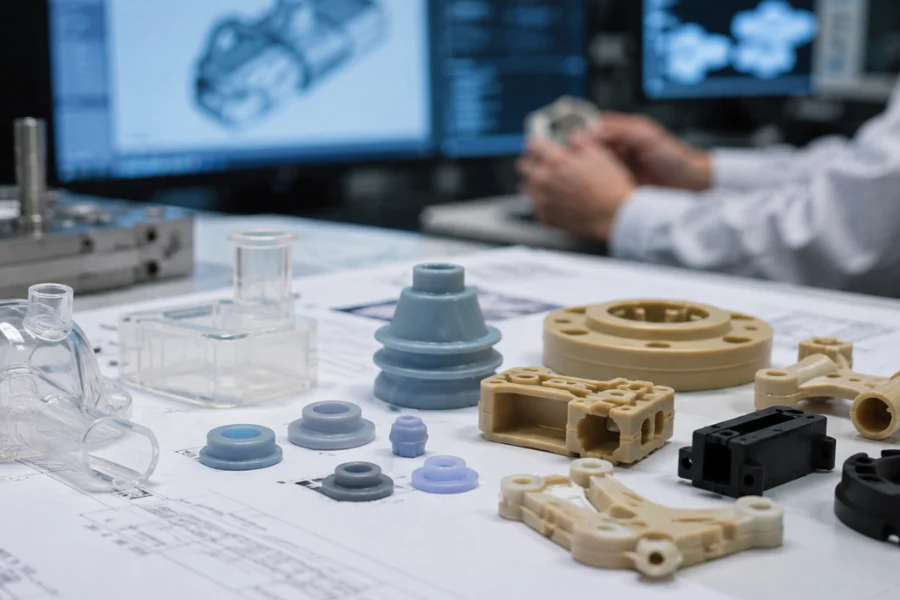
TPE is not a single polymer. It represents a broad family of elastomeric materials with different chemical structures and performance characteristics.
Understanding these differences helps engineers select materials that match specific medical requirements.
| TPE Type | Key Characteristics | Potential Medical Applications |
|---|---|---|
| SEBS-based TPE | Soft, flexible, good processing performance | Seals, grips, flexible components |
| TPU | High abrasion resistance and mechanical strength | Tubing, catheters, flexible medical parts |
| TPV | Improved chemical resistance and durability | Sealing applications |
| TPE-E | Higher temperature and mechanical performance | Specialized medical components |
| TPE-A | Good wear resistance and low-temperature flexibility | Advanced engineering applications |
Among these material groups, SEBS-based TPE is commonly considered for many medical applications because it provides a balance between flexibility, processing efficiency, and design versatility.
However, the best material choice depends on the complete application requirements, including:
- Mechanical loading
- Sterilization method
- Chemical exposure
- Manufacturing process
- Product lifetime
Key Material Properties of Medical Grade TPE
Medical grade TPE is selected because it provides a combination of mechanical performance, design flexibility, and manufacturing advantages.
The actual performance depends on:
- Polymer chemistry
- Material formulation
- Hardness range
- Additives
- Processing conditions
Biocompatibility and Medical Safety Considerations
For medical devices, material safety is one of the first evaluation criteria.
Medical grade TPE formulations are developed to reduce potential risks associated with patient-contact applications. Depending on the intended use, manufacturers may evaluate:
- Cytotoxicity
- Sensitization
- Irritation
- Chemical characterization
The required biological evaluation depends on the type of contact.
| Contact Type | Main Evaluation Considerations |
|---|---|
| Skin contact | Irritation and sensitization |
| Mucosal contact | Cytotoxicity and irritation |
| Blood contact | Additional biological assessment |
| Long-term contact | Extended risk evaluation |
A medical grade material is not selected only because it belongs to a specific polymer family. Engineers must evaluate the actual application conditions and required regulatory pathway.
Elasticity, Hardness, and Functional Performance
One of the main advantages of medical grade TPE is its wide hardness range.
Different hardness levels influence:
- Surface feel
- Flexibility
- Sealing force
- Mechanical support
- Deformation behavior
For example:
| Required Performance | Typical Medical Application |
|---|---|
| High elasticity | Seals, valves, closures |
| Soft surface feel | Medical device grips and covers |
| Flexible deformation | Tubing and connectors |
| Higher rigidity | Structural elastomer components |
Hardness selection should consider more than user touch requirements.
For medical components, engineers must also evaluate how the material behaves after:
- Repeated compression
- Sterilization cycles
- Long-term storage
- Mechanical loading
Compression Set and Long-Term Sealing Reliability
For sealing components, initial flexibility does not fully determine performance.
Medical seals, closures, and connectors must maintain reliable sealing force throughout their service life.
Important performance factors include:
- Compression set resistance
- Elastic recovery
- Dimensional stability
- Aging performance
Applications such as:
- Syringe seals
- Infusion components
- Medical connectors
- Pharmaceutical closures
require stable sealing performance to prevent leakage and maintain device reliability.
A material with excessive permanent deformation may gradually lose sealing capability after extended compression or repeated environmental exposure.
For this reason, medical OEM teams often evaluate TPE materials together with component geometry, sealing design, and manufacturing conditions.
Injection Molding Considerations for Medical TPE Components
Medical grade TPE is frequently manufactured through injection molding because the process supports:
- High-volume production
- Complex geometries
- Repeatable quality
- Multi-material designs
When flexible medical components require controlled production and scalable manufacturing, TPE injection molding provides a suitable manufacturing approach.
However, successful production requires matching:
- Material behavior
- Mold design
- Injection parameters
- Quality requirements
A suitable TPE grade can still produce inconsistent results if processing conditions are not properly controlled.
Chemical Resistance and Sterilization Compatibility of Medical Grade TPE
Medical devices are exposed to a wide range of environments, including disinfectants, biological fluids, pharmaceutical compounds, and sterilization processes.
For this reason, chemical resistance and sterilization compatibility are important considerations when selecting medical grade TPE materials.
However, TPE is a broad material family rather than a single polymer. Performance depends on:
- Polymer chemistry
- Material formulation
- Additives
- Hardness level
- Processing conditions
Different TPE grades may show different resistance levels against:
- Aqueous solutions
- Alcohol-based disinfectants
- Cleaning chemicals
- Oils and solvents
- Pharmaceutical fluids
A TPE grade suitable for one medical application may not provide the same performance in another environment.
Engineers should evaluate:
- Chemical exposure conditions
- Contact duration
- Operating temperature
- Sterilization method
- Expected service life
before selecting the final material.
Sterilization Considerations for Medical TPE Components
Sterilization compatibility is one of the key evaluation factors for medical device materials.
Depending on the formulation, medical grade TPE may be compatible with common sterilization methods, including:
- Steam sterilization
- Ethylene oxide (EtO) sterilization
- Gamma radiation
- Electron beam sterilization
However, sterilization performance should always be validated under the actual conditions of the final application.
Repeated exposure to heat, moisture, or radiation may influence:
- Mechanical properties
- Elastic recovery
- Surface appearance
- Color stability
- Long-term reliability
For example, steam sterilization requires sufficient thermal and hydrolysis resistance, while radiation sterilization requires evaluation of possible material changes caused by energy exposure.
Medical manufacturers typically validate selected TPE grades through functional testing and performance evaluation before commercial production.
Transparency, Colorability, and Design Flexibility
Another advantage of medical grade TPE is its design flexibility.
Depending on the formulation, TPE materials can provide:
- Transparent or translucent appearance
- Customized colors
- Different surface textures
- Various hardness options
This allows designers to optimize both functional performance and user interaction.
Examples include:
- Transparent components where visual inspection is required
- Soft-touch surfaces for improved handling
- Textured surfaces for better grip control
However, appearance should not be considered separately from manufacturing requirements.
Medical components must also maintain:
- Surface quality
- Dimensional consistency
- Clean production standards
- Functional reliability
Medical Applications of TPE Materials
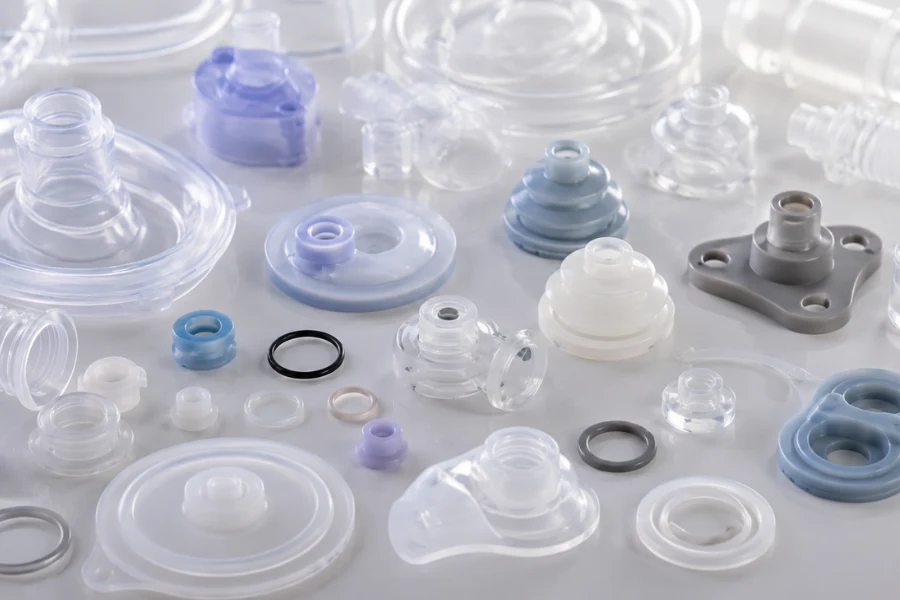
Medical grade TPE is widely used where manufacturers require flexible performance combined with efficient thermoplastic processing.
Common application areas include:
- Medical tubing
- Sealing components
- Pharmaceutical packaging closures
- Overmolded medical devices
- Patient-contact components
The suitability of TPE depends on the specific function of each component.
A tubing application may prioritize flexibility and kink resistance, while a sealing component may require compression performance and long-term dimensional stability.
Medical TPE for Tubing and Fluid Handling Components
Medical tubing is one of the most common applications for flexible medical polymers.
TPE materials can be used for:
- Respiratory tubing
- Feeding tubes
- Fluid transfer components
- Flexible connectors
- Catheter-related components
The key requirements often include:
- Flexibility
- Kink resistance
- Chemical compatibility
- Transparency
- Dimensional stability
Compared with rigid thermoplastics, TPE allows tubing components to bend repeatedly while maintaining functional performance.
However, tubing production requires strict process control because small variations during extrusion may influence:
- Wall thickness
- Inner diameter consistency
- Surface finish
- Connector compatibility
Important manufacturing considerations include:
- Melt stability
- Die design
- Cooling control
- Material handling
For medical tubing, material selection and extrusion process control must work together to achieve consistent product performance.
Medical TPE for Seals, Gaskets, and Closures
Sealing components rely heavily on the elastic recovery characteristics of TPE.
Common applications include:
- Syringe seals
- Infusion connectors
- Medical closures
- Valve components
- Pharmaceutical packaging seals
These components require more than initial flexibility.
Engineers must consider:
- Compression set
- Elastic recovery
- Leakage prevention
- Particle generation
- Chemical compatibility
In pharmaceutical packaging applications, extractables and leachables are also important considerations because unintended substances migrating from the material may affect product quality.
For this reason, medical grade TPE formulations used in pharmaceutical applications often require additional testing, documentation, and process control.
TPE Overmolding for Medical Devices
Overmolding is one of the most valuable manufacturing advantages of medical grade TPE.
By combining a flexible TPE layer with a rigid plastic substrate, manufacturers can create components with integrated functions, including:
- Improved ergonomics
- Better grip performance
- Flexible sealing areas
- Reduced assembly requirements
Common substrate materials include:
- Polypropylene (PP)
- Polyethylene (PE)
- Polycarbonate (PC)
- ABS
- COP
- COC
Typical applications include:
- Medical device handles
- Protective covers
- Flexible buttons
- Sealing interfaces
- Patient-contact surfaces
For medical OEM products, TPE overmolding can simplify product design by combining rigid structural elements with flexible functional areas in a single component.
Engineering Considerations for TPE Overmolding
Although TPE overmolding provides significant design advantages, successful production depends on material compatibility and process control.
TPE and Substrate Compatibility
Not every TPE grade can bond effectively with every engineering plastic.
Bonding performance depends on:
- TPE chemistry
- Substrate polymer
- Surface condition
- Processing temperature
- Mold design
For example, some TPE grades are specifically designed for bonding with polypropylene, while other combinations require different formulations or mechanical retention strategies.
Poor compatibility may result in:
- Weak adhesion
- Delamination
- Reduced product lifetime
Material testing during product development helps confirm whether the selected TPE and substrate combination can meet performance requirements.
Chemical Bonding and Mechanical Interlocking
TPE overmolding generally uses two bonding approaches.
Chemical Bonding
Chemical bonding occurs when the TPE formulation has compatibility with the rigid substrate.
This approach depends on:
- Polymer chemistry
- Surface interaction
- Processing conditions
Mechanical Interlocking
When chemical bonding is limited, mechanical design features can improve retention.
Common approaches include:
- Undercuts
- Surface textures
- Locking structures
- Increased bonding areas
The correct approach depends on the material combination, product requirements, and expected service conditions.
Selecting TPU for Medical Elastomer Applications
TPU is one important member of the thermoplastic elastomer family.
Compared with many softer TPE formulations, TPU typically provides:
- Higher abrasion resistance
- Strong mechanical performance
- Good tear resistance
- Improved durability
These properties make TPU suitable for applications requiring additional mechanical strength.
For medical projects requiring TPU-specific processing considerations, manufacturers may evaluate TPU injection molding solutions alongside other elastomer processing options.
The final choice between TPU and other TPE materials depends on:
- Required flexibility
- Mechanical loading
- Chemical exposure
- Manufacturing process
- Product lifetime
Medical TPE and Silicone Material Selection Considerations
Some medical applications require comparison between TPE and silicone.
Silicone may provide advantages in:
- Extreme temperature resistance
- Long-term elasticity
- Repeated sterilization environments
For silicone-based medical components, manufacturers may evaluate processes such as LSR injection molding when liquid silicone rubber performance is required.
The selection between TPE and silicone depends on the balance between:
- Material performance
- Processing efficiency
- Design requirements
- Production scalability
Medical Grade TPE Injection Molding Guide
Material selection is only the first step in developing reliable medical TPE components.
For medical applications, the final performance of a part depends on how the material, product design, mold structure, and manufacturing process work together.
A TPE grade with suitable mechanical properties may still fail in production if factors such as:
- Mold design
- Injection parameters
- Venting
- Bonding conditions
- Dimensional control
are not properly evaluated.
For this reason, medical TPE projects often require a complete manufacturing approach that connects material selection with tooling development and production validation.
Injection Molding of Medical Grade TPE Components
Injection molding is one of the most widely used manufacturing methods for medical TPE parts because it supports:
- High-volume production
- Complex geometries
- Consistent part quality
- Multi-material designs
- Automated manufacturing
Typical injection molded TPE medical components include:
- Seals
- Connectors
- Flexible covers
- Device grips
- Valve components
- Patient-contact surfaces
Compared with traditional rubber molding processes, TPE injection molding does not require a separate vulcanization process.
This provides advantages such as:
- Shorter cycle times
- Easier automation
- Better production efficiency
- More flexible tooling strategies
For medical applications requiring repeatable and controlled production, medical plastic injection molding provides the manufacturing foundation needed for scalable component production.
Material Preparation Before Injection Molding
Drying and Material Handling
Although many TPE materials have lower moisture sensitivity compared with engineering plastics such as nylon or PC, proper material handling remains important.
Excess moisture may influence:
- Surface appearance
- Mechanical performance
- Processing stability
Typical preparation may include:
- Drying temperature around 80-100°C
- Several hours of drying depending on material grade
Actual conditions should always follow supplier recommendations because different TPE formulations may have different moisture characteristics.
For medical manufacturing, material preparation also includes:
- Lot traceability
- Controlled storage
- Contamination prevention
- Documentation management
These controls help maintain consistency during production and support validation requirements.
Processing Temperature and Injection Parameters
The processing window of medical grade TPE depends on:
- Polymer chemistry
- Hardness level
- Additive system
- Part geometry
The goal is to achieve stable filling while maintaining material properties.
Melt Temperature Control
Correct melt temperature helps balance:
- Material flow
- Surface quality
- Mechanical performance
Excessive temperature exposure may lead to:
- Material degradation
- Color changes
- Reduced elasticity
Insufficient temperature may cause:
- Short shots
- Poor weld lines
- Incomplete filling
For medical components with thin walls or complex structures, maintaining a stable processing window is essential.
Injection Pressure and Speed Control
TPE materials require careful filling control because their flexible nature affects flow behavior.
Important parameters include:
- Injection speed
- Injection pressure
- Holding pressure
- Cooling time
Incorrect settings may contribute to:
- Flash
- Dimensional variation
- Surface defects
- Internal stress
Process optimization is especially important for small medical components where minor dimensional changes can affect assembly or functional performance.
Medical TPE Mold Design Considerations
Tooling design has a direct influence on the quality and reliability of molded TPE components.
Important mold considerations include:
- Material flow behavior
- Gate location
- Venting
- Parting line accuracy
- Demolding performance
Because TPE is softer and more flexible than many engineering plastics, mold precision becomes especially important.
Mold Design and Tooling Development
TPE components often require careful consideration of:
- Shut-off areas
- Draft angles
- Surface finish
- Part geometry
- Ejection strategy
Early tooling evaluation helps identify potential production risks before manufacturing begins.
For medical projects, professional mold making and early mold tool design review can help improve mold performance, reduce trial-and-error cycles, and support stable production.
Gate Design and Material Flow Control
Gate location affects:
- Filling balance
- Weld line position
- Surface appearance
- Mechanical performance
For flexible medical components, poor gate design may influence:
- Elastic behavior
- Surface quality
- Dimensional consistency
Engineers should evaluate:
- Flow length
- Wall thickness distribution
- Pressure balance
during the design stage.
A well-designed gating system helps reduce molding defects and improves production repeatability.
Venting Requirements for TPE Injection Molding
Proper venting is essential for medical TPE molding.
Insufficient venting may cause:
- Burn marks
- Trapped gas
- Incomplete filling
- Surface imperfections
Because TPE materials can deform easily during filling, poor venting may create quality issues that are difficult to correct through processing adjustments alone.
Optimized vent placement helps maintain:
- Stable filling
- Better surface appearance
- Consistent part quality
Common Medical TPE Molding Defects and Risk Control
Understanding potential defects helps reduce production issues during scale-up.
Flash Formation
Flash occurs when excess material escapes from the mold parting area.
TPE components are more sensitive to flash because the material has:
- Lower hardness
- Higher flexibility
- Greater deformation capability
Common causes include:
- Excessive injection pressure
- Poor shut-off design
- Insufficient mold precision
- Incorrect process parameters
Risk reduction methods include:
- Improving tooling accuracy
- Optimizing injection settings
- Reviewing parting line design
- Controlling clamp force
For medical components, flash control is particularly important because excess material can affect:
- Assembly fit
- Sealing reliability
- Product cleanliness
Short Shot Defects
Short shots occur when the cavity is not completely filled.
Possible causes include:
- Insufficient melt temperature
- Poor venting
- Incorrect injection parameters
- Complex flow paths
Thin-wall medical components and micro features require careful flow evaluation before production.
Early design review can help identify filling risks before tooling investment.
Warpage and Dimensional Variation
Although TPE is flexible, dimensional control remains important for medical applications.
Potential causes include:
- Uneven cooling
- Shrinkage differences
- Uneven wall thickness
- Internal stress
Dimensional variation may affect:
- Connector compatibility
- Sealing performance
- Assembly accuracy
For this reason, DFM evaluation is an important step before finalizing tooling.
Advanced Medical TPE Manufacturing Processes
2K Injection Molding for Multi-Material Medical Components
Some medical devices require both rigid and flexible materials in a single component.
2K injection molding allows manufacturers to combine materials such as:
- Rigid thermoplastics
- Flexible TPE layers
within one production process.
This approach can reduce assembly steps while improving:
- Product integration
- User comfort
- Functional performance
For complex medical components requiring multiple materials, 2K injection molding can provide an efficient manufacturing solution.
Medical Insert Molding Applications
Insert molding is another option when flexible materials need to be combined with metal or rigid components.
Potential applications include:
- Medical connectors
- Structural components
- Functional assemblies
When designing insert molded medical parts, engineers must consider:
- Insert positioning
- Material bonding
- Thermal expansion differences
- Mold structure
For projects requiring integrated components, medical insert molding can help simplify assembly and improve product consistency.
Clean Manufacturing and Process Validation
Medical manufacturing requires more than producing acceptable-looking parts.
The production process must demonstrate repeatability, traceability, and controlled quality.
Important considerations include:
- Material tracking
- Dimensional inspection
- Process monitoring
- Functional testing
- Documentation control
For patient-contact components and controlled medical applications, cleanroom injection molding may be required to support contamination control and manufacturing consistency.
Medical Process Validation
Depending on device requirements, manufacturers may evaluate:
Installation Qualification (IQ)
Confirms equipment and systems are installed according to defined requirements.
Operational Qualification (OQ)
Verifies that manufacturing processes operate within established parameters.
Performance Qualification (PQ)
Demonstrates that production can consistently deliver acceptable components.
Validation planning should begin during product development rather than after production starts.
From Medical TPE Material Selection to Production
A successful medical TPE project requires coordination between:
- Material selection
- Product design
- Mold development
- Injection molding
- Validation
- Production scaling
A typical workflow includes:
Material Evaluation
Define:
- Mechanical requirements
- Sterilization conditions
- Chemical exposure
- Patient contact requirements
↓
DFM Review
Evaluate:
- Part geometry
- Wall thickness
- Gate location
- Overmolding requirements
↓
Tooling Development
Consider:
- Mold precision
- Venting
- Surface finish
- Production durability
↓
Process Validation
Verify:
- Stable molding parameters
- Repeatable quality
- Manufacturing consistency
This integrated approach helps reduce risks when moving from prototype development to commercial medical production.
For early-stage projects requiring design verification before tooling investment, manufacturers may also evaluate product development and prototype support as part of the development process.
Advantages and Limitations of Medical Grade TPE
Medical grade TPE has become an important material option for medical device manufacturers because it combines elastomer-like performance with thermoplastic processing advantages.
However, TPE should not be selected simply because it is soft, flexible, or easy to process. The correct material choice depends on the complete product requirements, including sterilization conditions, mechanical performance, chemical exposure, regulatory expectations, and manufacturing strategy.
A material that performs well in one medical application may not provide the same reliability in another.
Advantages of Medical Grade TPE
Efficient Thermoplastic Processing
One of the primary advantages of medical grade TPE is its compatibility with thermoplastic manufacturing methods.
Unlike silicone rubber and other thermoset elastomers, TPE can typically be processed through:
- Injection molding
- Extrusion
- Overmolding
without requiring a separate curing process.
This provides manufacturing advantages such as:
- Shorter production cycles
- Easier automation
- Reduced processing complexity
- Improved scalability
For medical OEM projects requiring repeatable production and controlled manufacturing processes, thermoplastic processing can provide significant efficiency benefits.
Wide Design Flexibility
Medical grade TPE offers a broad range of performance options.
Engineers can select grades based on:
- Hardness
- Elastic recovery
- Mechanical strength
- Surface texture
- Transparency
- Chemical resistance
This flexibility allows designers to develop components that balance functional requirements with user experience.
Examples include:
- Soft-touch medical device handles
- Flexible connectors
- Sealing components
- Patient-contact surfaces
However, selecting a softer grade does not always mean selecting a better material.
The final choice must consider:
- Long-term deformation
- Compression performance
- Sterilization exposure
- Mechanical loading
Strong Overmolding Capability
TPE overmolding is one of the main reasons medical manufacturers consider this material family.
By combining a flexible elastomer layer with a rigid substrate, manufacturers can create integrated components with:
- Improved ergonomics
- Better grip performance
- Integrated sealing functions
- Reduced assembly requirements
This approach is especially useful for handheld medical devices and components requiring both structural support and soft-contact surfaces.
Better Reprocessing Characteristics
Because TPE is a thermoplastic material, it generally provides better reprocessing opportunities compared with thermoset elastomers.
Manufacturing waste from suitable applications may be reused depending on:
- Material requirements
- Regulatory restrictions
- Product risk level
However, medical applications require strict material traceability. Any recycled material consideration must be carefully evaluated against product safety and compliance requirements.
Limitations of Medical Grade TPE
Lower Temperature Resistance Compared With Silicone
One important limitation of many TPE grades is temperature performance.
Silicone rubber generally provides better performance under:
- Extreme temperatures
- Long-term heat exposure
- Repeated high-temperature sterilization cycles
For applications requiring maximum thermal stability, silicone may provide advantages.
However, many medical components do not require silicone-level temperature performance, making TPE a practical choice where processing efficiency and design flexibility are more important.
Chemical Resistance Depends on Formulation
TPE represents a broad family of materials rather than a single polymer.
Chemical resistance depends on:
- Polymer structure
- Additives
- Material formulation
- Application environment
Some TPE grades provide strong resistance to specific chemicals, while others may have limitations.
Engineers should evaluate actual exposure conditions, including:
- Cleaning agents
- Disinfectants
- Pharmaceutical fluids
- Storage environments
before selecting a material.
Bonding Challenges in Overmolding
Although TPE overmolding provides significant design benefits, achieving reliable adhesion can be challenging.
Potential issues include:
- Weak bonding strength
- Delamination
- Material separation during use
Successful overmolding requires compatibility between:
- TPE formulation
- Substrate polymer
- Mold design
- Processing parameters
Prototype testing and process validation are often necessary before full-scale production.
Medical Grade TPE vs Silicone vs PVC
Medical manufacturers often compare TPE with silicone and PVC when selecting flexible materials.
The right choice depends on the application requirements rather than one material being universally better.
| Evaluation Factor | Medical Grade TPE | Silicone Rubber | PVC |
|---|---|---|---|
| Material type | Thermoplastic elastomer | Thermoset elastomer | Thermoplastic polymer |
| Processing method | Injection molding, extrusion, overmolding | Liquid silicone molding, compression molding, curing | Injection molding, extrusion |
| Elastic performance | Good, depends on grade | Excellent | Moderate |
| Temperature resistance | Moderate to high depending on formulation | Excellent | Application dependent |
| Sterilization performance | Grade dependent | Excellent | Grade dependent |
| Overmolding capability | Strong advantage | More limited | Limited |
| Reprocessing potential | Better | Limited | Limited |
| Manufacturing efficiency | High for thermoplastic processes | Requires curing process | High |
When Medical OEMs May Prefer TPE
Medical manufacturers often consider TPE when they need:
- Flexible components produced through injection molding
- Soft-touch surfaces
- Multi-material designs
- Efficient high-volume production
- Multiple hardness options
Typical applications include:
- Medical device grips
- Flexible connectors
- Tubing components
- Seals and closures
When Silicone May Be More Suitable
Silicone may be preferred when applications require:
- Extreme temperature resistance
- Long-term elasticity under demanding conditions
- Highly aggressive sterilization environments
For silicone-based medical components, manufacturers may evaluate LSR injection molding when liquid silicone rubber processing is required.
When PVC May Still Be Considered
PVC remains used in some medical applications because of:
- Established processing methods
- Mature supply chains
- Cost efficiency
However, material selection requires careful evaluation of:
- Plasticizer systems
- Chemical compatibility
- Regulatory expectations
How Engineers Select the Right Medical Grade TPE
Selecting a medical grade TPE requires evaluating the entire product lifecycle.
The best material choice balances:
- Functional performance
- Regulatory requirements
- Manufacturing feasibility
- Long-term reliability
Step 1: Define Application Requirements
Engineers should first identify:
- Patient contact conditions
- Operating temperature
- Sterilization method
- Mechanical requirements
- Expected service life
A flexible tubing component and a sealing component may both require elasticity, but their engineering requirements are different.
Step 2: Evaluate Material Compatibility
The selected material should be evaluated against:
- Biocompatibility requirements
- Chemical resistance
- Compression performance
- Bonding capability
- Regulatory documentation
For overmolded components, compatibility between TPE and the rigid substrate is especially important.
Step 3: Review Manufacturing Requirements
Material selection should consider production feasibility.
Important factors include:
- Injection molding process
- Mold design
- Part geometry
- Tooling complexity
- Production volume
A material that performs well in laboratory testing may still create manufacturing challenges if the processing window is too narrow.
Step 4: Validate Before Full Production
Before production release, manufacturers typically evaluate:
- Prototype performance
- Mold trials
- Dimensional inspection
- Functional testing
- Process repeatability
For medical OEM projects, validation planning should begin during product development rather than after production starts.
From Medical Grade TPE Selection to Commercial Production
A successful medical TPE project requires coordination between:
- Material selection
- Product design
- Tooling development
- Injection molding
- Quality control
- Production validation
The complete manufacturing pathway often includes:
Product Development
The initial stage focuses on:
- Application requirements
- Material evaluation
- Design feasibility
- Prototype verification
For medical device teams developing new components, product development support can help connect design decisions with manufacturing requirements.
Tooling and Manufacturing Development
After design approval, manufacturers evaluate:
- Mold structure
- Injection parameters
- Production requirements
Combining tooling expertise with manufacturing experience helps reduce risks during scale-up.
Medical Device Contract Manufacturing
For companies seeking a complete manufacturing partner, integrating design support, tooling, molding, assembly, and quality management can simplify project coordination.
A complete medical device contract manufacturing approach can support the transition from prototype development to commercial production.
For medical OEM teams, this integrated model helps reduce communication gaps between material selection, tooling, manufacturing, and final product requirements.
FAQ
Is medical grade TPE biocompatible?
Medical grade TPE materials can be developed for biocompatible medical applications.
However, suitability depends on the specific formulation, intended device application, contact type, and required biological evaluation.
Can medical grade TPE withstand sterilization?
Some medical grade TPE materials are compatible with steam, EtO, gamma, and electron beam sterilization.
The actual performance depends on the specific material grade, sterilization conditions, and exposure cycles.
What is the difference between medical grade TPE and regular TPE?
Medical grade TPE is developed for healthcare applications with greater control over formulation, testing, documentation, and consistency requirements.
Standard TPE may focus mainly on mechanical performance, appearance, or cost.
Can TPE replace silicone in medical devices?
TPE can replace silicone in some applications where thermoplastic processing, overmolding capability, and production efficiency are important.
However, silicone may remain preferable when extreme temperature resistance or specific long-term performance characteristics are required.
Can TPE be used for medical injection molding?
Yes. Medical grade TPE is commonly processed through injection molding for:
- Seals
- Connectors
- Handles
- Covers
- Flexible medical components
Successful production depends on appropriate material selection, tooling design, and process control.
Can TPE bond with PP, PC, or ABS?
Some TPE grades are designed for bonding with specific rigid polymers.
Bonding performance depends on:
- TPE formulation
- Substrate material
- Surface condition
- Processing parameters
What factors should engineers consider before selecting medical TPE?
Engineers should evaluate:
- Required flexibility
- Sterilization method
- Patient contact conditions
- Chemical exposure
- Manufacturing process
- Validation requirements
Material selection should always consider the complete product lifecycle.
Conclusion
Medical grade TPE provides medical device manufacturers with a flexible material solution that combines elastomer-like performance with thermoplastic manufacturing advantages.
Its compatibility with injection molding, extrusion, and overmolding makes it suitable for a wide range of medical applications, including tubing, seals, closures, connectors, and patient-contact components.
However, successful implementation requires more than choosing a flexible polymer. Engineers must evaluate material chemistry, sterilization compatibility, bonding performance, tooling requirements, and production validation together.
For medical OEM teams, integrating material selection with DFM review, mold development, validation planning, and scalable manufacturing creates a more reliable path from prototype development to commercial production.
SeaSkyMedical supports medical device manufacturers through medical injection molding, mold development, cleanroom manufacturing, and contract manufacturing solutions designed around production reliability, quality control, and long-term scalability.