Why Medical Injection Mold Tooling Timelines Matter
Medical device development programs are often built around tightly controlled regulatory schedules, validation milestones, and commercialization targets, which means that delays during mold development can affect far more than the tooling itself. A postponed mold build may delay pilot production, verification testing, packaging validation, sterilization studies, and even FDA or CE submission timelines.
In regulated manufacturing environments, tooling schedules should be viewed as complete project timelines rather than isolated machining activities. The process usually begins with DFM evaluation and mold design review, then progresses through steel procurement, CNC machining, sampling, dimensional verification, qualification activities, and process stabilization before production-ready parts are approved.
Many medical OEM teams initially underestimate the amount of time required for engineering review cycles, process documentation, and qualification planning. Once steel cutting begins, even relatively small geometry changes can introduce several additional weeks of rework and repeat sampling.
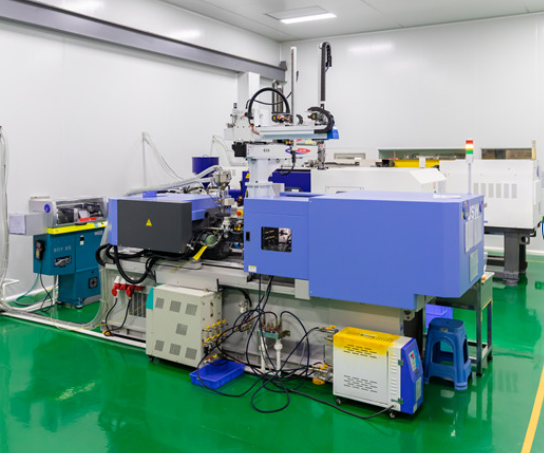
Companies involved in medical plastic injection molding programs are typically expected to coordinate engineering, tooling, molding, inspection, and validation activities under controlled manufacturing conditions, particularly when regulated healthcare products are involved.
Quick Overview of Typical Medical Tooling Schedules
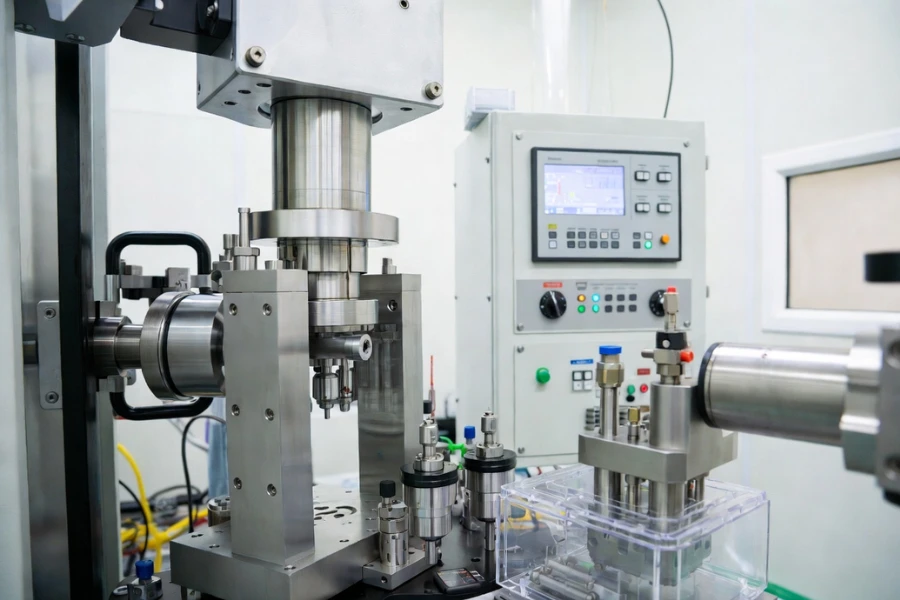
Medical mold fabrication timelines vary according to part complexity, cavity configuration, material selection, validation scope, and supplier structure.
| Tooling Category | Typical Schedule | Typical Application |
|---|---|---|
| Prototype tooling | 2-6 weeks | Design verification and functional testing |
| Bridge tooling | 4-10 weeks | Clinical samples and pilot production |
| Production tooling | 8-20+ weeks | Long-term regulated manufacturing |
| Qualification activities | Additional 4-8 weeks | IQ/OQ/PQ and process verification |
| Full development program | 3-6 months | Standard medical manufacturing projects |
Programs involving micro injection molding, thin-wall geometries, multi-shot molding, or high-precision medical assemblies may extend beyond six months once qualification and documentation activities are included.
Typical Stages in Medical Mold Development
Medical tooling programs generally move through six connected phases, each influencing overall project duration and manufacturing readiness.
| Stage | Typical Duration | Common Medical Manufacturing Considerations |
|---|---|---|
| DFM review and mold engineering | 1-2 weeks | Material compatibility and sterilization planning |
| Steel and component sourcing | 1-3 weeks | Corrosion-resistant steels and hot runner procurement |
| CNC machining and EDM processing | 4-12+ weeks | Precision cavities and complex mold actions |
| Mold assembly and cooling verification | 3-5 days | Thermal balance and dimensional consistency |
| T1/T2/T3 sampling and refinement | 2-6 weeks | Inspection reporting and customer approval |
| Qualification and production ramp-up | 2-4 weeks | IQ/OQ/PQ and capability verification |
DFM Review and Mold Engineering
The earliest engineering phase often determines whether later stages remain stable or become progressively delayed. DFM analysis and mold tool design help identify wall thickness inconsistencies, undercuts, insufficient draft angles, venting limitations, and ejection risks before machining operations begin.
Medical manufacturing projects frequently involve additional discussions regarding cleanroom compatibility, biocompatible materials, assembly interfaces, sterilization exposure, and packaging constraints. If these requirements are not clarified early, tooling modifications may become necessary after machining has already started.
At SeaSkyMedical, early DFM reviews are commonly used to evaluate molding feasibility, dimensional stability, and downstream assembly considerations before production steel enters machining.
Steel Procurement and Mold Component Sourcing
Tool steel selection directly affects both tooling durability and production schedule predictability. Pre-hardened materials such as P20 generally reduce machining time, while hardened steels including H13, S7, and 420 stainless steel require additional heat treatment and finishing operations.
Medical-grade mold programs often prioritize corrosion resistance and long-term process stability because many healthcare polymers involve abrasive fillers, sterilization exposure, or aggressive cleaning conditions. Specialized hot runner systems, imported mold components, and precision inserts can further extend procurement schedules depending on supplier availability and transportation lead times.
During early-stage product development, engineering teams often evaluate material behavior and tooling feasibility simultaneously to reduce later-stage schedule disruptions.
CNC Machining and EDM Processing
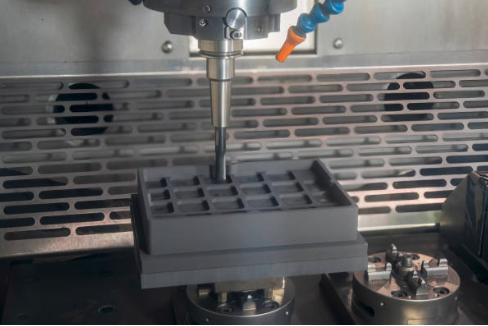
Machining is usually the longest phase of the mold build process because cavity geometry, tolerance requirements, and surface finish expectations all affect production speed. Simple two-plate molds with limited complexity move through CNC operations relatively efficiently, while molds involving side actions, unscrewing mechanisms, deep ribs, or thin-wall features require significantly more machining hours and inspection checkpoints.
Electrical discharge machining becomes increasingly important when producing intricate geometries, textured surfaces, or high-polish cosmetic areas. Medical housings, fluid-contact components, and diagnostic cartridge systems often require mirror-finish polishing to support cleanability and cosmetic consistency, which can add several additional days per cavity surface.
Complex multi-cavity programs may remain in machining and finishing stages for more than 12 weeks, particularly when cavity balancing and thermal management systems require repeated refinement.
Projects requiring highly detailed cavity structures or secondary precision features may also involve additional mold making and CNC plastic machining support to maintain dimensional consistency throughout qualification.
Mold Assembly and Cooling Verification
Once machining operations are completed, the tooling enters assembly and functional verification stages where ejector systems, cooling channels, alignment features, and sealing surfaces are tested under operating conditions.
Although assembly itself is relatively short, cooling system performance remains particularly important in healthcare manufacturing because uneven thermal behavior can affect shrinkage consistency, part warpage, and repeatability during process qualification. This becomes especially critical for laboratory consumables, surgical instrument housings, fluid management components, and thin-wall diagnostic products.
Programs involving medical insert molding or complex overmolded assemblies often require additional verification to confirm alignment stability and repeatable encapsulation performance.
T1 Sampling and Tool Refinement
Initial sampling activities generally begin with T1 trials, during which molded components are evaluated for dimensional accuracy, filling performance, cosmetic appearance, and functional behavior. Unlike many consumer products, regulated manufacturing programs often require multiple structured sampling cycles before tooling is approved for validation.
Each iteration may include dimensional inspection reports, process parameter adjustments, cavity refinements, gate modifications, polishing corrections, and customer review activities. In some projects, molds may require re-polishing or venting adjustments after T1 because minor cosmetic or dimensional variations become visible only under full molding conditions.
Medical OEM projects commonly require at least two formal sampling rounds before qualification planning proceeds.
When accelerated development schedules are required, manufacturers sometimes combine 3D prototype printing with bridge tooling strategies to obtain early functional samples before hardened production molds are completed.
Qualification and Production Ramp-Up
In healthcare manufacturing, tooling completion does not automatically mean production readiness. Qualification activities including IQ/OQ/PQ execution, dimensional repeatability studies, material traceability review, capability analysis, and process verification often require several additional weeks before stable production can begin.
These procedures exist because regulated manufacturing environments must demonstrate repeatable process performance under documented operating conditions. Cleanroom scheduling, inspection resource allocation, packaging coordination, and documentation review may all influence final release timing.
Manufacturers operating within cleanroom injection molding environments are typically better positioned to coordinate these activities without introducing excessive handoff delays between tooling, molding, inspection, and packaging stages.
Projects involving downstream medical device assembly and medical device packaging may also require additional validation coordination before commercial production can begin.
Typical Timeline Ranges by Tooling Type
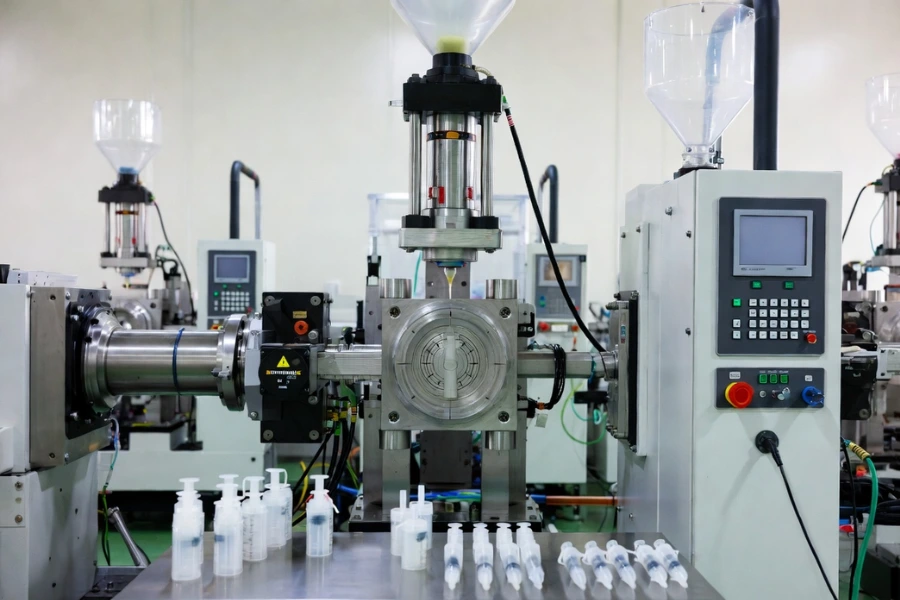
Different tooling strategies are selected according to development phase, expected production volume, and regulatory objectives.
| Tooling Type | Typical Timeline | Common Medical Applications | Typical Tool Material | Expected Tool Life |
|---|---|---|---|---|
| Aluminum prototype tooling | 2-4 weeks | Functional testing and early validation | 7075 aluminum | 50-5,000 cycles |
| Bridge tooling | 4-8 weeks | Clinical samples and pilot production | P20 steel | 1,000-30,000 cycles |
| Precision single-cavity production mold | 8-12 weeks | Medical device housings and assemblies | H13, S7, 420 stainless steel | 100,000-500,000 cycles |
| Multi-cavity production mold | 10-16 weeks | Syringes, laboratory consumables, diagnostic components | Hardened steel with hot runner systems | 1,000,000+ cycles |
| Two-shot or overmolding systems | 12-16 weeks | Handles, seals, multi-material devices | Combination tool steels | 500,000+ cycles |
| Complex precision healthcare tooling | 14-20+ weeks | Implantable components and high-tolerance assemblies | Corrosion-resistant alloys | Based on qualification requirements |
Prototype tooling is commonly used when engineering teams require rapid design verification before committing to hardened production molds. Long-term production tooling, by contrast, focuses on dimensional consistency, process stability, and repeatable high-volume manufacturing performance.
Programs involving soft-touch handles, sealing structures, or multi-material medical devices often rely on 2K injection molding or LSR injection moulding technologies during full-scale manufacturing.
Key Factors That Influence Medical Tooling Schedules
Part Geometry and Mold Complexity
Undercuts, internal threads, thin-wall sections, deep ribs, and micro-scale features all increase machining complexity because they require slower cutting speeds, additional EDM operations, and more sophisticated mold actions. Each side action or lifter mechanism can extend the schedule by approximately one to two weeks.
Early DFM involvement often prevents avoidable schedule extensions by identifying manufacturability risks before machining begins.
Tight Tolerance Requirements
Healthcare components frequently require tolerances as tight as ±0.001 inch, which substantially increases machining, measurement, and inspection effort. Achieving these tolerances may require slower machining parameters, additional verification cycles, and repeated steel adjustments during sampling.
Compared with general industrial molding, high-precision healthcare programs typically involve far more iterative dimensional review.
Tool Steel Selection
Pre-hardened steels shorten machining schedules but may not provide sufficient corrosion resistance or long-term durability for regulated production environments. Hardened stainless steels and specialty alloys require more processing time because of heat treatment, polishing, and precision finishing requirements.
For components exposed to sterilization cycles or abrasive engineering resins, durability and dimensional stability usually take priority over minimum schedule duration.
Cavity Count and Runner Design
Additional cavities improve production efficiency but also increase mold balancing complexity. Expanding from a two-cavity tool to a four-cavity system typically increases project duration by roughly 30-40% because runner balancing, cooling symmetry, and cavity-to-cavity consistency become more difficult to maintain.
Large-volume consumables such as test kit housings, specimen collection devices, and laboratory cartridges frequently depend on high-cavity production systems after validation is completed.
Surface Finish and Polishing Requirements
Medical products often require polished surfaces to improve cleanability, reduce particle retention, or maintain cosmetic standards. Mirror finishes and EDM textures can each add several days per surface because dimensional accuracy must remain stable throughout polishing operations.
These requirements are especially common in fluid-contact components and visible medical device housings.
Qualification and Regulatory Activities
Qualification procedures including IQ/OQ/PQ protocols, capability studies, FAI documentation, and material traceability reviews frequently extend schedules beyond physical mold completion. FDA-recognized materials and USP Class VI documentation may also require additional review and approval coordination.
Unlike cosmetic adjustments or shipping logistics, these qualification activities are generally not compressible without increasing downstream compliance risk.
Supplier Structure and Internal Capacity
Schedule reliability often depends on whether suppliers manage tooling, molding, inspection, assembly, and cleanroom manufacturing internally or rely heavily on external subcontractors. Each outsourced process introduces additional coordination risk, transportation delays, and scheduling dependencies.
Suppliers with integrated project management structures usually provide better visibility and more stable scheduling throughout regulated manufacturing programs.
Customer Approval Speed
Delayed engineering approvals remain one of the most common causes of timeline extension. Once steel cutting has started, geometry modifications may require re-machining, reprogramming, and repeated sampling activities that add several weeks to the schedule.
Projects with structured approval workflows and rapid engineering feedback generally move through validation stages more efficiently.
Why Qualification Activities Extend Healthcare Manufacturing Programs
Qualification stages differ significantly from standard commercial product approval because regulated manufacturing environments must demonstrate documented process repeatability rather than simple part acceptance.
Installation Qualification confirms that tooling and production equipment are configured correctly according to approved specifications. Operational Qualification evaluates whether process parameters remain stable across controlled operating ranges. Performance Qualification verifies that the manufacturing process consistently produces acceptable components during extended production conditions.
These activities often require dimensional capability studies, cleanroom coordination, traceability documentation, process verification records, and formal approval workflows before production release can proceed.
For this reason, qualification schedules should be treated as planned engineering phases rather than contingency buffers that can be compressed late in the project.
Practical Ways Medical OEM Teams Can Reduce Delays
Several project management practices can shorten schedules without compromising manufacturing quality or validation integrity.
Early DFM participation remains one of the most effective schedule optimization strategies because manufacturability concerns can be identified before tooling enters machining. Maintaining a strict design freeze before steel cutting also prevents costly revision cycles later in development.
Some medical manufacturers reduce commercialization risk by using phased tooling strategies in which bridge tooling supports early clinical or verification activities while hardened production tooling is manufactured in parallel. This approach allows test samples to become available significantly earlier without delaying long-term manufacturing preparation.
Rapid approval workflows also influence overall project duration. Engineering teams that review DFM reports, dimensional studies, and sampling data within 24-48 hours often reduce overall development schedules by several weeks.
Manufacturers such as SeaSkyMedical that coordinate tooling development, molding, inspection, assembly, and cleanroom packaging within unified project workflows are often able to reduce delays associated with supplier handoffs and fragmented communication chains.
Risk Indicators Buyers Should Watch During Supplier Selection
Medical tooling schedules sometimes become unstable because warning signs are overlooked during supplier evaluation.
Extremely aggressive delivery promises that fall well below industry benchmarks may indicate unrealistic planning assumptions or insufficient validation scope. Suppliers that do not ask detailed questions regarding FDA expectations, ISO 13485 requirements, material certifications, or qualification planning may struggle later when documentation becomes necessary.
Heavy dependence on external EDM processing, polishing, heat treatment, or inspection providers can also introduce coordination delays, particularly when multiple subcontractors are involved. Similarly, unclear definitions regarding T1 approval criteria, dimensional reporting expectations, or qualification ownership frequently result in repeated revisions and schedule instability.
Structured DFM reviews, documented validation planning, transparent communication procedures, and integrated manufacturing coordination generally indicate a more mature regulated manufacturing workflow.
Planning Realistic Timelines for Medical Manufacturing Programs
For medium-complexity healthcare molding projects, manufacturers and OEM teams should generally plan for approximately 20-24 weeks from project initiation through stable production readiness.
Qualification activities, traceability documentation, dimensional capability studies, and cleanroom coordination should be treated as essential engineering requirements rather than optional schedule buffers. Attempting to aggressively compress these stages often increases the risk of downstream process instability, repeated sampling cycles, or regulatory delays.
Working with suppliers experienced in medical device contract manufacturing, precision mold fabrication, ISO-controlled production systems, and regulated manufacturing coordination generally improves schedule predictability throughout the development lifecycle.
SeaSkyMedical supports healthcare programs through integrated tooling development, molding, inspection, assembly, and cleanroom manufacturing workflows designed to improve coordination during regulated product launches. Additional secondary operations can also help reduce project fragmentation during later-stage manufacturing and packaging preparation.
For additional information regarding medical injection molding timelines or tooling development planning, contact SeaSkyMedical.
FAQ
How long does a typical medical mold development program take?
Most medium-complexity healthcare molding projects require approximately 12-20 weeks from design freeze through production-ready tooling. Including DFM review, qualification planning, and process verification, total program duration commonly reaches three to six months.
Why do medical manufacturing tools usually take longer than standard industrial molds?
Healthcare manufacturing projects often involve tighter tolerances, qualification documentation, regulated material requirements, and structured process verification procedures. Surface finish standards and traceability expectations also contribute to longer schedules.
Can aluminum prototype molds be used for healthcare products?
Yes. Aluminum tooling is commonly used for functional testing, design verification, and early-stage clinical evaluation. These tools support lower production volumes and shorter operational lifespans than hardened production systems.
How long does it usually take to receive T1 samples?
Simple single-cavity programs may produce T1 samples within four to six weeks, while complex multi-cavity or side-action tooling often requires eight to ten weeks before first sampling is completed.
Which stage most commonly delays regulated molding projects?
CNC machining and EDM processing typically consume the largest portion of the schedule, particularly for precision cavities and complex geometries. Delayed customer approval during sampling stages is another common source of project extension.
How much delay can design modifications create after machining begins?
Once steel processing has started, geometry changes often add two to six weeks because tooling sections may require re-machining, reprogramming, and repeated sampling verification.
How long do IQ/OQ/PQ activities usually require?
Qualification procedures commonly require four to eight weeks depending on product complexity, documentation scope, and process capability expectations.
Can healthcare tooling projects be expedited?
Yes, although accelerated schedules usually require premium machining capacity, overtime processing, or expedited procurement. Qualification and verification procedures should still remain fully completed.
Is bridge tooling commonly used in regulated manufacturing?
Yes. Bridge tooling is frequently used for clinical samples, pilot production, and verification testing while hardened production tooling is manufactured in parallel.
How do overseas suppliers affect project schedules?
Cross-border tooling programs may require additional coordination time for logistics, communication workflows, and documentation review depending on transportation methods and project management structure.
How long does FAI reporting usually take?
First Article Inspection reporting typically requires one to two weeks because dimensional verification, material documentation, and inspection review must all be completed before approval.
What is the most effective way to shorten medical tooling schedules?
The most effective strategies include early DFM analysis, strict design freeze discipline, rapid engineering approval workflows, and structured qualification planning before machining operations begin.