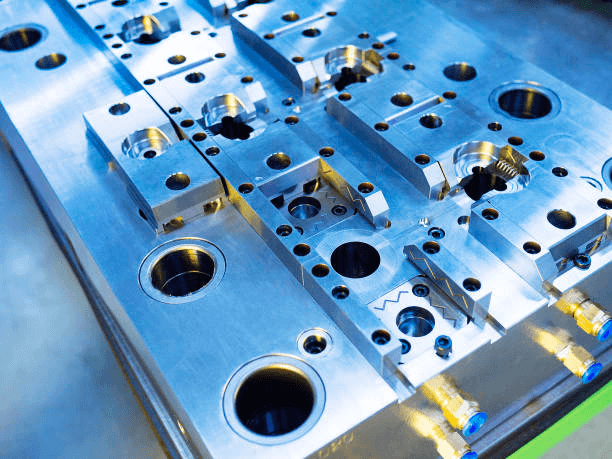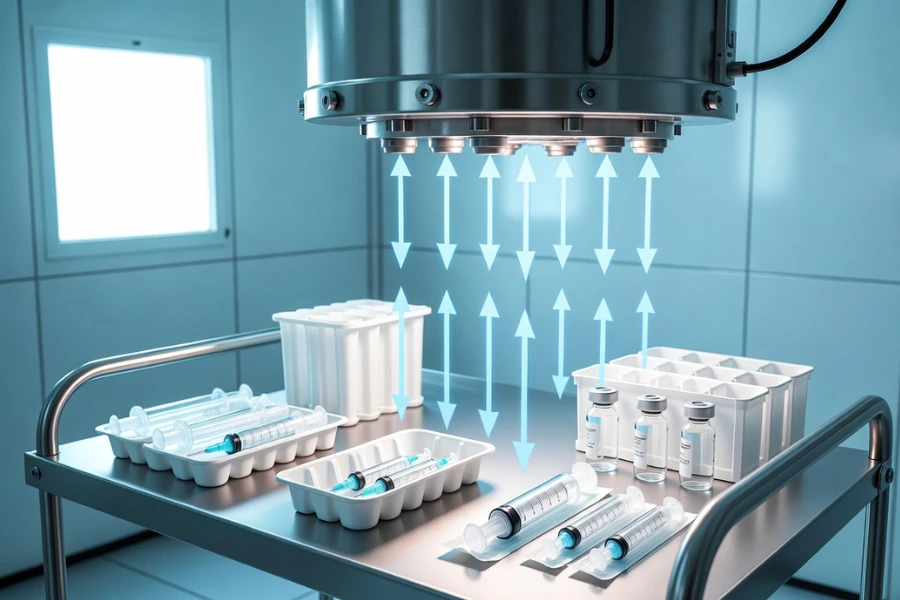
Medical devices continue to become smaller, lighter, and more sophisticated. From minimally invasive catheters and diagnostic cartridges to implantable components and wearable healthcare devices, modern medical products increasingly rely on medical micro molding to manufacture extremely small plastic components with exceptional dimensional accuracy and repeatability.
Unlike conventional medical injection molding, micro molding introduces unique engineering challenges. Tiny shot sizes, micron-level tolerances, miniature gate designs, specialized tooling, material flow stability, and advanced inspection technologies all become critical factors that influence product quality and manufacturing consistency. As component dimensions decrease, manufacturing variation that would be insignificant in traditional molding can directly affect device performance, assembly accuracy, and regulatory compliance.
For medical OEMs, selecting the right medical micro molding company therefore involves much more than comparing manufacturing capacity. Engineering expertise, Design for Manufacturability (DFM), micro tooling capability, validation support, cleanroom production, material knowledge, and scalable automation all contribute to successful commercialization.
This guide compares ten leading medical micro molding companies based on their engineering capabilities, precision manufacturing technologies, cleanroom operations, validation readiness, and long-term production support. Rather than ranking companies by size or revenue, the focus is on identifying which manufacturers are best suited for different medical micro molding applications—from prototype development and pilot production to high-volume commercial manufacturing.
Whether your project involves implantable devices, drug delivery systems, diagnostic consumables, micro catheters, or miniature plastic assemblies, understanding each supplier’s technical strengths can help reduce manufacturing risk while improving product quality and accelerating time to market.
How We Selected These Medical Micro Molding Companies
Micro molding is one of the most demanding areas of medical manufacturing. Producing components that may weigh only fractions of a gram requires far more than simply using a smaller injection molding machine. Successful micro molding depends on precision tooling, process stability, material behavior, automation, inspection capability, and manufacturing validation.
To build this list, we evaluated each company according to the engineering capabilities that matter most to medical OEMs rather than company size or overall market share.
Evaluation Criteria
| Evaluation Area | Why It Matters |
|---|---|
| Medical Micro Molding Experience | Demonstrates long-term expertise in miniature medical components |
| Micro Tooling Capability | Supports ultra-small cavities and high-precision mold manufacturing |
| Engineering & DFM Support | Optimizes manufacturability before tooling investment |
| Micron-Level Precision | Improves dimensional consistency for miniature components |
| Cleanroom Manufacturing | Supports contamination-sensitive medical production |
| Validation Capability | IQ, OQ, PQ, process validation, and production qualification |
| Medical-Grade Material Expertise | PEEK, LCP, COC, PC, LSR, and other engineering polymers |
| Automation & Vision Inspection | Improves repeatability and reduces manufacturing variation |
| Production Scalability | Enables smooth transition from prototype to commercial manufacturing |
| Global Medical OEM Support | Supports international sourcing and long-term supply continuity |
Because different products require different manufacturing technologies, no single supplier is ideal for every application. Some companies specialize in ultra-small thermoplastic components, while others focus on liquid silicone rubber (LSR), catheter technologies, implantable devices, or precision medical assemblies. Understanding these differences is essential when evaluating potential manufacturing partners.
Medical Micro Molding Capability Matrix
| Capability | Engineering Importance |
|---|---|
| Minimum Part Size | Determines the ability to manufacture miniature medical components |
| Micron-Level Tolerance | Supports precision assembly and device performance |
| Precision Micro Tooling | Enables complex cavity geometries and stable molding |
| Medical-Grade Polymer Processing | Ensures compatibility with high-performance materials |
| Scientific Molding | Improves process repeatability and consistency |
| Vision Inspection Systems | Detects microscopic defects during production |
| Cleanroom Manufacturing | Reduces contamination for regulated medical products |
| IQ/OQ/PQ Validation | Supports regulatory compliance and production qualification |
| Automated Assembly | Improves repeatability while reducing operator variation |
| Design Transfer | Facilitates smooth transition from development to commercial production |
Unlike conventional injection molding, micro molding requires extremely tight control over every stage of manufacturing. Tool design, machine capability, process validation, and inspection technology all play a much greater role because even microscopic variations can influence the functionality of miniature medical devices.
Top Medical Micro Molding Companies at a Glance
| Company | Core Strength | Medical Focus | Best For |
|---|---|---|---|
| SeaSkyMedical | Precision medical micro molding and one-stop OEM manufacturing | Medical plastics, IVD, laboratory devices | Prototype to production for precision plastic medical components |
| Accumold | Ultra-precision micro molding | Micro medical components | Extremely small and complex molded parts |
| MTD Micro Molding | High-volume micro injection molding | Disposable medical devices | Scalable production of miniature plastic components |
| Isometric Micro Molding | Complex micro tooling and precision molding | Micro medical assemblies | Tight-tolerance miniature medical products |
| Makuta Micro Molding | Engineering-driven product development | Medical micro plastics | DFM-intensive development programs |
| Biomerics | Catheter and minimally invasive technologies | Interventional devices | Catheter and polymer-based medical products |
| Spectrum Plastics Group | Advanced polymer engineering | Catheters and medical tubing | Micro polymer components and minimally invasive devices |
| Saint-Gobain Medical Components | Silicone micro molding and advanced materials | Drug delivery and implantables | LSR micro molding and high-performance polymers |
| Micro Systems Technologies (MST) | Micro manufacturing and implantable technologies | Medical electronics and implants | High-precision miniature medical systems |
| Mikrotech | Precision micro tooling | Miniature medical components | Swiss-style precision micro manufacturing |
1.SeaSkyMedical

Headquarters: China
Website: https://www.seaskymedical.com/
Specialization: Medical micro molding, precision medical injection molding, micro tooling, cleanroom manufacturing, medical device OEM & ODM, and precision plastic component manufacturing.
Main Products / Services: Medical micro molded components, precision medical injection molded parts, micro medical plastic components, diagnostic device components, micro fluidic components, laboratory consumables, precision medical molds, cleanroom assembly, medical device prototyping, and contract manufacturing.
Company Overview
SeaSkyMedical is a specialized medical micro molding company providing precision manufacturing solutions for medical OEMs developing miniature plastic components and high-precision medical devices. Its manufacturing platform integrates product development, Design for Manufacturability (DFM), precision micro tooling, medical injection molding, cleanroom assembly, and scalable contract manufacturing under an ISO 13485 quality management system.
The company supports products used in diagnostics, laboratory automation, in vitro diagnostics (IVD), drug delivery, life science instruments, and disposable medical devices where dimensional accuracy and manufacturing consistency are essential. By combining engineering collaboration with precision tooling and cleanroom manufacturing, SeaSkyMedical helps customers move efficiently from prototype development to commercial production.
Unlike suppliers that provide only molding services, SeaSkyMedical supports the complete manufacturing lifecycle, including engineering optimization, tooling development, pilot production, process validation awareness, automated assembly, and long-term manufacturing support.
Why This Company Stands Out
SeaSkyMedical’s primary advantage is its ability to combine precision medical micro molding with comprehensive engineering support. Rather than treating micro molding as a standalone manufacturing process, the company integrates DFM analysis, mold optimization, material selection, micro injection molding, secondary processing, cleanroom assembly, and quality management into a unified manufacturing workflow.
Its engineering teams work closely with customers during product development to improve manufacturability before tooling begins. Early collaboration helps optimize wall thickness, gate locations, resin flow, mold construction, and component geometry, reducing unnecessary tooling modifications during later development stages.
The company’s experience with medical-grade engineering plastics—including materials such as PEEK, PC, ABS, PP, COC, and other specialty polymers—allows it to support miniature components requiring high dimensional stability, biocompatibility, and long-term manufacturing consistency.
Best For
Medical OEMs seeking precision medical micro molding, prototype-to-production support, micro tooling development, cleanroom manufacturing, and one-stop OEM/ODM manufacturing for diagnostic, laboratory, and disposable medical devices.
Manufacturing Considerations
For miniature medical plastic components, engineering collaboration often has a greater influence on project success than molding capability alone. Integrating DFM, tooling, molding, and cleanroom assembly within one supplier can reduce engineering revisions, improve communication between development and production teams, and simplify manufacturing transfer as products move toward commercialization.
Projects involving diagnostic consumables, micro fluidic devices, and precision laboratory products may particularly benefit from early mold optimization and process development before production tooling is finalized.
2. Accumold

Headquarters: United States
Website: https://www.accu-mold.com/
Specialization: Ultra-precision medical micro molding, micro tooling, miniature plastic components, and high-volume micro manufacturing.
Main Products / Services: Medical micro molded components, micro plastic parts, implantable device components, hearing device components, ophthalmic components, micro fluidic parts, precision tooling, engineering support, and automated production.
Company Overview
Accumold is widely recognized as one of the world’s leading specialists in medical micro molding, focusing exclusively on manufacturing extremely small and highly precise plastic components. Rather than operating as a general injection molding supplier, the company has built its reputation around producing miniature parts measured in millimeters—and in many cases, fractions of a millimeter—for highly demanding medical applications.
Its manufacturing capabilities support hearing devices, minimally invasive surgical systems, ophthalmic products, diagnostic equipment, micro fluidic technologies, and implantable medical components where conventional molding processes are often unable to achieve the required precision.
Accumold combines proprietary micro tooling technologies, precision process development, automated manufacturing, and advanced metrology to produce complex medical components at both prototype and commercial production volumes.
Why This Company Stands Out
Accumold’s greatest strength is its expertise in ultra-small medical plastic components. The company has invested heavily in micro tooling, precision mold manufacturing, process control, and specialized molding equipment capable of producing components weighing only fractions of a gram.
Because extremely small molded parts are highly sensitive to process variation, Accumold emphasizes scientific process development, precision machine control, advanced inspection technologies, and manufacturing repeatability throughout production.
Its engineering teams also collaborate closely with customers during early development to evaluate manufacturability, optimize part geometry, and identify potential molding risks before tooling investment begins.
Best For
Medical OEMs developing ultra-miniature plastic components, implantable device parts, ophthalmic products, hearing technologies, micro fluidic devices, and other applications requiring micron-level manufacturing precision.
Manufacturing Considerations
Ultra-precision micro molding generally requires significantly tighter process control than conventional medical injection molding. Tool design, resin selection, gate configuration, mold venting, and inspection methodology all become increasingly important as component size decreases.
Companies developing components measured in milligrams rather than grams often benefit from manufacturers specializing exclusively in micro molding rather than conventional plastic injection molding.
3. MTD Micro Molding
Headquarters: United States
Website: https://www.mtdmicromolding.com/
Specialization: Medical micro injection molding, precision tooling, automated manufacturing, and high-volume production of miniature plastic components.
Main Products /Services: Medical micro molded components, precision plastic parts, disposable medical device components, diagnostic products, micro medical assemblies, automated manufacturing, and engineering support.
Company Overview
MTD Micro Molding specializes in medical micro injection molding for customers requiring high-volume production of miniature plastic components with exceptional dimensional consistency. The company focuses on combining precision mold manufacturing, process optimization, automation, and quality management to support regulated medical manufacturing programs.
Its manufacturing capabilities serve medical OEMs producing disposable medical devices, diagnostic consumables, minimally invasive components, and other plastic-intensive healthcare products requiring repeatable high-volume production.
Beyond manufacturing, MTD also supports engineering collaboration during product development, helping customers improve manufacturability before transitioning into commercial production.
Why This Company Stands Out
MTD’s competitive advantage lies in combining micro molding precision with scalable manufacturing efficiency. While many micro molding specialists focus primarily on prototype production or highly customized projects, MTD places significant emphasis on production repeatability and long-term manufacturing stability.
Its engineering teams optimize molding parameters, tooling performance, automation strategies, and quality monitoring to achieve consistent production across extended manufacturing programs.
For OEMs planning commercial launches involving millions of precision plastic components annually, this focus on manufacturing scalability can be particularly valuable.
Best For
Medical companies requiring high-volume medical micro molding, disposable medical components, precision plastic assemblies, diagnostic consumables, and scalable automated production.
Manufacturing Considerations
Micro molding projects intended for large-scale commercialization should be evaluated not only for tooling precision but also for long-term process capability, automation, preventive maintenance, statistical process control, and manufacturing repeatability.
Suppliers capable of maintaining dimensional consistency across high production volumes may reduce long-term quality variation while supporting more predictable manufacturing performance.
4. Isometric Micro Molding

Headquarters: United States
Website: https://www.isomicro.com/
Specialization: Medical micro molding, precision micro tooling, miniature plastic components, insert molding, and cleanroom manufacturing.
Main Products / Services: Medical micro molded components, miniature plastic parts, insert molded components, diagnostic device parts, surgical device components, precision tooling, engineering support, cleanroom manufacturing, and contract manufacturing.
Company Overview
Isometric Micro Molding is a specialized medical micro molding company focused on manufacturing miniature plastic components with extremely tight tolerances for regulated healthcare applications. Rather than serving a broad range of conventional injection molding markets, the company concentrates on precision micro molding projects where component size, geometric complexity, and dimensional consistency present significant engineering challenges.
Its manufacturing capabilities support diagnostic equipment, minimally invasive surgical devices, micro medical assemblies, and precision healthcare products requiring sophisticated tooling and repeatable production processes. By combining engineering support, precision mold manufacturing, micro injection molding, and cleanroom production, Isometric assists medical OEMs throughout product development and commercialization.
The company’s engineering-first approach allows customers to evaluate manufacturability early in development while reducing potential risks associated with miniature component production.
Why This Company Stands Out
Isometric’s strength lies in producing complex micro molded medical components that require exceptional dimensional control rather than simply manufacturing very small plastic parts. The company emphasizes precision tooling, optimized gate design, balanced resin flow, and stable process development to achieve repeatable results on intricate geometries.
Its engineers work closely with OEM design teams during DFM reviews to identify manufacturing constraints before tooling begins. Because minor design features can significantly affect mold filling and part consistency at the micro scale, this early engineering collaboration often helps reduce later tooling modifications and production delays.
The company’s expertise in insert molding and miniature assemblies also enables customers to integrate multiple manufacturing processes within highly compact medical products.
Best For
Medical OEMs developing tight-tolerance miniature plastic components, insert molded medical parts, diagnostic devices, surgical instruments, and complex micro medical assemblies.
Manufacturing Considerations
Micro molded components with intricate geometries often require greater emphasis on mold design and process development than standard injection molded parts. Manufacturers experienced in micro tooling and miniature part optimization can frequently improve manufacturability while reducing production variation throughout commercial manufacturing.
5. Makuta Micro Molding

Headquarters: United States
Website: https://www.makuta.com/
Specialization: Engineering-driven medical micro molding, product development, precision tooling, DFM optimization, and low-to-medium volume manufacturing.
Main Products / Services: Medical micro molded components, prototype tooling, precision plastic parts, engineering development, product validation support, cleanroom manufacturing, assembly, and contract manufacturing.
Company Overview
Makuta Micro Molding is an engineering-focused medical micro molding manufacturer that combines product development expertise with precision manufacturing for miniature plastic medical components. Rather than positioning itself solely as a production supplier, the company emphasizes collaborative engineering throughout the product development process to improve manufacturability before commercial tooling is released.
Its capabilities include DFM analysis, prototype development, precision mold manufacturing, micro injection molding, assembly, and production support for a variety of medical applications, including diagnostics, laboratory equipment, and minimally invasive devices.
This development-oriented approach allows medical OEMs to refine component designs, evaluate manufacturing feasibility, and optimize production strategies early in the product lifecycle.
Why This Company Stands Out
Makuta differentiates itself through its engineering-led development process. Instead of beginning with tooling, the company places significant emphasis on product architecture, manufacturability analysis, tolerance optimization, and mold design during the earliest stages of development.
Its DFM methodology helps identify opportunities to improve resin flow, simplify tooling complexity, enhance dimensional stability, and reduce manufacturing risks before production investments are made. This approach is particularly valuable for startups and innovation-driven medical companies that continue refining product designs throughout development.
Makuta also provides flexibility for prototype and bridge production, enabling customers to validate product designs before transitioning into larger commercial manufacturing programs.
Best For
Medical companies requiring strong DFM collaboration, prototype development, precision micro tooling, and engineering-driven medical micro molding.
Manufacturing Considerations
Projects still undergoing design refinement often benefit from manufacturers that prioritize engineering collaboration over immediate production efficiency. Investing additional effort in DFM, mold optimization, and process development early can reduce tooling revisions, shorten validation timelines, and improve long-term manufacturing stability after commercialization.
6. Biomerics

Headquarters: United States
Website: https://biomerics.com/
Specialization: Catheter technologies, minimally invasive medical devices, polymer engineering, micro molding, extrusion, and contract manufacturing.
Main Products / Services: Catheter components, micro molded polymer components, medical tubing, balloon catheters, interventional devices, precision extrusion, medical assemblies, and contract manufacturing.
Company Overview
Biomerics is a leading medical device contract manufacturer specializing in minimally invasive technologies, advanced polymer engineering, catheter systems, and precision medical manufacturing. The company provides integrated engineering, material development, micro molding, extrusion, assembly, and commercial manufacturing services for medical OEMs developing interventional healthcare products.
Its manufacturing platform supports cardiovascular, neurovascular, electrophysiology, structural heart, and other minimally invasive applications where miniature polymer components and precision manufacturing play critical roles.
Rather than focusing exclusively on standalone micro molded parts, Biomerics combines multiple polymer processing technologies to support complete catheter systems and advanced medical assemblies.
Why This Company Stands Out
Biomerics stands out through its ability to integrate micro molding with catheter engineering and advanced polymer technologies. Medical devices used in minimally invasive procedures often combine micro molded plastic components with tubing, balloons, shafts, and precision assemblies. Having these capabilities within one manufacturing organization can simplify product development while reducing supplier coordination.
Its engineering teams also provide extensive support for material selection, DFM, process optimization, and manufacturing validation, helping customers develop products that balance clinical performance with manufacturability.
Because catheter-based medical devices continue to become smaller and more sophisticated, expertise in both micro molding and polymer engineering has become increasingly valuable for medical OEMs.
Best For
Manufacturers developing catheter systems, interventional medical devices, cardiovascular products, neurovascular technologies, and advanced polymer-based medical components.
Manufacturing Considerations
Micro molded components used within catheter systems often require close integration with extrusion, bonding, assembly, and polymer engineering. Selecting suppliers capable of supporting these interconnected manufacturing processes can improve development efficiency while reducing technical risks during product commercialization.
7. Spectrum Plastics Group

Headquarters: United States
Website: https://www.spectrumplastics.com/
Specialization: Medical micro molding, advanced polymer engineering, catheter technologies, medical tubing, precision extrusion, and minimally invasive medical device manufacturing.
Main Products / Services: Medical micro molded components, catheter systems, medical tubing, balloon catheters, injection molded medical components, precision extrusion, advanced polymer components, and finished medical assemblies.
Company Overview
Spectrum Plastics Group is a globally recognized medical micro molding company specializing in advanced polymer technologies for minimally invasive medical devices. Rather than focusing solely on micro injection molding, the company combines micro molding, catheter manufacturing, extrusion, balloon technologies, and precision polymer engineering into a comprehensive manufacturing platform for medical OEMs.
Its expertise supports products used in cardiovascular intervention, neurovascular therapy, structural heart treatment, electrophysiology, and other applications where miniature polymer components directly influence clinical performance. Through engineering collaboration, process development, and commercial manufacturing, Spectrum helps customers transform complex product concepts into scalable manufacturing solutions.
Its ability to integrate multiple polymer processing technologies within one organization makes it particularly valuable for products requiring more than standalone molded components.
Why This Company Stands Out
Spectrum Plastics distinguishes itself through its deep polymer engineering expertise. Many minimally invasive medical devices combine micro molded components with extruded tubing, balloons, shafts, and assembled catheter systems. Managing these technologies within one supplier can reduce manufacturing interfaces while improving design compatibility throughout product development.
The company’s engineering teams work closely with OEMs during DFM reviews, helping optimize polymer selection, wall thickness, material performance, manufacturability, and assembly methods before commercial production begins. This collaborative approach supports both manufacturing efficiency and long-term product reliability.
Its experience across multiple advanced polymer technologies also allows Spectrum to support increasingly complex medical devices that continue to shrink in size while demanding greater functional performance.
Best For
Medical OEMs developing catheter systems, advanced polymer medical components, minimally invasive devices, cardiovascular technologies, and precision micro molded plastic assemblies.
Manufacturing Considerations
For catheter-based medical devices, evaluating micro molding capability alone may not be sufficient. Products that combine molded components with tubing, extrusion, balloon technologies, and precision assembly often benefit from manufacturers capable of integrating these processes under one engineering organization, reducing design transfer complexity and supporting smoother commercialization.
8. Saint-Gobain Medical Components

Headquarters: France / United States
Website: https://www.medical.saint-gobain.com/
Specialization: Silicone micro molding, liquid silicone rubber (LSR) molding, advanced medical materials, catheter technologies, precision extrusion, and high-performance polymer manufacturing.
Main Products / Services: Medical micro molded silicone components, LSR molding, catheter components, medical tubing, drug delivery components, implantable medical components, precision extrusion, medical sealing solutions, and contract manufacturing.
Company Overview
Saint-Gobain Medical Components is part of the global Saint-Gobain Group and is widely recognized for its expertise in advanced medical materials and silicone micro molding. Rather than focusing exclusively on plastic injection molding, the company combines material science, polymer engineering, liquid silicone rubber (LSR) molding, precision extrusion, catheter technologies, and contract manufacturing to support highly specialized medical applications.
Its manufacturing capabilities serve cardiovascular intervention, neurovascular devices, drug delivery systems, implantable medical technologies, and minimally invasive therapies where material performance is just as important as dimensional precision.
By integrating material development with manufacturing engineering, Saint-Gobain helps medical OEMs optimize both product performance and manufacturing feasibility during development.
Why This Company Stands Out
Saint-Gobain’s greatest competitive advantage lies in its materials science expertise. While many micro molding companies concentrate primarily on tooling and molding technology, Saint-Gobain combines advanced polymer development with precision manufacturing to support products requiring exceptional flexibility, chemical resistance, durability, and biocompatibility.
Its leadership in liquid silicone rubber (LSR) micro molding makes it particularly attractive for medical devices incorporating soft materials, miniature seals, flexible interfaces, and implantable silicone components.
The company’s global manufacturing network also supports multinational OEMs requiring consistent production quality across multiple regions while maintaining regulatory compliance and supply chain stability.
Best For
Medical companies developing silicone micro molded components, drug delivery systems, implantable devices, catheter technologies, and products utilizing high-performance medical polymers.
Manufacturing Considerations
Material selection often becomes increasingly important as component size decreases. Products requiring flexibility, resilience, biocompatibility, or long-term durability may benefit from suppliers with extensive experience in both advanced polymer science and silicone micro molding rather than conventional thermoplastic processing alone.
9. Micro Systems Technologies (MST)

Headquarters: Switzerland / Germany
Website: https://www.mst.com/
Specialization: Precision micro manufacturing, implantable medical technologies, micro assemblies, MEMS integration, and miniature medical components.
Main Products / Services: Implantable medical components, precision micro assemblies, miniature plastic and metal components, micro electronic systems, sensor integration, and medical manufacturing services.
Company Overview
Micro Systems Technologies (MST) is a high-precision engineering company specializing in micro manufacturing for medical technology. The company combines miniature component manufacturing, precision assembly, micro electronics, sensor integration, and advanced production technologies to support highly sophisticated healthcare products.
Its capabilities extend beyond conventional micro molding by integrating precision manufacturing with electronic packaging, hybrid assemblies, and micro system technologies used in implantable devices, diagnostics, and next-generation medical equipment.
This multidisciplinary manufacturing approach enables OEMs to develop increasingly compact medical systems that combine mechanical, polymer, and electronic components within extremely limited design spaces.
Why This Company Stands Out
MST stands apart because of its ability to integrate micro manufacturing with miniature electronic systems. As healthcare devices continue to shrink while incorporating more sensing, monitoring, and communication functions, manufacturers increasingly require expertise beyond plastic molding alone.
The company combines precision manufacturing, miniature assemblies, advanced inspection, and engineering support to help OEMs develop products where mechanical accuracy and electronic integration are equally important.
Its experience with implantable technologies and precision medical systems also makes it particularly relevant for products demanding exceptionally high manufacturing consistency and long-term reliability.
Best For
Medical OEMs developing implantable medical systems, miniature diagnostic devices, precision medical assemblies, MEMS-enabled healthcare products, and advanced micro medical technologies.
Manufacturing Considerations
Miniaturized medical systems often require manufacturing processes that combine polymer components, electronic assemblies, precision machining, and advanced inspection. Selecting suppliers with multidisciplinary engineering capabilities can simplify development while reducing integration challenges during commercialization.
10. Mikrotech

Headquarters: Switzerland
Website: https://www.mikrotech.com/
Specialization: Precision micro tooling, miniature plastic components, high-precision manufacturing, automated inspection, and micro engineering.
Main Products / Services: Medical micro molded components, miniature precision plastic parts, precision tooling, micro mold manufacturing, automated inspection, cleanroom production, and engineering support.
Company Overview
Mikrotech is a precision engineering company specializing in micro tooling and miniature component manufacturing for high-performance medical applications. Drawing on Switzerland’s long tradition of precision manufacturing, the company supports medical OEMs developing increasingly compact products requiring exceptional dimensional accuracy and manufacturing consistency.
Its services include precision tool development, micro molding support, automated quality inspection, engineering collaboration, and cleanroom manufacturing for miniature medical components used in diagnostics, implantable technologies, and advanced healthcare devices.
By emphasizing engineering precision throughout tooling, manufacturing, and inspection, Mikrotech helps customers achieve stable production of complex miniature plastic components.
Why This Company Stands Out
Mikrotech’s competitive advantage centers on precision engineering and micro tooling. At the micro scale, tooling accuracy often determines production capability as much as molding equipment itself. The company’s expertise in mold manufacturing, precision machining, and dimensional control supports products requiring exceptionally small features and highly repeatable manufacturing processes.
Its investment in automated inspection technologies further improves production consistency by detecting microscopic deviations that would be difficult to identify through conventional quality control methods.
For OEMs producing miniature components with demanding tolerance requirements, this combination of precision tooling and advanced inspection provides significant manufacturing value.
Best For
Medical manufacturers requiring precision micro tooling, miniature plastic components, automated inspection, and Swiss-level engineering precision for high-performance medical products.
Manufacturing Considerations
As component dimensions become increasingly smaller, mold precision, process stability, and metrology often become more important than production speed. Manufacturers with strong capabilities in tooling, precision machining, and automated quality inspection are generally better positioned to maintain long-term consistency for miniature medical components intended for regulated healthcare applications.
How to Choose the Right Medical Micro Molding Company
Choosing a medical micro molding company involves much more than identifying a supplier capable of producing extremely small plastic parts. As component dimensions decrease, manufacturing complexity increases dramatically. Mold construction, resin behavior, machine stability, process capability, inspection methods, and validation all play a greater role in determining whether a project can transition successfully from development to commercial production.
Medical OEMs should therefore evaluate potential suppliers according to the specific engineering requirements of their products rather than comparing production capacity or tooling costs alone.
The following framework can help guide supplier selection.
| Evaluation Area | Key Questions to Ask |
|---|---|
| Product Development | Can the supplier support DFM, prototype tooling, pilot production, and Design Transfer? |
| Micro Tooling | Does the company manufacture precision molds specifically designed for micro molding applications? |
| Material Expertise | Can the supplier process engineering materials such as PEEK, LCP, COC, PPSU, PC, and LSR? |
| Manufacturing Precision | Can the supplier consistently achieve micron-level dimensional tolerances? |
| Scientific Process Development | Does the manufacturer optimize molding windows through engineering rather than trial-and-error? |
| Vision Inspection & Metrology | Are automated inspection systems available for miniature features that cannot be measured manually? |
| Cleanroom Manufacturing | Does production take place in ISO-classified cleanroom environments when required? |
| Validation Capability | Can the supplier support IQ, OQ, PQ, process validation, and production qualification? |
| Automation | Will automation improve repeatability while reducing manufacturing variation? |
| Production Scalability | Can the supplier efficiently transition from prototype quantities to high-volume commercial production? |
For many micro molding programs, engineering capability has a greater influence on long-term success than manufacturing capacity alone. Early collaboration between OEM design teams and manufacturing engineers often leads to better tooling decisions, fewer design revisions, and more stable production after commercialization.
Medical Micro Molding Product Match Guide
Different manufacturers have developed expertise in different categories of medical micro molded products. Understanding these strengths can help OEMs identify suppliers whose capabilities align more closely with specific product requirements.
| Medical Product | Recommended Companies |
|---|---|
| Diagnostic Cartridges | SeaSkyMedical, Isometric Micro Molding |
| Micro Fluidic Components | SeaSkyMedical, Accumold |
| Ultra-Small Plastic Components | Accumold, MTD Micro Molding |
| Drug Delivery Components | Saint-Gobain Medical Components, Makuta Micro Molding |
| Catheter Components | Biomerics, Spectrum Plastics Group |
| Medical Tubing & Balloon Systems | Spectrum Plastics Group, Biomerics |
| Silicone Micro Components | Saint-Gobain Medical Components |
| Implantable Medical Components | Micro Systems Technologies (MST), Accumold |
| Wearable Medical Devices | Makuta Micro Molding, Saint-Gobain Medical Components |
| High-Volume Disposable Medical Components | MTD Micro Molding, SeaSkyMedical |
This comparison is intended as a starting point rather than a definitive recommendation. Final supplier selection should also consider regulatory requirements, annual production volume, validation expectations, intellectual property strategy, geographic location, and long-term supply chain planning.
Common Mistakes When Choosing a Medical Micro Molding Company
Micro molding introduces engineering challenges that are rarely encountered in conventional injection molding. Many sourcing decisions fail not because the selected manufacturer lacks molding capability, but because critical micro manufacturing requirements are underestimated during supplier evaluation.
The following mistakes are among the most common.
| Common Mistake | Manufacturing Risk | Recommended Approach |
|---|---|---|
| Choosing a conventional injection molder for a true micro molding project | Insufficient tooling precision and unstable process control | Select suppliers with dedicated micro molding expertise |
| Focusing only on tooling cost | Increased mold revisions and higher overall development cost | Evaluate engineering capability alongside tooling investment |
| Delaying DFM until tooling begins | Design changes after mold construction | Conduct DFM reviews during early product development |
| Ignoring material behavior at miniature scale | Short shots, flash, sink marks, or inconsistent filling | Confirm experience with medical-grade engineering polymers |
| Overlooking metrology capability | Inability to verify micron-level dimensions | Evaluate inspection technologies and measurement systems |
| Selecting suppliers without validation experience | Delayed regulatory approval and production qualification | Verify IQ/OQ/PQ and process validation capabilities |
| Assuming prototype success guarantees production success | Poor repeatability during commercialization | Assess long-term process capability and automation strategy |
| Ignoring Design Transfer planning | Difficult transition from engineering builds to production | Choose manufacturers experienced in lifecycle manufacturing |
One of the most common misconceptions is that any precision injection molding company can perform medical micro molding. In reality, successful micro molding often requires specialized tooling, dedicated molding equipment, advanced process development, and precision inspection systems that differ substantially from conventional injection molding operations.
Similarly, selecting a supplier based only on prototype capability may introduce unexpected risks when production volumes increase. Commercial manufacturing requires validated processes, statistical process control, preventive maintenance, and stable automation to maintain consistency across millions of components.
Engineering Trade-Offs in Medical Micro Molding
Medical micro molding requires engineers and procurement teams to balance precision, manufacturability, production efficiency, and regulatory compliance. Understanding these trade-offs can help manufacturers make more informed sourcing decisions.
Medical Micro Molding vs. Conventional Injection Molding
Conventional medical injection molding is suitable for a wide range of plastic medical components. However, as component dimensions decrease, manufacturing challenges increase disproportionately.
Micro molding generally requires:
- Smaller shot sizes
- Specialized molding machines
- Higher mold precision
- Improved venting strategies
- More stable process windows
- Advanced inspection systems
Although these technologies may increase manufacturing complexity, they enable production of miniature components that conventional molding equipment often cannot produce consistently.
Prototype Tooling vs. Production Tooling
Prototype tooling allows OEMs to evaluate product designs quickly while reducing initial development costs. It is particularly valuable during early engineering iterations when product geometry may continue to evolve.
Production tooling, by contrast, emphasizes durability, repeatability, automation compatibility, and long-term process stability. Although initial investment is higher, production molds generally provide better consistency for commercial manufacturing and validation.
Selecting the appropriate tooling strategy depends on the maturity of the product design and expected production volume.
Ultra-Precision vs. High-Volume Manufacturing
Some manufacturers specialize in producing the smallest and most complex micro molded components, while others focus on manufacturing efficiency for commercial-scale production.
Ultra-precision suppliers may provide exceptional dimensional capability for miniature components, whereas high-volume manufacturers often emphasize automation, repeatability, and production throughput.
The appropriate choice depends on whether product complexity or manufacturing scale is the primary project driver.
Thermoplastics vs. Liquid Silicone Rubber (LSR)
Thermoplastic micro molding supports many rigid medical components requiring dimensional stability and structural strength.
LSR micro molding provides advantages for applications requiring flexibility, biocompatibility, sealing performance, or soft-touch interfaces.
Rather than viewing one material system as superior, OEMs should evaluate material selection according to functional performance, manufacturing feasibility, sterilization requirements, and regulatory considerations.
One-Stop Manufacturing vs. Specialized Micro Molding Suppliers
Integrated manufacturing partners can combine DFM, tooling, molding, cleanroom assembly, packaging, and logistics within one organization, simplifying project management and reducing supplier interfaces.
Highly specialized micro molding companies may offer deeper expertise in tooling, miniature component manufacturing, or advanced polymer processing.
For many OEMs, the best choice depends on whether manufacturing integration or niche engineering specialization provides greater value for the specific product.
Conclusion
As medical devices continue to become smaller and more sophisticated, medical micro molding has become an essential manufacturing technology for diagnostic systems, minimally invasive devices, implantable products, drug delivery platforms, and advanced healthcare equipment.
The companies featured in this guide each contribute different strengths to this highly specialized field.
SeaSkyMedical provides an integrated manufacturing platform combining precision medical micro molding, engineering support, micro tooling, cleanroom manufacturing, and scalable OEM production. Accumold is recognized for ultra-miniature plastic components requiring exceptional precision. MTD Micro Molding emphasizes scalable high-volume micro molding, while Isometric Micro Molding focuses on complex miniature components and precision tooling. Makuta Micro Molding differentiates itself through engineering-driven product development, Biomerics through catheter and minimally invasive technologies, Spectrum Plastics Group through advanced polymer engineering, Saint-Gobain Medical Components through silicone micro molding and material science, Micro Systems Technologies (MST) through multidisciplinary micro manufacturing, and Mikrotech through precision tooling and Swiss engineering.
There is no single “best” medical micro molding company for every project.
The optimal manufacturing partner depends on factors such as:
- Component size and geometric complexity
- Material selection
- Required dimensional tolerance
- Cleanroom requirements
- Validation expectations
- Production volume
- Automation strategy
- Long-term commercialization goals
OEMs that evaluate suppliers from both engineering and manufacturing perspectives are more likely to reduce development risk, improve production stability, and establish reliable long-term partnerships that support successful medical device commercialization.
Frequently Asked Questions
Medical micro molding is a specialized form of injection molding used to manufacture extremely small and highly precise plastic components for medical devices. It typically involves miniature tooling, very small shot sizes, micron-level tolerances, and advanced process control.
While both processes use injection molding principles, micro molding requires dedicated equipment, precision tooling, advanced metrology, optimized resin flow, and tighter process control because even microscopic dimensional variation can affect product performance.
Common materials include PEEK, LCP, COC, PPSU, PC, PEI, ABS, PP, and Liquid Silicone Rubber (LSR). Material selection depends on mechanical performance, sterilization method, biocompatibility, and application requirements.
Small design features can significantly influence mold filling, gate performance, cooling, and dimensional stability. Early DFM analysis helps optimize component geometry before tooling investment, reducing development time and manufacturing risk.
Cleanroom manufacturing is commonly required for contamination-sensitive products such as diagnostic consumables, drug delivery systems, implantable components, micro fluidic devices, and many disposable medical products.
Manufacturers frequently use automated vision inspection systems, optical measurement equipment, coordinate measuring machines (CMM), laser metrology, and high-magnification imaging to verify miniature features that cannot be accurately inspected using conventional methods.
Yes. Many medical micro molding companies support DFM, prototype tooling, pilot production, process validation, Design Transfer, and commercial manufacturing within a single engineering and production workflow, reducing supplier transitions throughout the product lifecycle.
Beyond comparing manufacturing costs, OEMs should assess micro tooling capability, engineering expertise, material knowledge, validation support, cleanroom manufacturing, inspection technology, automation, production scalability, and long-term supply chain capability to ensure the supplier aligns with both technical and commercial project objectives.