Introduction: The MOQ Challenge in Medical Device Manufacturing
In medical device development, one of the most persistent barriers between design validation and scalable production is the expectation of high minimum order quantities, as traditional injection molding suppliers are typically optimized for mass production environments where tooling investment, machine setup, and process validation are distributed across large-scale output, often requiring tens of thousands of units before production becomes economically viable.
For medical engineering teams working on clinical trials, early-stage validation, or niche devices with limited annual demand, this creates a structural gap between prototyping methods such as 3D printing and CNC machining and full-scale production tooling.
To bridge this gap, low volume injection molding and short run manufacturing approaches allow production from small batches to several thousand units without rigid ordering thresholds.
This article explains whether minimum order quantities truly exist in custom medical molding and how tooling strategies, production economics, and medical compliance requirements redefine the concept of MOQ in real manufacturing environments.
What Does No Minimum Order Quantity Mean in Medical Injection Molding?
In modern medical manufacturing, the concept of no minimum order quantity does not eliminate tooling cost or production economics, but instead removes rigid volume barriers that traditionally restrict injection molding to high-volume programs.
This flexibility is achieved through optimized tooling strategies and controlled manufacturing environments within medical plastic injection molding systems designed for regulated medical production.
Batch sizes can range from approximately 50 to 2,000 units depending on geometry, material selection, and tooling configuration, while still maintaining industrial-grade quality.
Aluminum and pre-hardened steel such as P20 are commonly used in mold making processes that prioritize fast iteration and controlled lifecycle cost instead of long-term million-cycle durability.
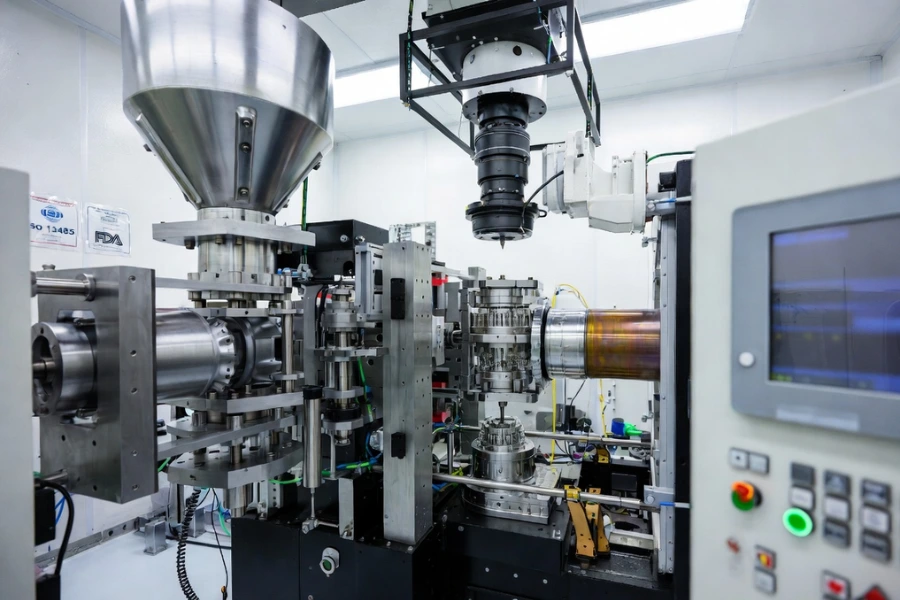
Within ISO-controlled environments, SeaSkyMedical applies this model to support validation batches and early production requirements where flexibility is essential.
Why Traditional Injection Molding Suppliers Require High Minimum Orders
Traditional injection molding suppliers are built around high-volume production logic, where efficiency depends on continuous machine utilization and amortization of fixed tooling costs.
A significant portion of production cost is consumed during setup, calibration, and validation, which remains nearly constant regardless of whether the batch size is 500 or 50,000 units.
In addition, medical manufacturing introduces regulatory requirements such as cleanroom operation, material traceability, and documentation compliance, further increasing baseline operational overhead.
Within cleanroom injection molding environments, even low-volume production must meet strict ISO 13485 quality control systems, which makes small batch production inefficient for conventional manufacturers without dedicated short-run capabilities.
How Short Run Injection Molding Removes MOQ Barriers
Short run injection molding restructures production economics by decoupling tooling investment from high-volume dependency, allowing manufacturers to serve low-demand medical applications without sacrificing industrial standards.
Aluminum and P20 Tooling for Flexible Production
Short run systems typically rely on aluminum tooling or pre-hardened P20 steel instead of hardened production molds, significantly reducing machining time and upfront investment while maintaining sufficient durability for validation and controlled production cycles.
These molds are manufactured through optimized mold making workflows designed to balance cost, lead time, and functional lifespan.
Faster Iteration Through Controlled Development Cycles
Tooling lead times typically range from 10 to 15 working days, enabling faster design validation and reducing the time between prototype and functional production.
This is closely aligned with product development workflows where iterative testing and regulatory feedback cycles require flexible manufacturing responsiveness.
Flexible Batch Sizes Without Fixed MOQ Constraints
Unlike traditional production models, short run manufacturing allows production quantities below 100 units while still using medical-grade thermoplastics suitable for functional and regulatory testing.
The Real Meaning of MOQ in Medical Injection Molding Economics
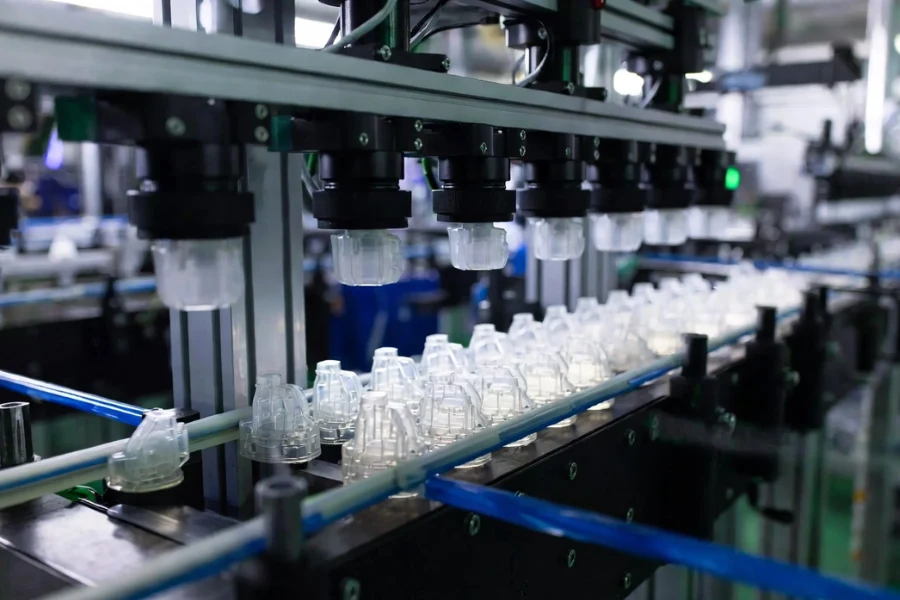
Minimum order quantity in medical injection molding is fundamentally a reflection of tooling amortization rather than physical production limitation.
The total cost of tooling remains fixed, meaning unit price decreases as production volume increases due to cost distribution across larger batch sizes.
At low volumes, tooling cost dominates per-part pricing, while at higher volumes, material cost and cycle efficiency become the primary cost drivers.
For example, a tooling investment distributed across 100 units results in significantly higher per-part cost than the same tooling distributed across 10,000 units, even when production conditions remain identical.
In certain cases, CNC plastic machining may still be more cost-efficient for extremely low volumes under 50 units, while injection molding becomes more competitive beyond that threshold due to material and process efficiency.
When to Use Injection Molding Instead of Other Manufacturing Methods
Manufacturing selection depends primarily on volume, material requirements, and functional performance rather than fixed MOQ constraints.
For very low volumes under approximately 50 units, CNC machining or 3D prototype printing is often more economical due to the absence of tooling cost.
Once production exceeds 50 to 500 units, short run injection molding becomes increasingly advantageous, especially when using engineering-grade thermoplastics that require stable dimensional control and repeatable mechanical performance.
Beyond 500 units, injection molding becomes the dominant solution as tooling amortization reduces per-unit cost significantly.
Why MOQ Flexibility Matters in Medical Applications
In medical manufacturing, flexibility in order quantity is directly linked to regulatory risk, supply continuity, and clinical validation requirements.
Clinical trials often require limited production quantities, making high MOQ constraints impractical and potentially wasteful if design modifications occur during regulatory review.
Short run systems also serve as bridge manufacturing solutions during the transition from prototype tooling to production-scale molds.
Within medical device contract manufacturing environments, this approach ensures uninterrupted supply while maintaining compliance with ISO 13485 controlled processes.
In addition, low-volume tooling can function as backup capacity during maintenance or production disruptions.
How to Select the Right Mold Type for Medical Injection Projects
Tool selection depends on production scale, lifecycle expectations, and design stability.
Aluminum tooling is typically used for early validation and low-volume production due to fast machining and low cost.
P20 steel is used for mid-scale production where moderate durability is required.
Fully hardened steel molds are used for long-term high-volume manufacturing programs.
In more advanced applications, specialized processes such as medical insert molding or micro injection molding may be applied when precision and component integration are critical.
Key Inputs to Define Before Contacting a Manufacturer
Before starting a medical injection molding project, three inputs are essential for accurate tooling recommendation.
Estimated annual demand determines tooling class and production strategy.
Acceptable scrap rate influences quality control and process design.
Timeline flexibility affects whether rapid tooling or production-optimized tooling is more appropriate.
These inputs are typically refined during early free mold tool design evaluation stages before tooling begins.
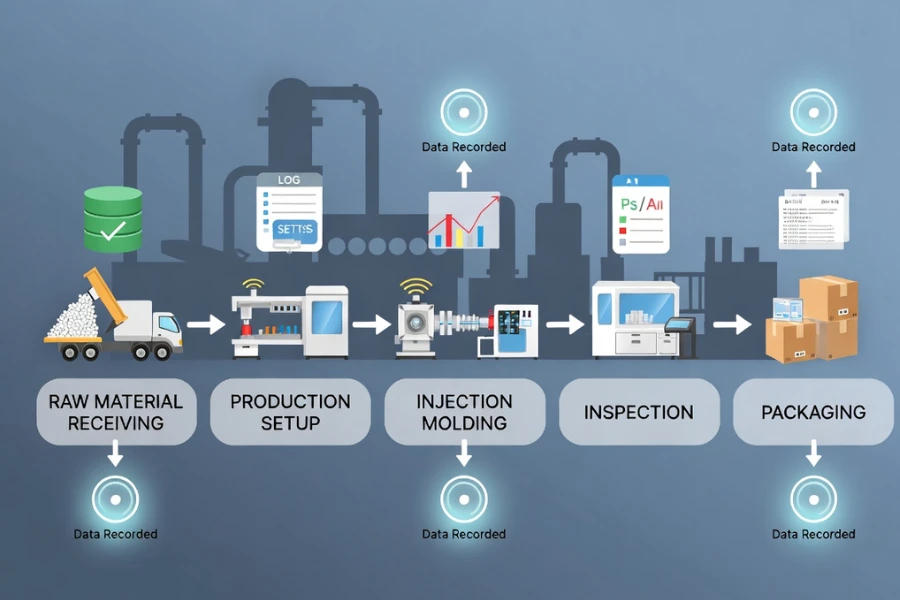
Cost Optimization Strategies in Medical Injection Molding
Cost efficiency is achieved primarily through early design optimization and tooling strategy alignment.
Simplifying part geometry reduces mold complexity and cycle time.
Selecting appropriate tooling material prevents overinvestment in unnecessary durability.
Batch consolidation reduces repeated setup costs across production cycles.
Design for manufacturability review is particularly important in medical applications, where early optimization reduces iteration risk and improves production stability.
In integrated workflows supported by medical device OEM components capabilities, these optimizations are applied during early-stage engineering analysis.
FAQ: Medical Injection Molding Minimum Order Quantity
Is there a minimum order quantity for medical injection molding?
There is no universal MOQ, as short run injection molding allows production starting from small batches, typically 50 to 2000 units depending on tooling strategy.
Does no MOQ mean there is no mold cost?
No, tooling cost still exists and is distributed across production volume, directly affecting unit pricing.
Is low volume injection molding suitable for medical devices?
Yes, when produced under ISO 13485 controlled environments, it is widely used for clinical validation and pilot production.
What is the typical lead time for short run medical molding?
Typical lead time is 2 to 4 weeks depending on complexity and validation requirements.
When should a project move from short run to steel tooling?
When demand becomes stable and scalable, steel tooling becomes more cost-efficient due to lower per-unit cost.
Conclusion
Minimum order quantity in custom medical injection molding is not a fixed production limitation but a reflection of tooling economics, production strategy, and regulatory manufacturing requirements.
Short run and bridge tooling systems allow medical manufacturers to operate flexibly across early validation, clinical testing, and production scaling stages without compromising quality or compliance.
SeaSkyMedical supports this model through integrated custom plastic molding and ISO 13485 controlled manufacturing systems, enabling a continuous pathway from prototype development to scalable production within regulated environments.