Introduction: Precision and Compliance in Medical Manufacturing
Injection molding has become a cornerstone in producing medical devices, providing a reliable method to achieve both dimensional precision and regulatory adherence. The combination of controlled thermal processing, meticulous material selection, and stringent quality oversight allows manufacturers to deliver components that meet the rigorous demands of patient safety and healthcare efficacy, while simultaneously satisfying the documentation and traceability standards outlined in ISO 13485 and 21 CFR 820.70. Organizations seeking streamlined production often rely on Medical Device Contract Manufacturing to ensure their components meet both quality and regulatory requirements.

Understanding Medical Device Injection Molding
Definition and Applications
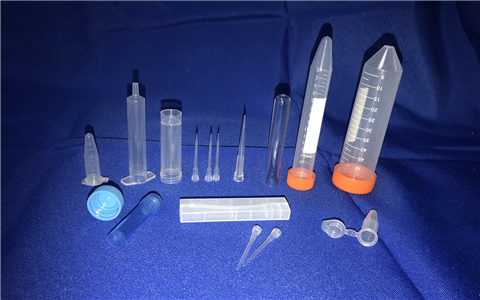
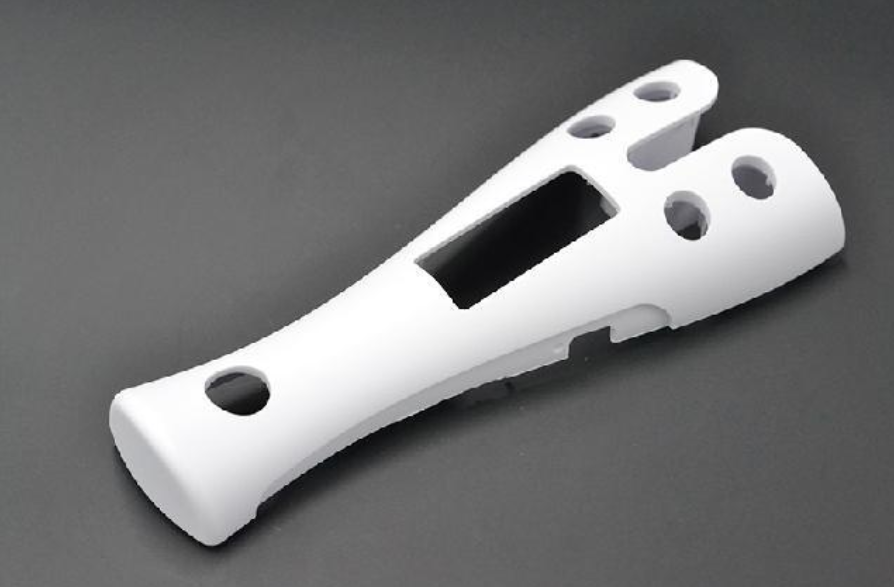
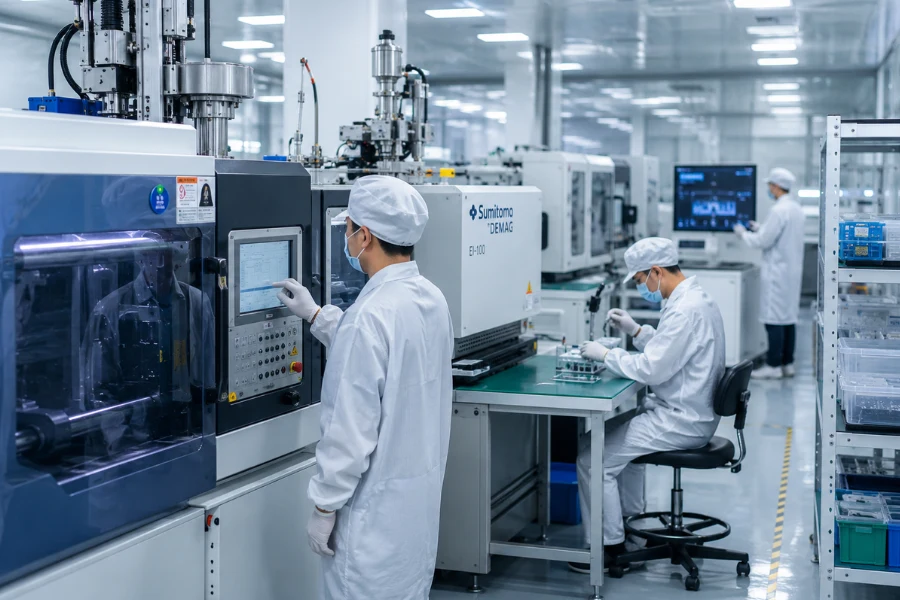
Medical injection molding involves melting biocompatible polymers and injecting them into precisely engineered molds to form device components with exacting tolerances. This process enables the creation of a diverse array of products, ranging from implantable components such as hip and knee prostheses to disposable items like syringes, catheters, and culture dishes. The ability to produce high-quality, repeatable parts is essential, particularly when even minor dimensional deviations can affect device performance or patient safety. Companies offering Medical Plastic Injection Molding provide end-to-end solutions that integrate mold design, production, and quality assurance.
Types of Injection Molding for Medical Devices
Different molding techniques offer distinct advantages in achieving regulatory compliance. Mold Making is critical to ensure dimensional accuracy, while insert molding allows the combination of multiple materials into a single component, enhancing functionality and reducing assembly steps, which can be supported via Medical Insert Molding. Overmolding techniques, including two-shot processes, enable ergonomic enhancements without compromising structural integrity, exemplified in 2K Injection Molding. Liquid silicone injection molding accommodates complex geometries for specialized applications, although its mold durability is typically limited to low-volume or prototyping stages.
Material Selection and Regulatory Implications
High-performance engineering plastics such as PEEK, polycarbonate (PC), polypropylene (PP), and polyethylene (PE) offer a balance of chemical resistance, dimensional stability, and sterilization compatibility, which is critical for medical applications. For instance, ABS plastics formed via styrene-butadiene-acrylonitrile copolymerization provide both impact resistance and long-term dimensional stability, making them suitable for intricate medical components, as highlighted on page 38 of Plastics Molding and Die Design (3rd Edition). Detailed Material Selection for PP Injection Molding ensures that component performance meets both functional and compliance criteria. The careful selection of these materials directly influences the device’s compliance with sterilization standards and biocompatibility requirements.
Managing Process Variables
Critical process parameters, including mold temperature, injection pressure, and cooling time, must be carefully controlled to maintain part uniformity and dimensional fidelity. Water content and volatile compounds within the polymer significantly impact flow behavior, hardness, and surface finish; excessive moisture can lead to voids or reduced mechanical strength, whereas insufficient moisture may compromise mold filling and lead to incomplete features. Properly balancing these parameters ensures that the final components consistently meet regulatory tolerances and validation requirements, which can be supported by advanced CNC Plastic Machining for precision tooling.
Regulatory Framework Integration
ISO 13485 and Risk Management
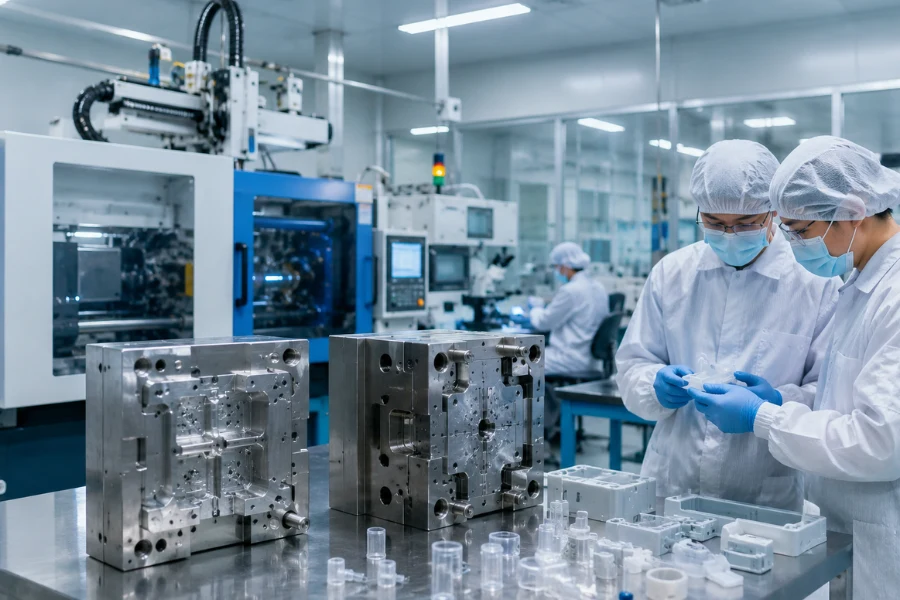
ISO 13485 outlines quality management principles for medical device manufacturing, emphasizing risk identification, process validation, and traceability throughout the product lifecycle. By integrating injection molding controls with these standards, manufacturers can document material specifications, machine settings, and in-process inspections, providing auditable evidence of compliance. Related support for prototyping and design adjustments can be implemented via 3D Prototype Printing.
FDA Requirements
The FDA’s Quality System Regulation (21 CFR Part 820) requires controlled manufacturing processes, detailed documentation, and rigorous design verification. Effective injection molding processes, coupled with real-time monitoring of critical parameters and adherence to Good Manufacturing Practices (GMP), fulfill these regulatory expectations and reduce the likelihood of nonconformities. Product Development Services assist in aligning processes with both ISO and FDA expectations.
Ensuring Quality Through Process Control
Dimensional precision is achieved through careful mold design, accounting for shrinkage compensation and wear allowances, as described on page 38 of Plastics Molding and Die Design. Rapid but controlled polymer solidification prevents warpage and maintains critical tolerances, supporting IQ/OQ/PQ validation and demonstrating process stability. By systematically tracking each step, including raw material handling, injection parameters, and post-molding inspections, manufacturers provide traceable assurance that parts meet both functional and regulatory requirements. Secondary operations, such as Medical Device Packaging and Medical Device Assembly, further reinforce compliance and quality.
Conclusion: Integrating Expertise and Compliance
Injection molding offers a robust pathway to regulatory compliance for medical devices when combined with precise material selection, process optimization, and rigorous documentation. By leveraging engineering insights from industry literature and adopting validated molding practices, manufacturers can ensure that components not only perform reliably but also adhere to ISO and FDA standards. For organizations seeking expertise in medical device manufacturing, SeaSkyMedical provides end-to-end injection molding solutions that prioritize precision, scalability, and regulatory alignment, ensuring that your products consistently meet the highest quality and compliance benchmarks.