
96-Well Plates

96-Well Plates

Custom 96-well plate injection molding and precision mold manufacturing for laboratory consumables, diagnostic systems, and life science applications.

Seasky Medical provides OEM manufacturing solutions for 96-well plates, with demonstrated experience in polypropylene deep well plate molding. Our services cover design for manufacturability, precision tooling, material selection, injection molding, and production quality control.

We support medical device and laboratory consumable manufacturers with ISO 13485-certified quality management and ISO 8 cleanroom manufacturing capabilities.

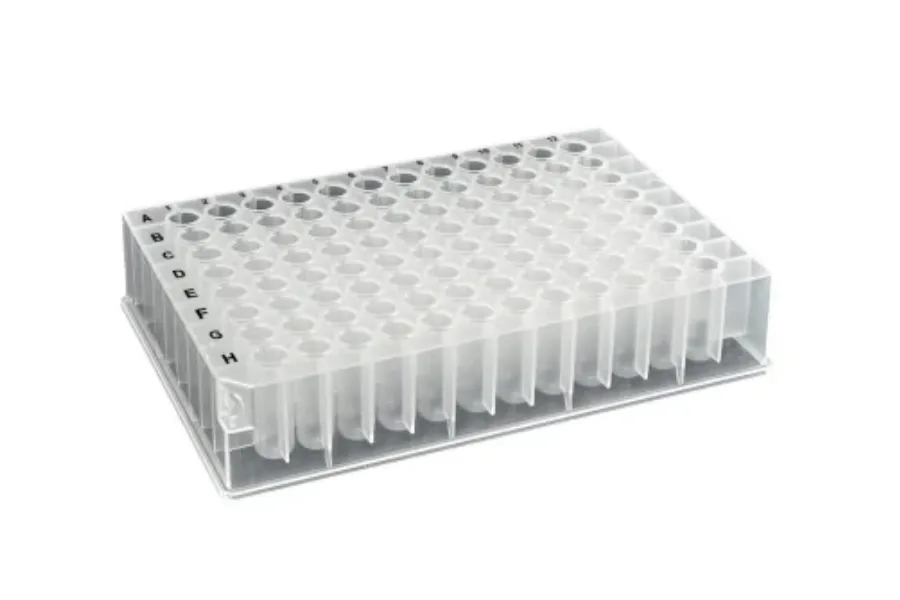
96-Well Deep Well Plates

96-Well Deep Well Plates

Deep well plates contain elongated wells designed to accommodate larger sample volumes than typical shallow microplates. They are used in sample storage, extraction workflows, and automated liquid handling systems.

Injection molding these plates requires careful control of deep-core geometry, cooling, shrinkage, and ejection. Seasky Medical has direct project experience manufacturing polypropylene 96-well deep well plates.

96-Well Microplates

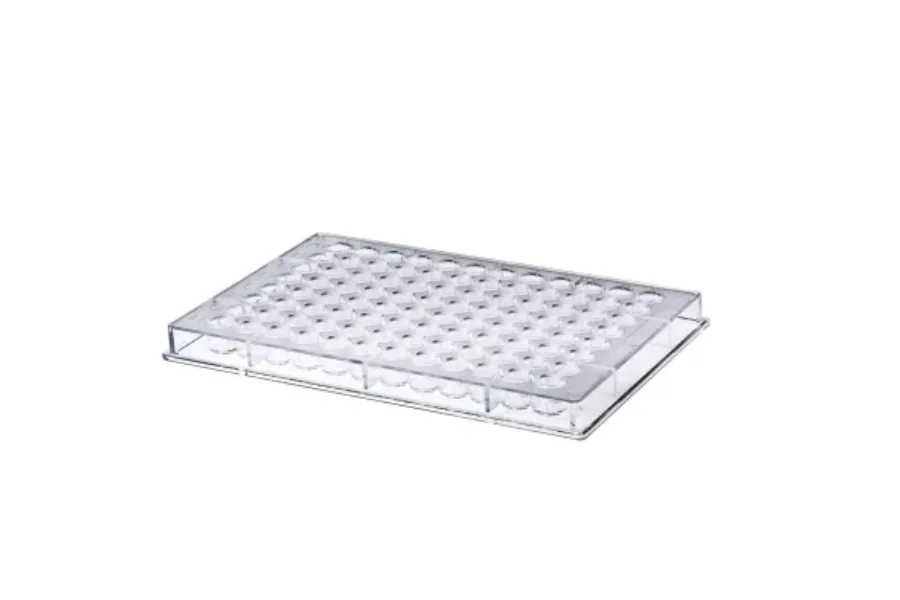
Standard 96-well microplates are commonly designed for assays, reagent handling, and laboratory testing. Well-bottom geometry may be flat, round, or V-shaped, depending on the analytical method and intended equipment.
Custom microplate manufacturing requires evaluation of well consistency, surface quality, material properties, and compatibility with automated laboratory instruments.

96-Well Microplates
96-Well PCR Plates

96-Well PCR Plates

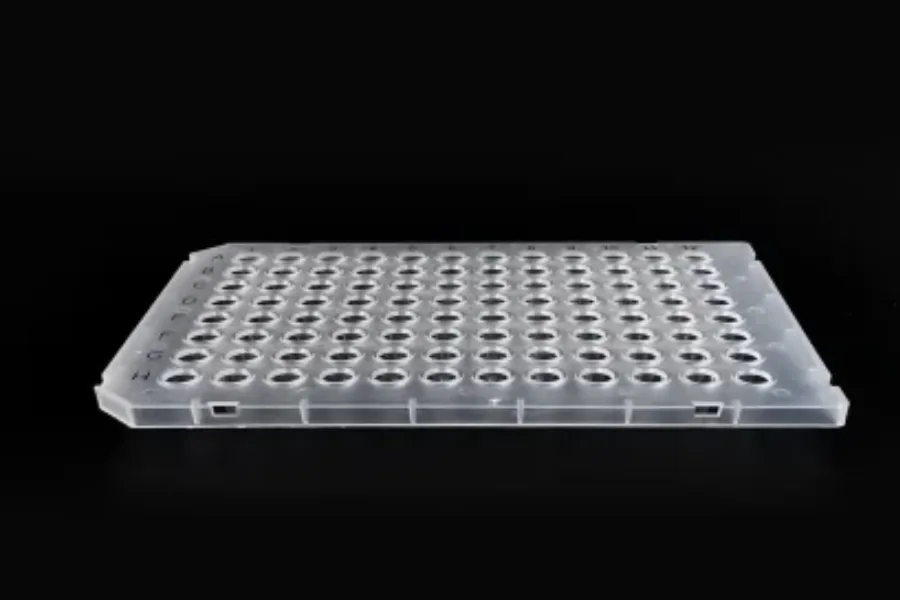
PCR plates are designed for thermal cycling applications where controlled heat transfer, sealing compatibility, and dimensional stability are important.
Common design considerations include well-wall thickness, skirt configuration, thermal expansion, and compatibility with PCR instruments. Custom tooling feasibility depends on the specific geometry, resin, and performance requirements.

Custom 96-Well Plate Designs

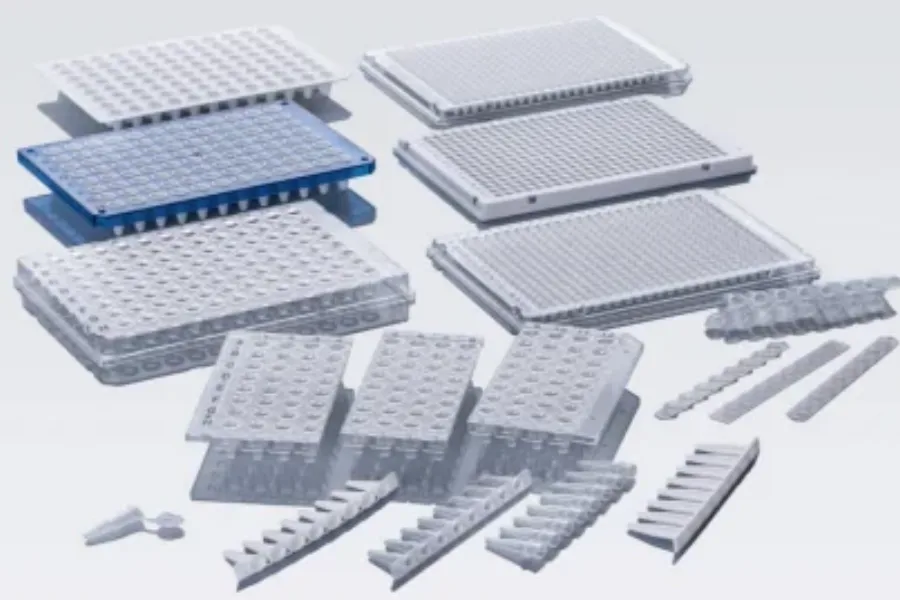
Standard microplate formats do not always satisfy specialized instrument or sample-processing requirements. Custom designs may require modified well geometry, plate height, rim features, skirts, or mechanical interfaces.
Seasky Medical supports design review and custom mold development based on customer drawings, functional specifications, and expected production volumes.

Custom 96-Well Plate Designs

Custom 96-Well Plate Injection Molding

Manufacturing a 96-well plate involves more than reproducing 96 cavities. The mold must form repeated well structures while controlling shrinkage, cooling, ejection, and dimensional consistency across the entire plate.
Seasky Medical provides precision mold development and injection molding services for custom laboratory consumables, including challenging deep well plate geometries.

Precision Mold Design

A 96-well plate mold contains closely spaced forming features that create the individual wells. For deep well designs, long and slender mold cores may introduce challenges involving deflection, temperature distribution, and part release.
During mold development, we evaluate core arrangement, runner design, gate placement, cooling channels, and ejection mechanisms to reduce manufacturing risks.

Polypropylene Material Selection

Polypropylene (PP) is widely used in laboratory consumables because suitable grades provide chemical resistance and can be processed into complex injection-molded geometries.
The selected grade must be evaluated for shrinkage, stiffness, processing behavior, and compatibility with the intended laboratory workflow. For PCR or low-binding applications, additional material and performance requirements may apply.

Controlled Cooling and Ejection

Uneven cooling can cause warpage and dimensional variation, particularly in plates with deep wells and repeated thin-wall features.
A major manufacturing challenge is releasing the molded plate without damaging the wells or distorting the surrounding structure. Seasky Medical’s documented deep well plate project addresses the importance of balancing cooling design, core retention, and ejection forces.

Injection Molding Process Optimization

Injection pressure, melt temperature, mold temperature, packing conditions, and cooling time influence the dimensional stability of molded plates.
For production tooling, process optimization focuses on consistent well formation, reliable part release, acceptable dimensional variation, and repeatable molding cycles.

96-Well Plate Specifications and Customization Options

Plate specifications should be defined according to the intended instrument, sample volume, laboratory process, and required material properties.

Parameter

Available design considerations

Plate format

96 wells arranged in 8 rows × 12 columns

Product type

Deep well plate, microplate, PCR plate, or custom format

Well geometry

Round, square, conical, flat-bottom, U-bottom, or V-bottom, where applicable

Well capacity

Defined by the customer’s design and application

Plastic material

PP or another application-appropriate thermoplastic

Plate dimensions

Standard-compatible or custom external geometry

Skirt configuration

Full skirt, semi-skirt, or unskirted, depending on product type

Surface characteristics

Defined by optical, liquid handling, or assay requirements

Sealing compatibility

Film, cap mat, or other specified sealing system

Manufacturing scope

Custom mold making, injection molding, inspection, and packaging

Where compatibility with standardized laboratory automation is required, dimensional requirements should be evaluated against applicable ANSI/SLAS microplate standards and the equipment manufacturer’s specifications.

Custom tooling does not automatically establish compliance with these standards. Final compatibility must be confirmed through design verification.

Applications of 96-Well Plates

Sample Preparation and Storage

Deep well plates can accommodate samples during extraction, mixing, centrifugation, and temporary storage workflows. Plate design should account for chemical exposure, working volume, sealing, and the operating conditions of the laboratory process.

In Vitro Diagnostics

Microplates can form part of diagnostic workflows involving sample preparation, reagent reactions, or analytical measurement. Their suitability depends on the assay format, cleanliness requirements, and interaction between the plate material and test chemistry.

Automated Liquid Handling

Automated systems require consistent plate positioning and well alignment for accurate pipetting. Dimensional variation, plate flatness, well spacing, and mechanical interfaces must be assessed against the instrument requirements.

Molecular Biology and PCR

PCR plates accommodate reaction mixtures during thermal cycling. Thin-wall geometry, thermal response, sealing compatibility, and dimensional stability affect performance and must be evaluated for the selected instrument and protocol.

Quality Control for 96-Well Plate Manufacturing

Quality requirements for 96-well plates depend on their intended use. A general sample storage plate may have different acceptance criteria from a microplate designed for optical measurement or molecular diagnostics.
Seasky Medical supports medical plastic molding through an ISO 13485-certified quality management system and controlled manufacturing capabilities.

Dimensional Accuracy

Critical dimensions may include well spacing, well depth, external plate dimensions, skirt geometry, and overall flatness. Inspection plans should identify dimensions that affect laboratory instrument compatibility and sample-handling performance.

Surface and Visual Inspection

Well surfaces, mold parting lines, gate vestiges, and molded edges should be examined against agreed acceptance criteria. Visual inspection may identify incomplete filling, flash, deformation, surface defects, or damage introduced during demolding.

Functional Performance Testing

Depending on the application, required testing may include leakage, sealing compatibility, thermal cycling performance, centrifugation resistance, or interaction with automated liquid handling systems. For optical assays, appropriate optical performance requirements should be established separately.

Controlled Manufacturing Environment

Our ISO 8 cleanroom capabilities support laboratory consumable projects with defined cleanliness requirements. Cleanroom molding controls aspects of the manufacturing environment but does not independently establish that a finished plate is sterile, DNase-free, RNase-free, or free from PCR inhibitors. Such claims require product-specific controls and verification.

Why Choose Seasky Medical for 96-Well Plate Manufacturing?

Proven Deep Well Plate Molding Experience

Seasky Medical has documented manufacturing experience with polypropylene 96-well deep well plates. Our project addressed molding challenges involving deep well cores, part release, cooling arrangements, and production reliability.

Precision Mold Manufacturing

We support custom mold design and manufacturing for laboratory consumables requiring repeated features and tightly controlled dimensions. Our engineering work considers filling behavior, cooling, part ejection, and overall mold performance before production.

ISO 13485 Quality Management

Seasky Medical operates an ISO 13485-certified quality management system for medical plastic manufacturing. This supports documented manufacturing controls and quality planning for customers with medical and diagnostic product requirements.

Integrated OEM Manufacturing

Our services include product development support, material evaluation, mold making, injection molding, and secondary operations. By addressing tooling and molding requirements together, we help customers identify manufacturing risks before committing to production tooling.

Frequently Asked Questions

Yes. Seasky Medical provides custom injection molding and mold manufacturing for laboratory consumables, with documented experience producing polypropylene 96-well deep well plates. Custom projects are evaluated according to the customer’s drawings, plate geometry, material requirements, operating conditions, and expected production volume. Other plate formats require a project-specific manufacturing feasibility review.

A conventional 96-well microplate is often designed for assays or analytical testing using relatively small liquid volumes. A 96-well deep well plate has deeper wells that accommodate larger volumes for sample preparation, extraction, mixing, or storage. The appropriate plate depends on working volume, well geometry, equipment compatibility, and application requirements.

Polypropylene and polystyrene are commonly used for different microplate applications. Polypropylene is frequently selected for deep well plates and certain PCR applications, while polystyrene is used in many assay microplates. Material selection depends on chemical resistance, optical properties, temperature exposure, surface characteristics, and the requirements of the laboratory workflow.

Yes. Custom plate designs can be developed around instrument-specific dimensions, well geometry, plate height, skirt configuration, and other mechanical requirements. Compatibility should be evaluated against relevant ANSI/SLAS dimensions where applicable and the equipment manufacturer’s specifications. Final verification should include physical fit and functional testing with the intended laboratory equipment.

Common challenges include filling long and narrow well features, controlling shrinkage and warpage, maintaining consistent cooling, and removing the molded plate without damaging the wells. Mold core design and ejection forces are particularly important. A successful manufacturing process must balance dimensional accuracy, surface quality, cycle time, and reliable part release.

Customers should provide 2D or 3D drawings, material requirements, well geometry, intended application, and estimated production volume. Additional information may include instrument compatibility, sealing methods, operating temperature, chemical exposure, cleanliness requirements, and inspection criteria. These details help determine mold design, production feasibility, quality planning, and quotation scope.

green circle

Start Your Project Now