
IV Components

Custom IV Components and Precision Injection Molding for Infusion Systems

Seasky Medical provides OEM manufacturing solutions for custom IV components used in disposable infusion sets and medical fluid administration systems. Our capabilities include precision mold development, medical plastic injection molding, material selection, and assembly support for infusion device manufacturers.

We support the production of injection-molded drip chambers, roller clamps, flow control components, connectors, and other plastic parts based on customer drawings and technical requirements.With an ISO 13485:2016-certified quality management system and ISO 8 cleanroom manufacturing capabilities, Seasky Medical supports controlled production for custom medical consumables.

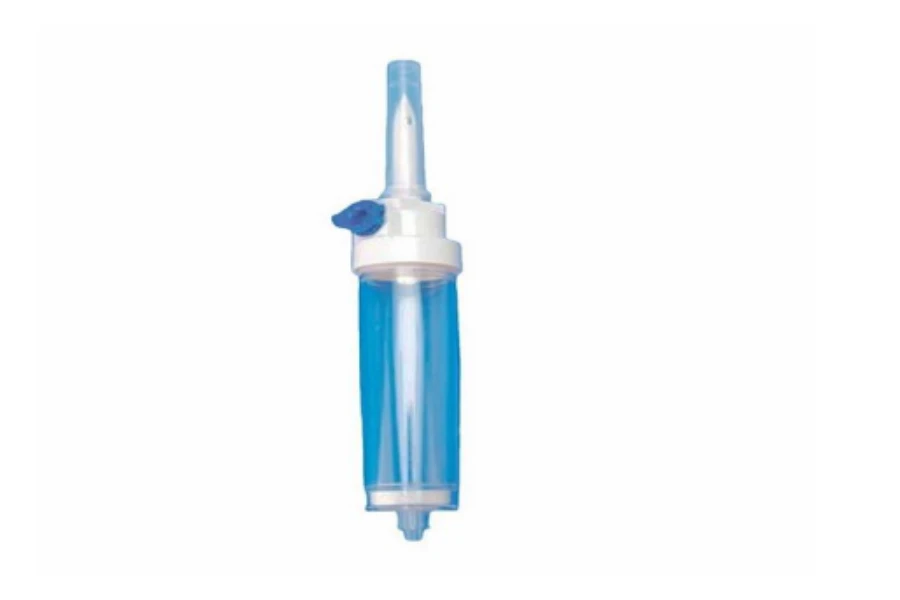
IV Drip Chambers

IV Drip Chambers

IV drip chambers provide a visible section of the fluid pathway where droplets can form and be observed. Their construction may incorporate a drop former, transparent chamber body, and connections to upstream or downstream tubing.
Injection molding considerations include optical clarity, wall thickness, dimensional consistency, bonding surfaces, and drop-forming geometry.
The required drop factor and flow performance must be verified for the assembled infusion device.

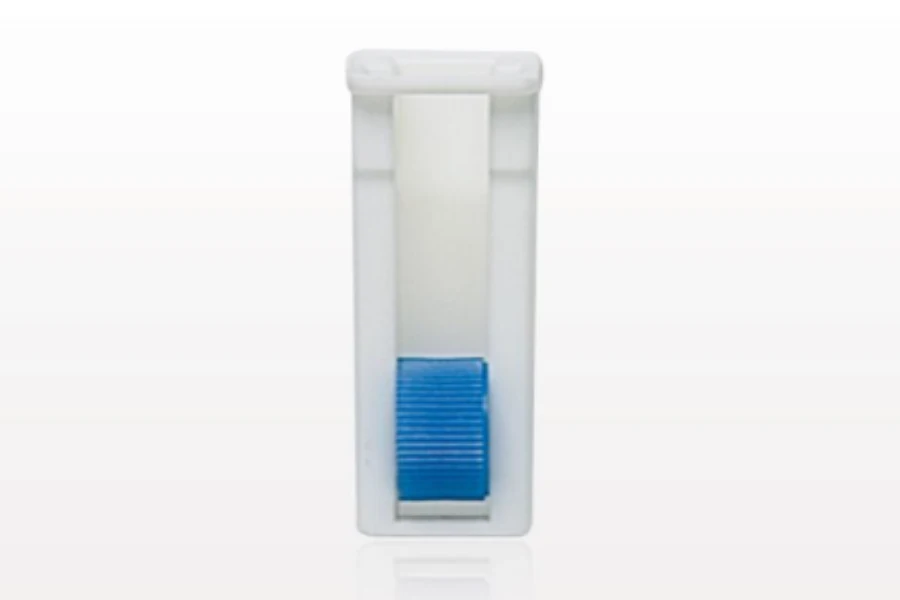
IV Roller Clamps

IV roller clamps regulate fluid flow by progressively compressing flexible infusion tubing. They typically consist of a molded housing and a movable roller.
Critical manufacturing features include roller geometry, guide tracks, housing dimensions, and the interface with the specified tubing.
Component consistency is important for smooth roller travel and predictable tubing compression.

IV Roller Clamps
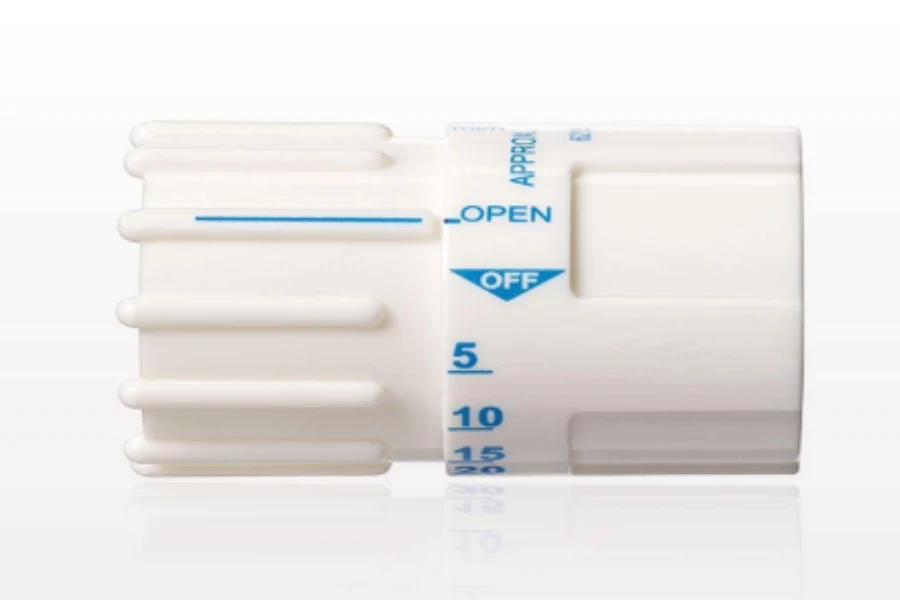
IV Flow Regulators

IV Flow Regulators

IV flow regulators are designed to adjust fluid delivery through controlled flow restrictions. Depending on the device architecture, the mechanism may include molded housings, rotating elements, and internal flow-control features.
Precision molding requirements may involve mating surfaces, rotational alignment, sealing interfaces, and the geometry of fluid passages.
Final flow characteristics must be established through testing under defined fluid and pressure conditions.

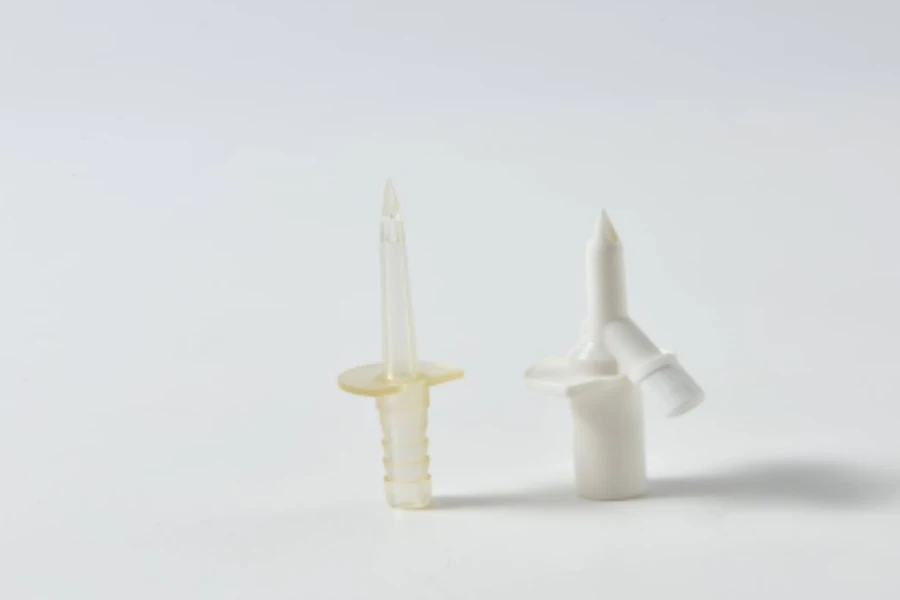
IV Spikes and Adapters

IV spikes connect infusion sets to compatible fluid containers. Molded plastic spikes and adapters may incorporate piercing features, fluid passages, venting interfaces, and tubing connections.
Tooling must account for tip geometry, passage formation, material strength, and dimensional fit with the intended container closure.
Custom designs should be evaluated for connection integrity, leakage performance, and compatibility with the fluid container.

IV Spikes and Adapters
IV Injection Ports and Y-Connectors

IV Injection Ports and Y-Connectors

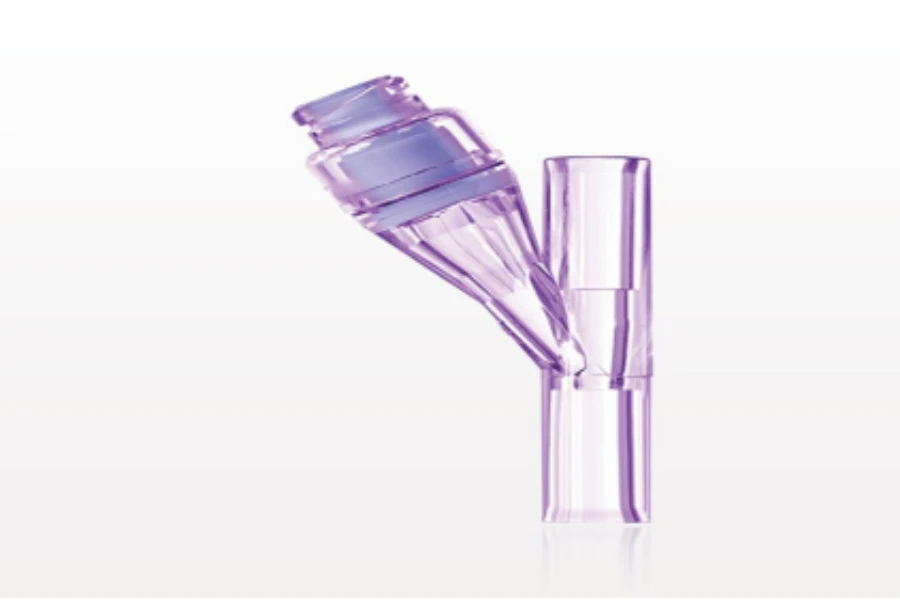
Injection ports and Y-connectors provide additional access or branching points within an infusion line. Their molded bodies may include multiple fluid channels and interfaces for tubing, valves, or sealing elements.

Manufacturing considerations include internal flow geometry, bonding surfaces, dimensional consistency, and leakage control.

Designs incorporating septa or needleless valves require additional evaluation of material interactions, assembly, and functional performance.

IV Luer Connectors

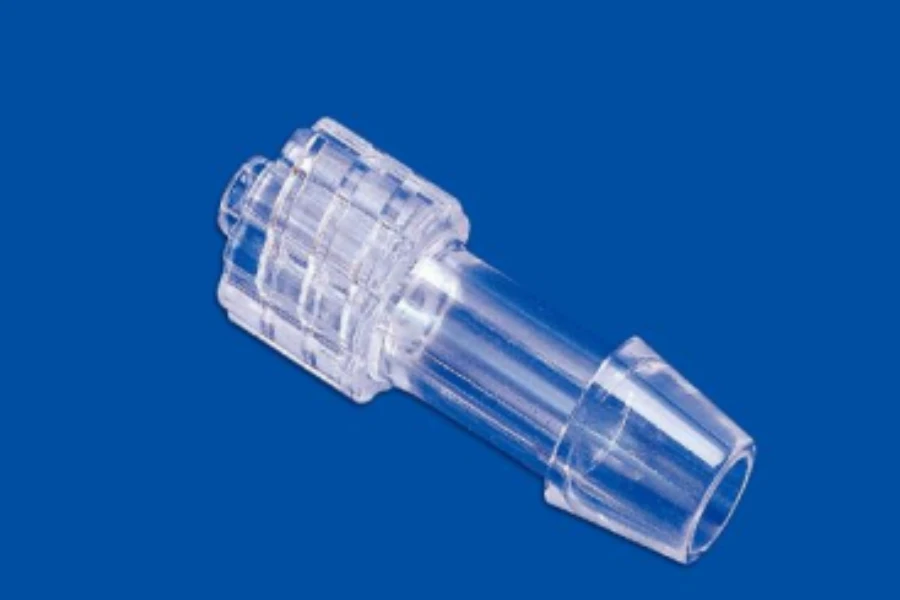
Luer connectors establish detachable interfaces between compatible infusion devices, tubing assemblies, and patient access components.

Custom Luer parts require dimensional control of mating surfaces and locking features. Applicable connection standards and functional testing requirements depend on the intended clinical application.

Seasky Medical supports custom molding projects involving medical Luer-related components and connection interfaces.

IV Luer Connectors

OEM IV Component Injection Molding

IV components frequently combine small plastic features, fluid passages, mechanical interfaces, and surfaces intended for joining to other parts.
Seasky Medical provides custom manufacturing support from design review and precision tooling to medical injection molding and selected secondary operations.

Design for Manufacturability

Design for manufacturability (DFM) identifies potential production challenges before a mold is manufactured.

For drip chambers, engineering review may focus on wall thickness, transparency, gate placement, and fluid-path geometry. Roller clamps require attention to guide tracks, roller fit, and dimensional variation that could affect movement.

Connector and spike designs may require additional analysis of internal channels, molding draft, and critical sealing surfaces.

Precision Mold Design and Manufacturing

Injection molds for IV components must reproduce functional details while supporting consistent filling, cooling, and part ejection.
Mold development considers gate location, cavity balance, cooling arrangements, parting lines, and surface finish.
When a component contains narrow fluid passages or small mating features, tooling design must also account for core strength, dimensional accuracy, and mold maintenance.

Medical Plastic Material Selection

Medical IV components may use polypropylene (PP), polycarbonate (PC), PVC, or other polymers depending on their function and device design.
Material selection should consider transparency, mechanical strength, flexibility, chemical compatibility, joining processes, and the intended sterilization method.
Flexible tubing and rigid injection-molded components may require different manufacturing processes and materials. All fluid-contact materials must be evaluated against the requirements of the final infusion device.

Cleanroom Injection Molding

Seasky Medical offers ISO 8 cleanroom injection molding for medical plastic components with defined environmental cleanliness requirements.
Cleanroom production helps control environmental contamination during molding. It does not, by itself, establish product sterility or eliminate the need for downstream cleaning, sterilization, or packaging validation.

Assembly and Secondary Operations

IV assemblies may require molded components to be connected to tubing, membranes, filters, and other parts.

Seasky Medical offers assembly and secondary manufacturing services for medical consumables. Potential operations can be evaluated according to the component design, selected materials, joining requirements, and production volume.

IV Component Specifications and Customization Options

IV components are generally designed around the functional requirements of the final infusion system rather than a single universal specification.
Parameter Design and manufacturing considerations
Product types Drip chambers, roller clamps, flow regulators, spikes, adapters, injection ports, and connectors
Material PP, PC, or other application-appropriate medical-grade polymers
Component dimensions Custom sizes based on CAD drawings and device specifications
Fluid path Internal channel design, connections, and flow requirements
Tubing interface Specified tubing dimensions, material, and joining method
Transparency Material and surface finish requirements for visual monitoring
Sealing Defined leakage limits and operating conditions
Mechanical features Sliding tracks, rotating components, clips, and locking interfaces
Sterilization compatibility Evaluation against the intended processing method
Production environment Cleanroom molding where specified
Manufacturing scope Precision tooling, molding, inspection, assembly, and packaging
For applications within the scope of applicable medical device standards, manufacturing requirements should be translated into drawings, measurable specifications, and verification criteria.
For example, ISO 8536-4 addresses single-use gravity-feed infusion sets, while ISO 80369-7 applies to specified Luer connections for intravascular or hypodermic applications. Meeting a component drawing alone does not establish complete-device conformity.

IV Component Manufacturing Challenges

Maintaining Consistent Fluid Path Geometry

Variations in internal channel dimensions can affect flow resistance, fluid retention, or compatibility with adjoining components. Mold design and process control should focus on critical passage dimensions and features that affect the assembled device.

Ensuring Reliable Assembly Interfaces

Many IV components are joined to flexible tubing or other molded components. Joint strength and leakage performance depend on material compatibility, interface geometry, assembly method, and processing conditions. These factors should be verified for the final assembly.

Balancing Transparency and Moldability

Transparent drip chamber parts require suitable resin selection and molding conditions. Surface defects, flow marks, trapped gas, or excessive internal stress may reduce clarity or affect component performance. Tooling and process parameters should be selected according to the optical and mechanical requirements of the design.

Controlling Mechanical Fit

Roller clamps and adjustable flow regulators rely on moving or mating components. Dimensional variation may influence sliding resistance, rotational movement, or assembly retention. Functional dimensions must therefore be evaluated together rather than independently.

Applications of Custom IV Components

Disposable IV Infusion Sets

Custom molded components support fluid flow, drip formation, flow adjustment, and connections throughout disposable infusion assemblies. Important considerations include fluid-path continuity, joining reliability, and compatibility between the selected components.

Gravity Infusion Systems

Gravity-feed infusion sets use hydrostatic pressure to deliver fluid through tubing and flow-control components. Drip chamber geometry, tubing characteristics, and flow regulation features should be evaluated as part of the complete system.

Infusion Pump Administration Sets

Administration sets designed for infusion pumps may require specific tubing characteristics, connector interfaces, and component geometry. Compatibility depends on the pump model, sensing mechanisms, operating pressure, and validated administration set design.

Blood Transfusion Sets

Blood administration sets may incorporate specialized drip chambers, filters, connectors, and tubing interfaces. Materials and component geometries must be evaluated for blood compatibility, filtration requirements, and the intended administration conditions.

IV Extension and Access Assemblies

Extension sets and additional access lines may use molded connectors, clamps, injection ports, or other fluid management components. Manufacturing requirements include connection integrity, internal volume, tubing compatibility, and applicable functional performance.

Why Choose Seasky Medical for IV Components?

Experience in IV Set Manufacturing

Seasky Medical has a dedicated IV set injection molding solution covering commonly used infusion components, including drip chambers, roller clamps, flow regulators, and medical connectors. This experience provides a relevant manufacturing foundation for custom plastic parts used in infusion systems.

ISO 13485 Quality Management

Seasky Medical operates under an ISO 13485:2016-certified quality management system. This supports structured quality planning, manufacturing controls, and documented production processes for medical device component projects.

ISO 13485-Certified Quality Management

Seasky Medical operates under an ISO 13485:2016-certified quality management system for medical manufacturing. Quality planning and manufacturing controls are organized according to the agreed scope and requirements of each project.

ISO 8 Cleanroom Manufacturing

Our ISO 8 cleanroom facilities support injection molding for medical consumables requiring controlled manufacturing conditions. Additional contamination-control, packaging, and sterilization requirements are determined for the specific product.

Integrated OEM Manufacturing Services

We support custom projects involving mold development, material selection, injection molding, inspection, and selected assembly operations. Working across these manufacturing stages helps identify risks related to component geometry, tooling, and assembly before production.

Frequently Asked Questions

An IV infusion set may include a fluid container spike, drip chamber, flexible tubing, roller clamp or flow regulator, injection port, and Luer connector. Specific configurations vary by device type and intended application. Some sets also incorporate filters, air vents, valves, or specialized components for pump-controlled or blood administration systems.

Yes. Seasky Medical provides custom injection molding for medical infusion components rather than relying on standard ready-made inventory. Its existing IV set manufacturing solutions cover drip chambers, roller clamps, flow regulators, connectors, and related parts. Manufacturing feasibility is evaluated based on customer drawings, materials, dimensional requirements, and expected production volume.

IV components may use polypropylene, polycarbonate, and other application-appropriate polymers. Flexible tubing commonly requires different materials and manufacturing processes from rigid molded components. Selection depends on transparency, mechanical performance, fluid compatibility, joining methods, sterilization conditions, and the intended use of the final medical device.

Yes. Seasky Medical offers ISO 8 cleanroom injection molding for medical components with defined environmental cleanliness requirements. Cleanroom molding can help limit environmental contamination during production, but it does not automatically make components sterile. Product-specific cleanliness controls, sterilization requirements, and packaging validation must be addressed separately when applicable.

Seasky Medical identifies both drip chambers and roller clamps within its IV set manufacturing solutions. Custom production requirements depend on the component design and mating parts. Drip chambers require attention to transparency and fluid-path geometry, while roller clamps require dimensional control of the roller, housing, and tubing compression interface.

Required tests depend on component function and intended device use. They may include dimensional inspection, visual inspection, leakage testing, flow verification, connection integrity, and mechanical performance checks. Testing of individual parts should be distinguished from complete-device verification, which may involve additional applicable standards and regulatory requirements.

Provide 2D or 3D drawings, material specifications, critical dimensions, and estimated production volume. For fluid-contact components, also include operating pressure, connection requirements, fluid compatibility, and sterilization expectations. Details about assembly, cleanliness, packaging, and functional testing help determine the appropriate tooling and manufacturing scope.

green circle

Start Your Project Now